

 beef
 fish sauce
Beef holy basil at a made-to-order shop
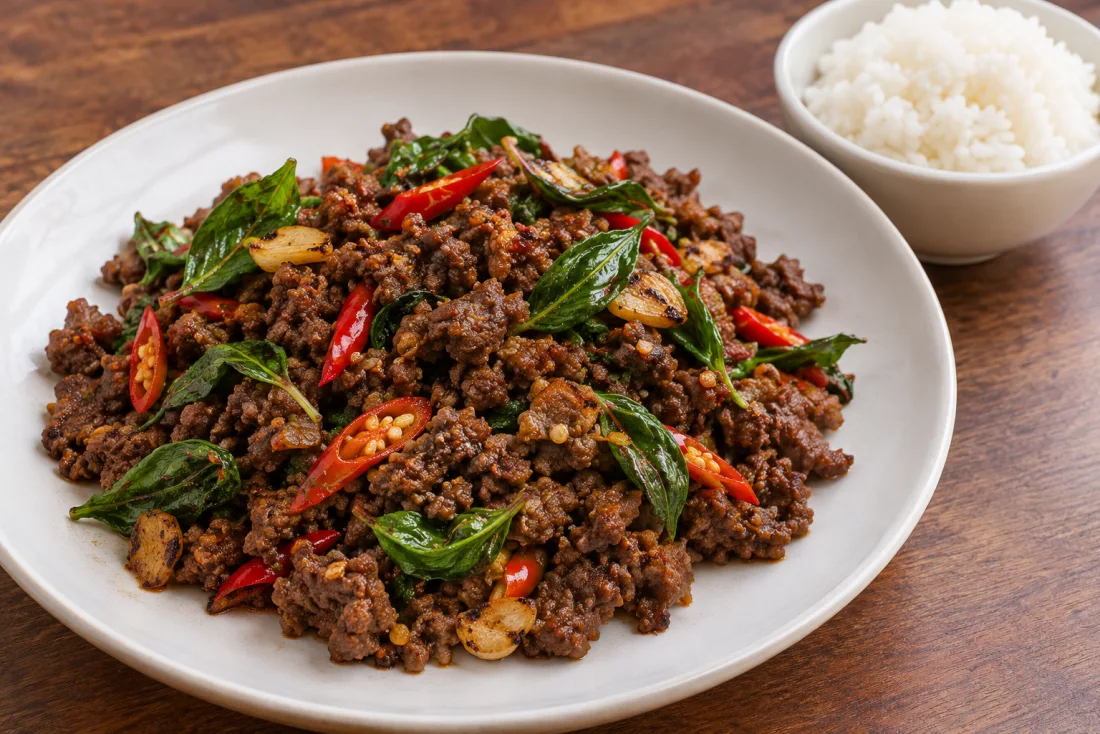
Neua means beef here, and neua sap is minced beef. Chicken and pork are other familiar versions of this made-to-order dish. Thai cooks document dry minced and saucier beef versions. The name identifies the protein and herb rather than a province or particular cut.
Cooking minced or sliced beef
Mince can be fried until its moisture evaporates and the beef takes on browned edges. The garlic, chili and holy basil give it aroma. Some restaurant recipes use multiple chilies or basil flowers. Sliced beef can carry a wetter mix of oyster sauce, fish sauce, seasoning and a little water.
Browning, chili and peppery basil
The beef brings savory browned notes, fresh chili offers direct heat and dried chili can taste toasted. Holy basil brings a peppery aroma. Dry mince and moist slices have different textures, and sauce color is an unreliable indicator of heat.
Rice and an optional fried egg
Order a helping over rice or share the stir-fry on its own plate. Khai dao means fried egg, with chicken or duck egg depending on the shop. Mix dry mince into rice or add a spoon of sauce at a time. Ask whether fresh and dried chili can be reduced before cooking.
Comparing basil and oyster sauce beef
English basil beef can be ambiguous. Krapao refers to holy basil, while horapha is Thai sweet basil. Oyster sauce beef generally emphasizes the sauce and can contain onions or vegetables. Neua sap describes the cut and red holy basil describes the herb.
Allergens in seasonings and fried egg
Fish sauce contains fish. Oyster sauce may contain mollusks. Soy and wheat can be in seasonings, including pre-marinated beef ingredients, and a fried egg adds egg. Ask about stock sauces, shared wok utensils and fryer oil.
If you have a food allergy, tell the restaurant before ordering and ask about ingredients, sauces and shared cooking equipment.