
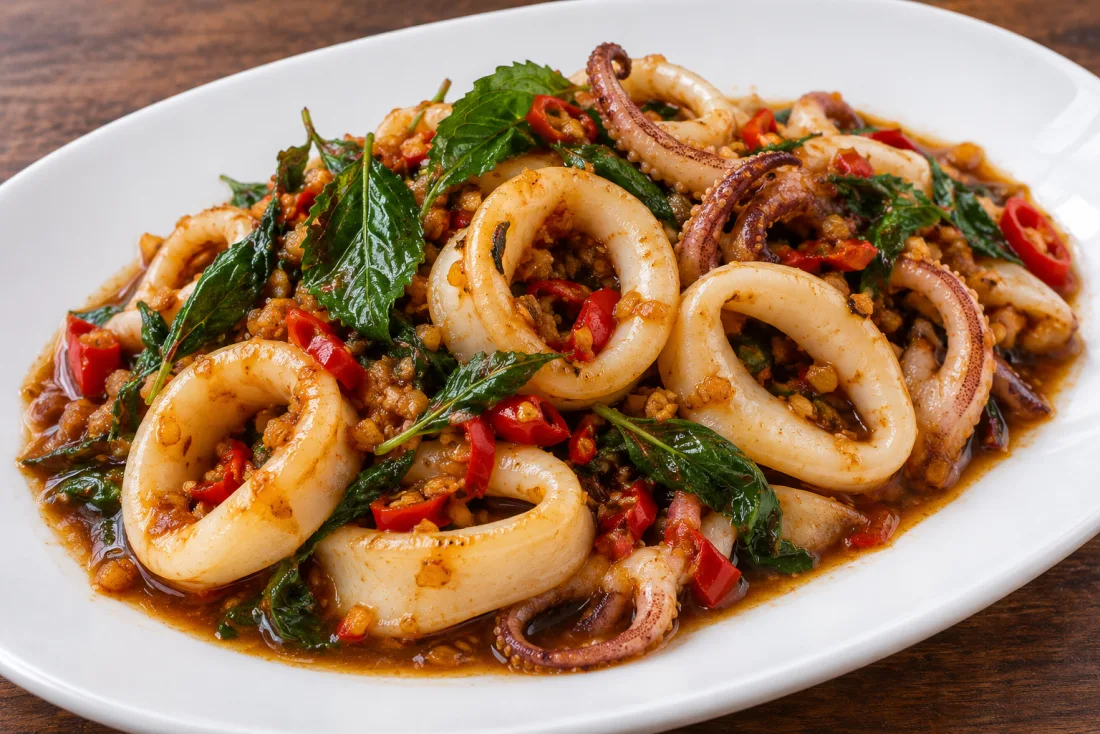

 squid
 fish sauce
A squid option at a Thai stir-fry shop
Krapao is holy basil and pla muk refers to squid or a related cephalopod. Thai cooks document squid with yellow chili and red holy basil. The chili also appears in southern seafood cooking, while this made-to-order dish can vary by kitchen and fish supply.
Squid pieces, aromatics and sauce
Squid can be cut into rings, scored pieces or tentacle segments. Chili and garlic flavor the oil; fish sauce, oyster sauce and soy sauces can season the cooked squid. Score large squid so the cut surface catches more sauce. Add holy basil at the end. Some home recipes include long beans and onion.
Springy squid and a peppery aroma
Squid body has a springy bite and tentacles feel firmer. Yellow chili or fresh bird chili adds heat and basil brings peppery aroma. Dark soy can darken the sauce. Onion can add sweetness and long beans a fresh crunch.
Rice and an optional egg
Order over rice or share the squid as a separate dish. Add a fried egg if desired. Portion squid and sauce separately when sharing. Ask what squid cut is on offer and whether the crushed chili can be reduced.
Garlic squid, chili paste and mixed seafood
Garlic squid puts garlic and sometimes pepper first. A squid dish with nam phrik phao uses roasted chili paste. Talay can include prawns, squid and other seafood. Pla muk indicates squid, while khai muek refers to squid eggs.
Allergens in squid and sauces
Squid is a cephalopod mollusk. Oyster sauce can also contain mollusks; fish sauce contains fish. Soy sauce can add soy and wheat. Eggs add egg allergens and shrimp ingredients add crustaceans. Ask about shared woks, boards, spoons, oil and utensils.
If you have a food allergy, tell the restaurant before ordering and ask about ingredients, sauces and shared cooking equipment.