
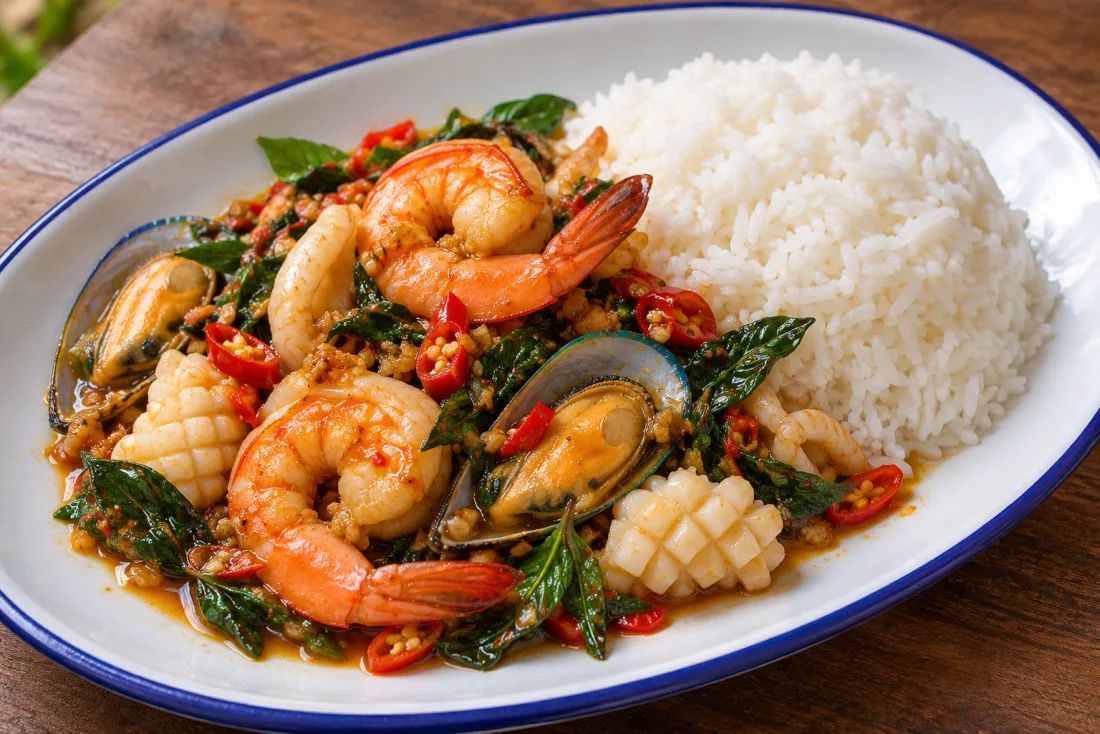

 shrimp
 squid
 fish sauce
From minced meat to mixed seafood
The name combines holy basil and seafood. Thai cooks use shrimp and squid, or add fish such as sea bass. The seafood combination depends on the kitchen. Like other holy basil stir-fries, it can be a quick rice plate or a shared dish.
Cooking shrimp, squid and fish quickly
One home recipe fries garlic and chili and makes a sauce with water, fish sauce, light soy, oyster sauce and sugar. Shrimp and squid go in next, with holy basil folded in at the end. Some cooks blanch seafood first or sear fish to hold its shape. Other sauces can include dark soy or shrimp paste.
Peppery basil, springy shrimp and chewy squid
Garlic and chilies give heat, with the peppery scent of holy basil. Shrimp are springy and slightly sweet, squid chewier and fish can flake. Fish sauce, oyster sauce and soy add savor. Drier versions can have a stronger wok aroma, and saucier plates are easy to eat with rice. Color alone does not predict heat.
Serving mixed seafood with steamed rice
The stir-fry can come over rice with egg or cucumber, or on a shared plate. Portion different seafood pieces and the sauce separately when sharing. Watch for tails, shells and bones. Ask about the size and whether extras come with it.
Seafood mix, shrimp-only and aromatic wok dishes
Shrimp, squid or fish in the title usually names a single main ingredient, while talay can combine them. Other Thai seafood stir-fries use fingerroot, green peppercorns or makrut lime leaf for a different fragrance. Shrimp paste with holy basil is another documented variation.
Allergens in each seafood and the sauce
Shrimp and crab are crustaceans. Squid and oyster are mollusks; fish, fish sauce and fish stock contain fish. Check soy and wheat in sauces and egg if served. Ask about shared woks, knives, blanching water or fryer oil. Removing a piece of seafood does not remove allergens in the sauce.
If you have a food allergy, tell the restaurant before ordering and ask about ingredients, sauces and shared cooking equipment.