
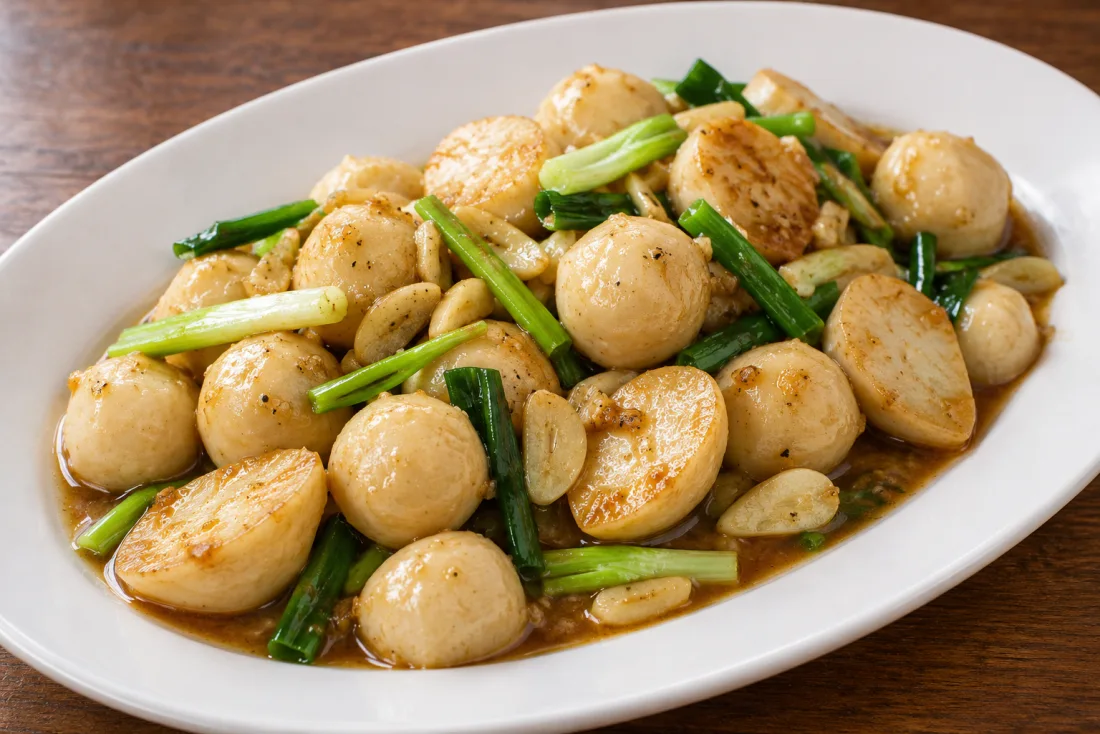

 fish balls
What the Thai name describes
Pad luk chin pla refers to fish balls stir-fried after they are shaped. Balls can be left whole or halved. They take on a thin sauce and aromatics in the wok, distinct from fried fish balls, fried fish pieces or curry fish cakes.
Ordering it in a Thai restaurant
A Thai restaurant lists a Hat Yai fish ball stir-fry. Thai published recipes also include ginger and sweet-and-sour versions. Seasoning can vary, so look for the sauce or the aromatics when choosing a plate to share or one with rice.
Fish balls, aromatics and sauces
A ginger version uses fish balls, ginger, red chilies, garlic, light soy, oyster sauce, fermented soybean paste, sugar and pepper. A separate sweet-and-sour recipe uses garlic, onion and scallions among its ingredients. A milder plate can emphasize garlic, scallion and ground pepper.
Heating the center and glazing the outside
Follow preparation instructions for packaged fish balls and cook them through. Halves have more surface to brown. Scent the oil first, then toss the fish balls in the sauce and add scallions near the end. A little water loosens a thick sauce.
Springy bites and savory aromatics
The fish balls remain springy, with a little browning outside. Garlic and scallion are fragrant, and ground pepper gives gentle warmth. Stir-fry sauces can be savory, spicy or sweet-and-sour. Rice helps balance the seasoning.
Allergens in fish balls and the wok sauce
Fish balls contain fish and may also contain egg, wheat, soy or shrimp. Bean paste and soy contain soy, and some soy sauces include wheat. Oyster sauce may contain molluscs. Check the fish balls, sauces and shared wok.
If you have a food allergy, tell the restaurant before ordering and ask about ingredients, sauces and shared cooking equipment.