
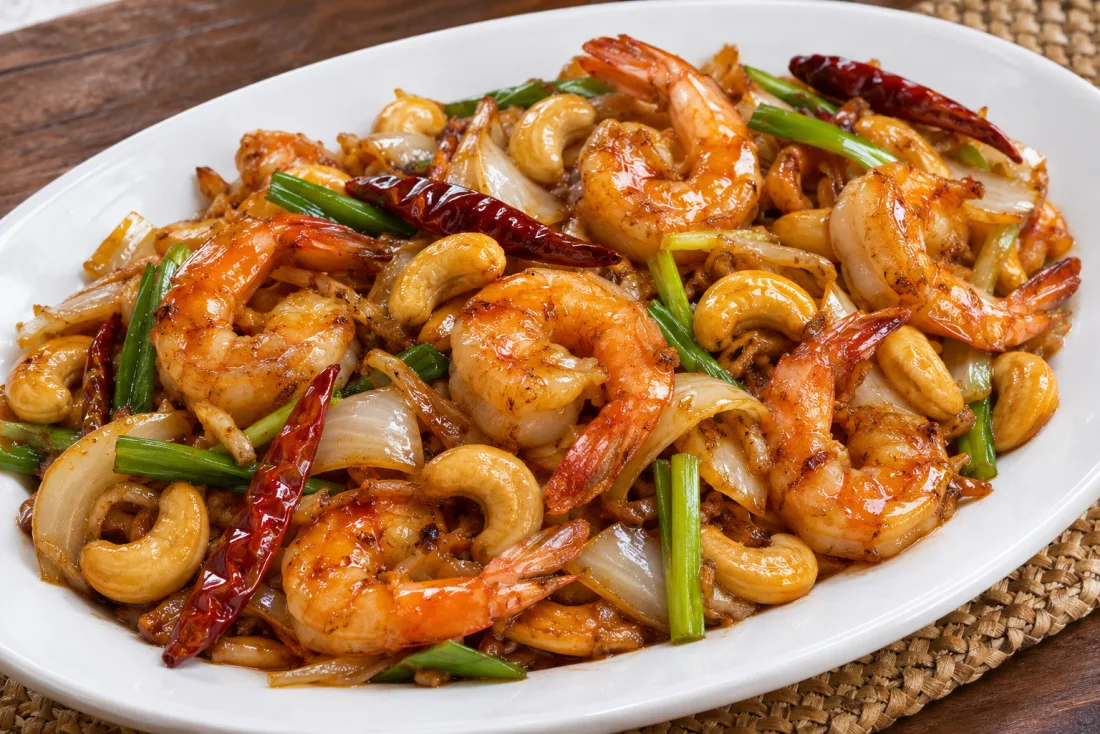

 shrimp
What the Thai name says
Kung is shrimp and met mamuang himmaphan is cashew. The dish uses the kernel. A kitchen may stir-fry the shrimp directly or fry it in a light coating before tossing it in sauce. Read the protein selection when the menu names only the cashew style.
At Thai-Chinese kitchens and restaurants
Cashew stir-fries appear on Thai-Chinese style menus. A Bangkok restaurant offers shrimp as an option, and a shop in Pattaya names it directly. Portions can accompany steamed rice or be shared alongside other dishes. Heat and vegetable combinations vary by kitchen.
Shrimp, cashews and the wok sauce
A Thai recipe uses shrimp, frying flour, roasted cashews, garlic, onion, scallion, sweet peppers, large dried chilies, water chestnuts and ginkgo. Oyster sauce, light soy and sugar build the glaze. Chinese cooking wine and sesame oil give this recipe extra aroma.
Keeping the shrimp and cashews crisp
In the fried version, the shrimp are cooked and drained before the vegetables and sauce are stir-fried. Return the shrimp briefly, adding the cashews near the end. A short final toss helps preserve the batter and nut texture. Steam and sauce soften the coating during takeaway.
Sweet shrimp, toasted nuts and chili
The sauce is usually savory and a little sweet. Shrimp have a light sweetness, while toasted cashews add depth and crunch. Dried chilies add a roasted aroma and variable heat, and sweet peppers give a juicy contrast. Steamed rice takes up the glaze.
Allergens in shrimp, nuts and sauces
Shrimp are crustaceans and cashews are tree nuts. Peanuts are a separate allergen. Oyster sauce can bring molluscs, soy sauce contains soy and may contain wheat, and flour blends can contain egg. Sesame oil brings sesame. Ask about seasoning, shared frying oil and shared woks.
If you have a food allergy, tell the restaurant before ordering and ask about ingredients, sauces and shared cooking equipment.