

What Thai stir-fried water spinach is and where to find it
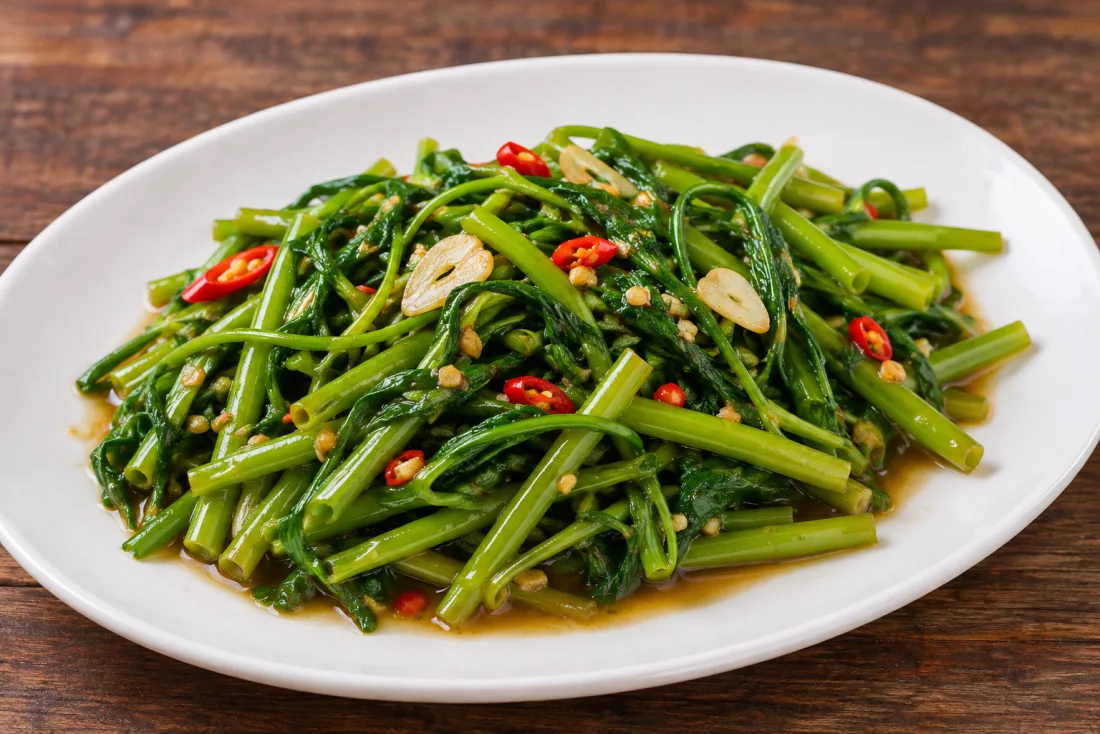
Pad means stir-fry and pak boong means water spinach. English menus often use morning glory as well. Here that name refers to the edible water spinach shoots. A plate usually contains pale stems, darker leaves and pieces of garlic or chilli.
Menus in Bangkok and Phuket list the dish, and a Lampang Vocational College cooking lesson includes the high-heat version. These examples show it in several parts of Thailand, in both restaurant menus and a practical cooking class. They do not establish where it was first made.
Water spinach, garlic, chilli and fermented soybeans
Water spinach has hollow stems that stay crunchy longer than the leaves. Cooks cut the stems into lengths and may leave the tender leafy tips longer. Crushed garlic perfumes the oil and split or chopped chillies flavour the sauce. Coarse pieces of garlic make its flavour stronger in some bites than others.
W. Tipsuwan’s recipe uses Thai fermented yellow soybean paste, light soy sauce and oyster sauce. The soybean paste, tao jiao, gives the dish a fermented savoury note. Soy sauce adds salt and oyster sauce helps the liquid cling to the stalks. Some cooks also use sugar or fish sauce.
Why high heat and a short stir-fry keep the stems crisp
Fai daeng translates literally as red fire. On this menu it indicates a hot wok and quick cooking. One method puts the seasonings on top of the greens and tips everything into the wok. Another starts by frying the garlic and chilli, then adds the water spinach and the prepared sauce. Having the ingredients ready means they can come off the heat as the leaves wilt, while the stalks still have bite.
The thin leaves collapse quickly. Holding the vegetables over heat too long can soften the stems and let water collect at the bottom. Eat it while hot to get the full contrast between crisp stems, soft leaves and a light coating of sauce.
Flavour, chilli heat and what to eat it with
The fermented beans and oyster sauce give the first savoury taste. A small piece of soybean can add texture, and garlic comes through from the hot oil. The vegetable itself has a fresh green flavour and a faint sweetness. Chilli heat can linger, and depends on the variety, the amount and how the chillies were cut.
A little sauce seasons a bite of plain rice. The crunchy greens also go well with grilled meat, fried fish or a rich curry in a shared meal. Say phet noi (เผ็ดน้อย) for less heat, or ask whether the kitchen can leave out the chillies.
Restaurant sauce variations and reading the menu
The Boathouse in Phuket describes its version with chilli, garlic and oyster sauce. The Deck in Bangkok lists fermented soybean paste and soy sauce as well. Both descriptions give a sense of the dish and may leave details to the kitchen. Fai daeng (ไฟแดง) refers to the heat of the stir-fry. Mu krop (หมูกรอบ) indicates crispy pork.
Ask for light seasoning if you want more of the flavour of the greens. For a plant-based version, ask about seasonings without seafood, since oyster sauce or fish sauce is often already mixed into the dish. Recipes sharing a name can differ by kitchen, region or preference.
Soy, wheat, molluscs, fish and shared woks
Fermented soybean paste and soy sauce usually contain soy. Some of those seasonings also contain wheat. Oyster-based sauce can contain oyster, a mollusc, and some kitchens use fish sauce. Ask about the specific sauces and check plant-based oyster-style sauce for soy and wheat if these are relevant.
A wok, spatula or sauce spoon may also touch seafood, meat or wheat-containing sauces. The visible greens and garlic reveal little about those contacts. Name the ingredient you need to avoid and ask about the seasonings and equipment used for your serving.
If you have a food allergy, tell the restaurant before ordering and ask about ingredients, sauces and shared cooking equipment.