
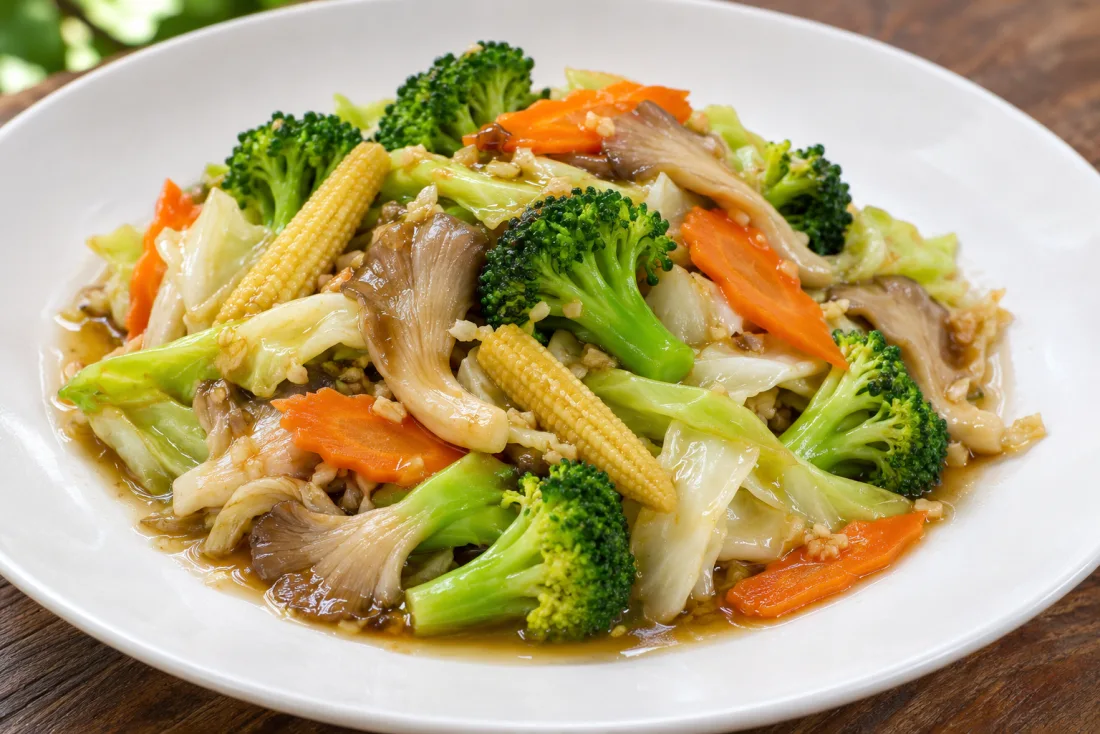

Vegetables used in a Thai mixed stir-fry
Pak ruam means mixed vegetables. The combination varies by kitchen and can include leafy vegetables and mushrooms. Extra protein and stock also vary.
Cooking vegetables by texture
Cut firm vegetables evenly and blanch by type or stir-fry the hardest first. Drain blanched vegetables so they do not dilute the sauce. Add tender leaves late. Garlic, oyster sauce, soy, sugar and water can form a light glaze; a je version uses plant seasonings and vegetable stock.
Crisp vegetables in a savory glaze
Broccoli holds sauce, baby corn and carrot can taste sweet, and pea pods can stay crisp. Garlic and optional pepper bring aroma. The dish generally emphasizes vegetables and savor.
Serving with rice
Serve with rice and other dishes. Divide different vegetables when sharing. Ask whether rice is included and whether a fresh portion can use less sauce or chili.
Water spinach, Chinese broccoli and vegan versions
Pad pak boong highlights water spinach and pad kana highlights Chinese broccoli. Mixed vegetables can include either. For a vegan preparation, check the sauce, stock and shared cookware.
Allergens in sauces and toppings
Oyster sauce can contain mollusks. Fish sauce contains fish, soy sauce may include soy and wheat, and sesame oil adds sesame. Ask about egg or shrimp toppings and about shared equipment.
If you have a food allergy, tell the restaurant before ordering and ask about ingredients, sauces and shared cooking equipment.