
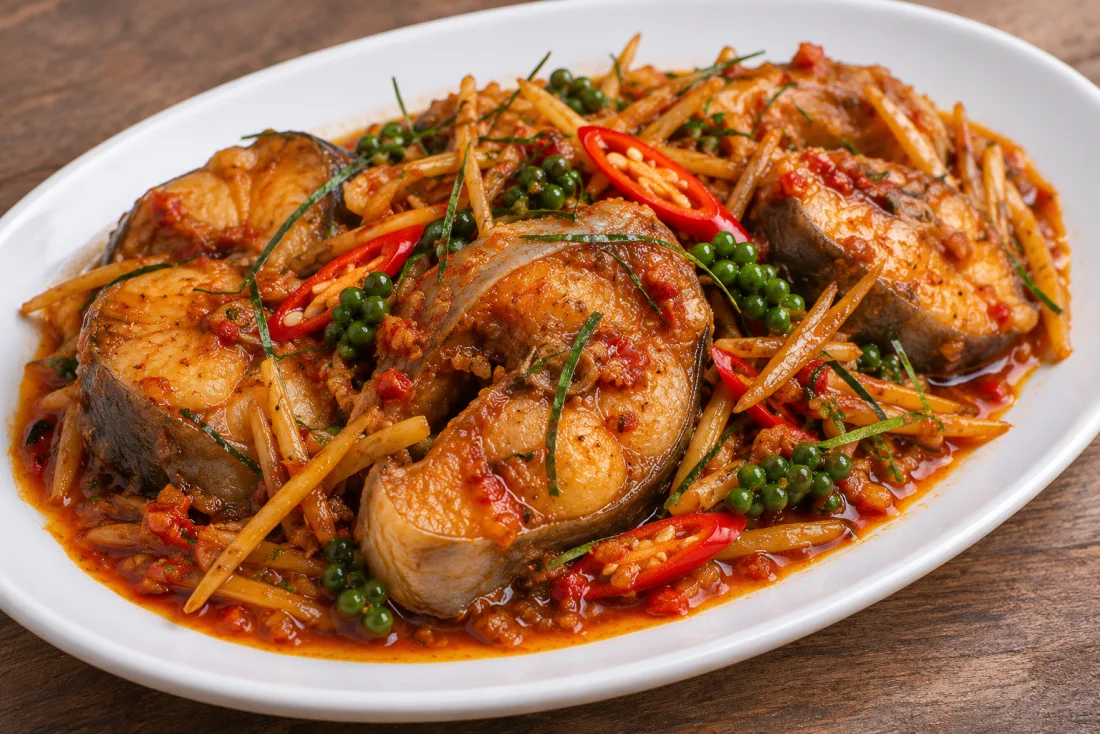

 catfish
Reading the stir-fry names
Pad pla duk means catfish stir-fry. Pad cha emphasizes hot fresh aromatics, while pad phet often uses spicy curry paste. Thick cross-cut pieces can come with chilies, fingerroot and green peppercorn sprigs.
Thai home and restaurant methods
Thai cooks show crisp-fried catfish, red curry paste versions and fish cooked directly in the wok. They can be shared or served beside rice. Sea catfish may be named separately. Check how the kitchen gets its heat.
Fingerroot, peppercorns and sauce
One recipe combines fried catfish with fingerroot, green peppercorns, chilies, Thai sweet basil, fish sauce, oyster sauce, sugar and a little water or stock. A red curry variant can add makrut lime leaves and fried holy basil.
Frying and tossing the fish
Cook fish through, drain fried pieces and toss gently to preserve their shape. Direct stir-frying also requires the thickest pieces to be cooked through. Add herbs late. Keep raw and cooked tools separate and watch for bones.
Spice and rice
Fingerroot and chilies give an aromatic heat, while green peppercorns add their own bite. Fried pieces keep some crispness and fresh pieces are softer. Fish sauce, oyster sauce and sugar give a savory glaze that works with hot rice.
Allergens in catfish and sauces
Catfish and fish sauce contain fish. Oyster sauce can contain molluscs, and curry paste may include shrimp. Soy sauces may contain soy and wheat. Ask about coating, cooking oil, stock and shared equipment.
If you have a food allergy, tell the restaurant before ordering and ask about ingredients, sauces and shared cooking equipment.