
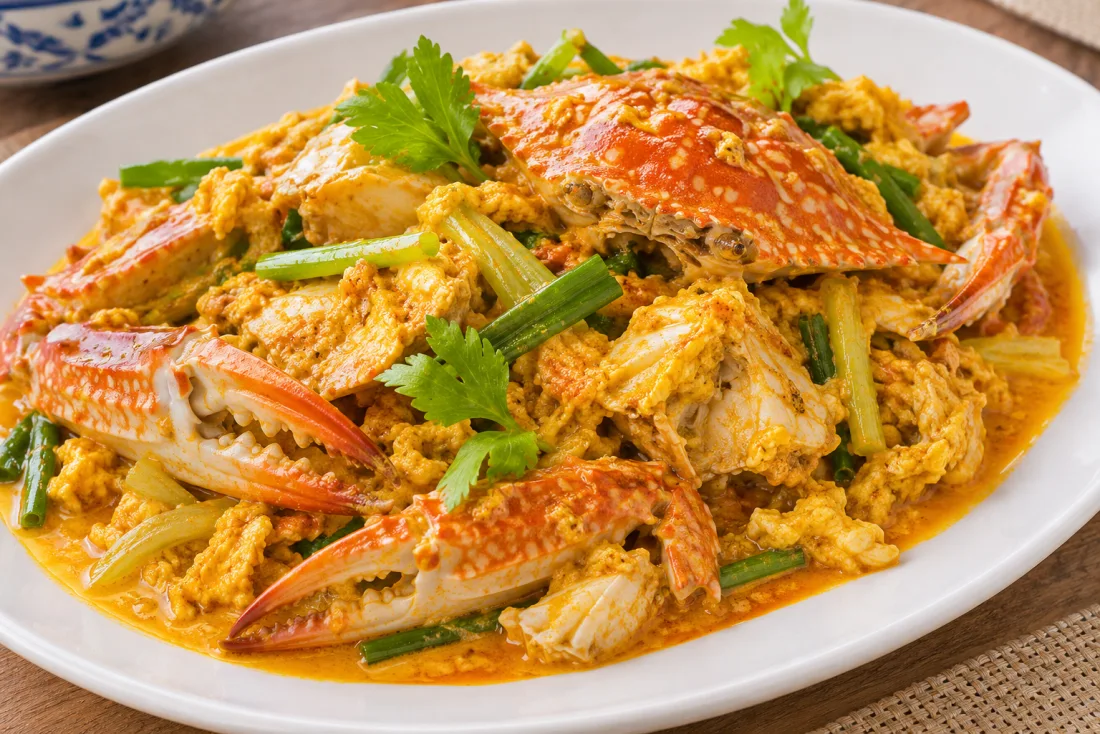

Curry crab and Bangkok seafood restaurants
Pu means crab, pad means stir-fried and pong karee means curry powder. Bangkok’s Somboon Seafood dates its opening to 1969 and documents developing its signature fried curry crab. Its account places the dish in Thai and Chinese-influenced Bangkok restaurant cooking.
Recipes from other Thai cooks show that the curry powder and egg sauce can be prepared in different ways. Check whether a restaurant serves shell-on crab or picked meat.
Crab, curry powder, eggs and evaporated milk
A cook can use chopped crab or picked crab meat. One preparation fries garlic, onion and curry powder, adds crab and a little stock, then uses scallion and celery for aroma. Shell-on crab can include claws. Picked meat can be eaten directly with a spoon.
Beaten egg and evaporated milk can set in soft curds in the sauce. Roasted chilli paste or its oil adds color and aroma. Cooks may mix the egg sauce first or cook it after taking out the crab. The remaining seasonings vary.
Curry aroma, sweet crab and soft curds
Curry powder gives a warm aroma, with sweet crab and savory seasoning underneath. Egg gives the sauce body, and evaporated milk makes it smoother. Soft onion, scallions and celery bring additional flavors. Roasted chilli oil can add a little sweetness and heat.
The color does not indicate heat. Ask whether chilli sauce or red chilli can be adjusted, and try a spoonful with rice to taste the sauce and crab separately.
Sharing with rice and handling the shells
A large plate can be shared with rice, which takes up the soft egg sauce. Open the claws separately if the crab is shell-on. Picked meat can be eaten by the spoonful with sauce and onion.
Restaurants may sell whole crab by size or weight and picked crab by the plate. Ask about the portion and whether steamed rice comes with it. Try a piece of crab on its own before mixing some into the rice. If sizes vary, ask how many diners a portion serves.
Curry powder crab and coconut curry
Pong karee points to curry powder and a commonly used egg-and-milk sauce. A southern crab curry with wild betel leaves uses coconut milk and curry paste. The names and sauces help distinguish the crab dishes.
Some kitchens use the curry-powder method with shrimp, squid or mixed seafood. A published variant combines it with egg noodles. Ask about any dairy, egg, coconut and shells when the menu is brief.
Allergies in crab, egg, milk and sauces
Crab is a crustacean. The sauce often uses egg and evaporated milk. Roasted chilli paste may contain shrimp, fish sauce may contain fish, and oyster sauce may contain mollusks. Soy sauce can contain soy and wheat.
Ask about crab, egg, milk, chilli paste and other seasonings. Woks and crab utensils can be shared with other seafood. Taking out the shell or crab leaves ingredients already cooked in the sauce.
If you have a food allergy, tell the restaurant before ordering and ask about ingredients, sauces and shared cooking equipment.