

 pork neck
 dried shrimp powder
 fish sauce
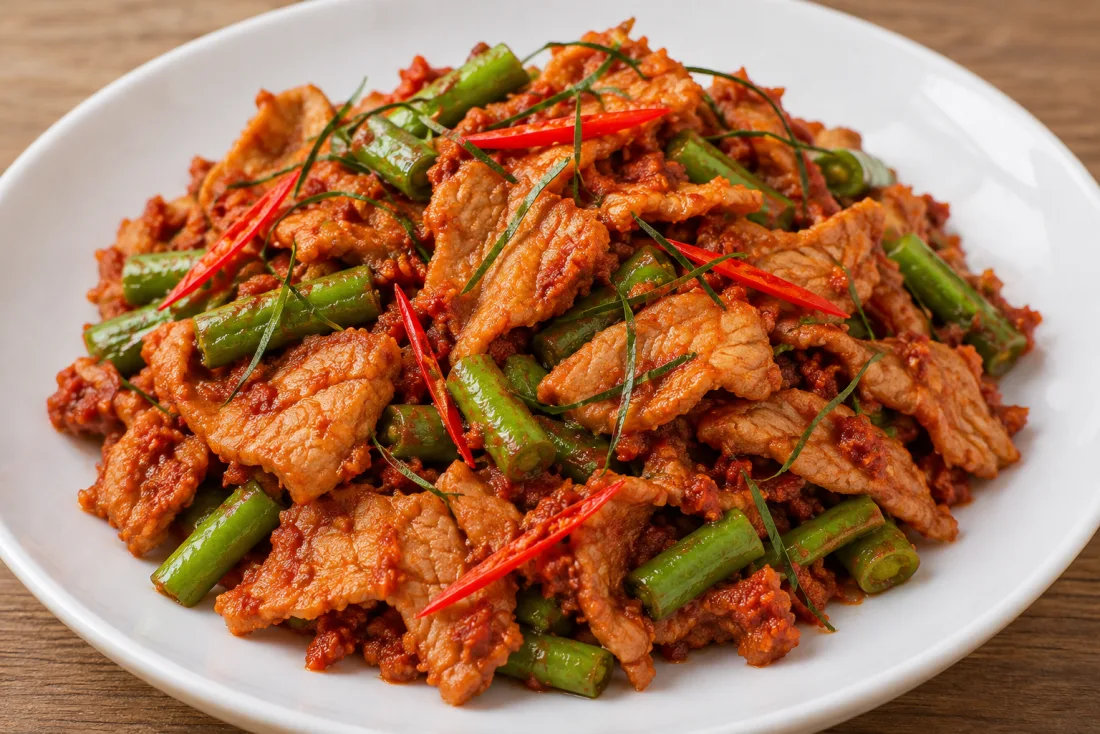
Pork and long beans in a dry curry stir-fry
Moo means pork and prik khing is a paste and stir-fry style. Thai recipes include pork neck or lean slices with long beans and a little sauce. Crispy pork belly and crackling are named alternatives.
Frying the paste and adding the pork
A Thai recipe combines red curry paste with ground dried shrimp, fries it, then cooks pork. Add blanched long beans, fish sauce, palm sugar, chili and fine lime-leaf strips. Some recipes use a splash of water.
Savory pork, crisp beans and fragrant leaves
Pork neck can be rich, the pods can remain crisp, and dried chili paste coats each bite. A little palm sugar rounds the heat and salt, while makrut leaf adds citrus fragrance.
Serving with steamed rice
Share pork and beans before adding sauce to rice. Ask whether rice is included and whether the quantity of paste can be reduced. Moving the garnish does not remove chili from the paste.
Ginger stir-fry, coconut curry and crackling
Pad khing focuses on ginger strips. Prik khing uses a chili paste and can overlap with pad prik gaeng. Coconut red curry has more liquid. Crackling or crispy pork changes the pork texture.
Allergens in shrimp, fish sauce and seasonings
Dried shrimp and shrimp paste contribute crustaceans. Fish sauce contains fish. Oyster sauce can contain mollusks; other sauces can contain soy and wheat. Milk or egg depends on the serving. Ask about shared pans, grinders, boards and oil.
If you have a food allergy, tell the restaurant before ordering and ask about ingredients, sauces and shared cooking equipment.