

 beef
 fish sauce
Chili and ginger in the name
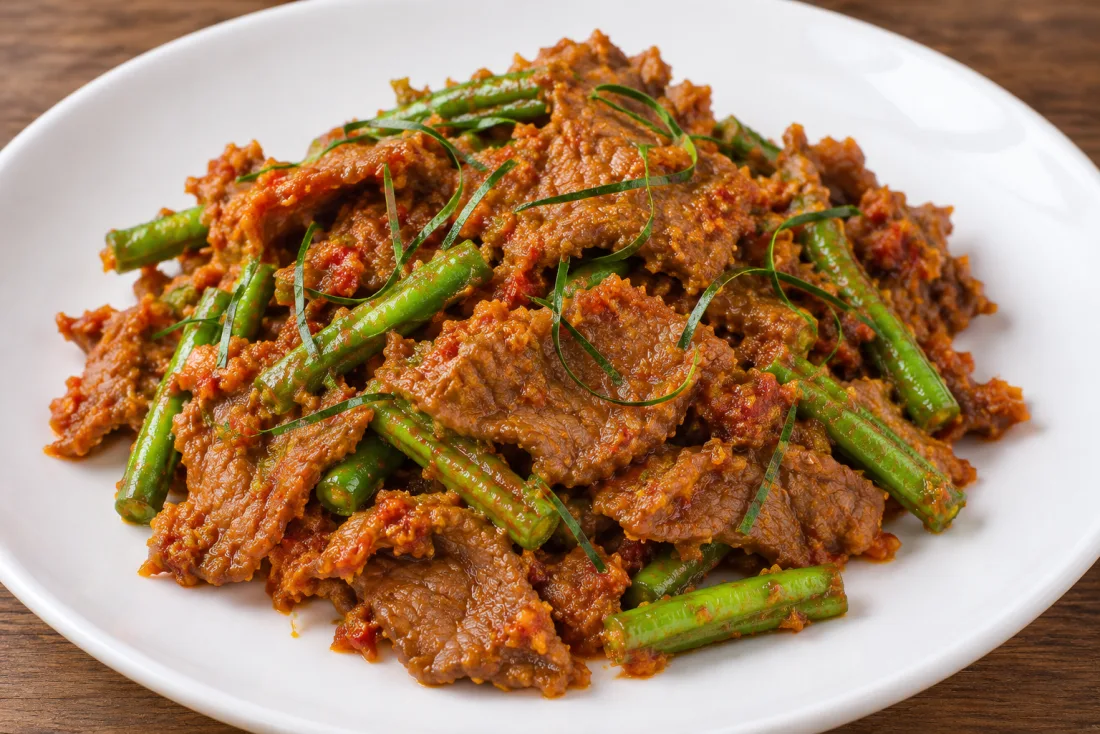
Neua identifies beef. Pad prik khing describes a style of curry-paste stir-fry. One Thai beef recipe uses red curry paste, long beans and lime leaves without separately adding fresh ginger. Other kitchens can use ginger. The paste gives the beef a more concentrated coating than a bowl of coconut curry.
At Thai restaurants and rice counters
Thai restaurant menus list pad prik khing beef over rice or as its own dish. It can also come in a plate to share. Beef cuts and chili strength vary, and it is worth distinguishing fresh chili beef from the ground curry-paste version when a menu is abbreviated.
Beef loin, long beans and red curry paste
One Thai recipe uses beef loin, long beans, red curry paste, fish sauce, palm sugar, makrut lime leaves and red chili. The author adds shrimp paste and uses teriyaki sauce in the marinade. That marinade is specific to the example. Lime leaves add citrus fragrance and beans bring crispness.
How the paste coats the beef
A cook can blanch the beans and drain them first. Fry the curry paste in oil, add the sliced beef, then loosen the sauce with just enough water to coat the ingredients. Fish sauce and palm sugar season the sauce. Toss in the beans and add finely sliced lime leaf near the end.
Spice perfume and the sweet-salty balance
The wok gives the paste a cooked spice fragrance, while the lime leaf adds a bright aroma. The sauce is savory, sweet and hot, with tender meat and firm beans. The paste itself can be hot even without more fresh chili. Rice helps distribute the concentrated sauce.
Allergens in paste, fish sauce and marinades
Shrimp paste contains crustaceans, and fish sauce contains fish. Teriyaki and other soy-based marinades can contain soy and wheat. Some kitchens add oyster sauce or serve a fried egg. Check the actual curry paste, marinade, stir-fry sauce and cookware.
If you have a food allergy, tell the restaurant before ordering and ask about ingredients, sauces and shared cooking equipment.