

 beef
 fish sauce
What the name describes
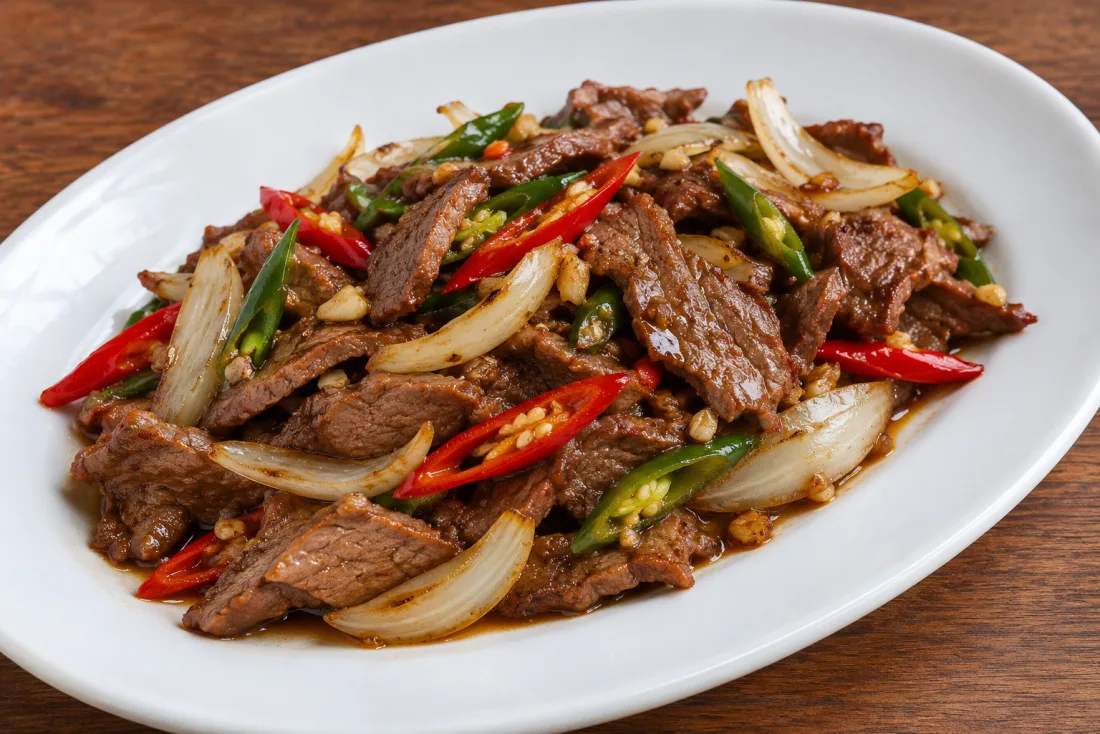
Pad prik neua names beef cooked with chili. Prik sot specifies fresh chili and prik yuak points to a long, mild pepper. This example uses fresh peppers rather than relying on a ground curry paste. Menus may separately list curry-paste stir-fries or black pepper dishes.
Thai restaurants and rice plates
Thai menus can list the same stir-fry method with different proteins. A Bangkok restaurant has a beef chili dish, and a made-to-order shop puts fresh chili beef over rice and mentions occasionally adding long beans. Portions can also be ordered as shared rice accompaniments.
Beef rump, peppers and sauces
One Thai chef uses thick-cut beef rump, mild long peppers, red and yellow spur chilies and garlic. Fish sauce, oyster sauce, seasoning sauce and a little sugar build the flavor. Long beans or onion can appear in other versions.
Timing beef and peppers
Scent the oil with garlic, then stir-fry the beef and season it. Adding the fresh peppers late keeps some bite. Some cooks set the beef aside briefly and return it after the peppers are ready. A little water loosens the sauce when desired.
Sweet pepper and savory beef
Fresh peppers range from gently sweet to hot. Beef, oyster sauce and fish sauce give strong savory flavor, with a little sugar to round it out. Rice absorbs the sauce, and a fried egg can accompany some rice plates.
Allergens in the sauces
Fish sauce brings fish, oyster sauce can contain molluscs, and seasoning sauces or soy sauce can contain soy and wheat. Check any marinade as well. Adding a fried egg brings egg. Curry-paste dishes can contain shrimp paste. Ask about shared utensils and wok use.
If you have a food allergy, tell the restaurant before ordering and ask about ingredients, sauces and shared cooking equipment.