
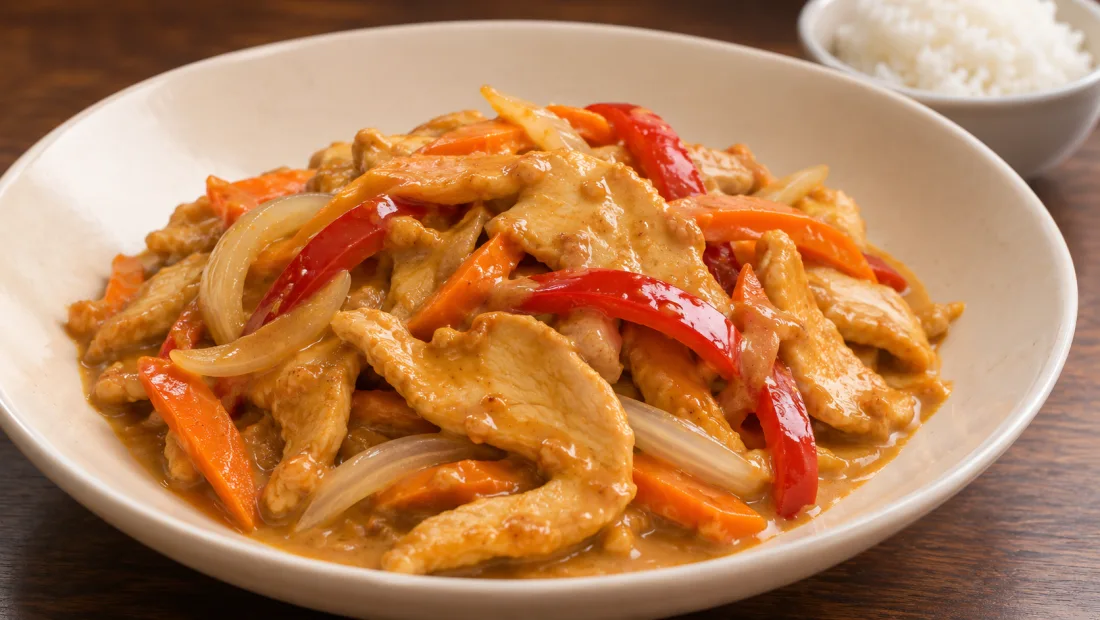

 chicken
What goes into the wok
Phat means stir-fried. Satay often describes grilled skewers with sauce. In this dish the sauce coats hot stir-fried ingredients. Thai restaurant menus may name it Pad Satay or Satay Sauce. The Thai municipal activity lists the dish name but does not establish its ingredients.
Chicken, vegetables and sauce
Examples include sliced chicken, beef and mixed vegetables. Produce chosen by each cook may include carrot, peppers, baby corn or peas. The characteristic sauce is peanut-based. A documented Thai satay dipping sauce also uses coconut milk, curry paste and tamarind, which should not be assumed in every stir-fry.
Taste and texture
A thick sauce clings to vegetable edges and tastes nutty, sweet and savoury. Hot sauce may carry gentle spice or a tart note depending on the recipe. Chicken should be tender after cooking. Some versions leave sauce below the vegetables, while others coat them lightly. Steamed rice is a possible side.
Where the dish is found
A northern Thai public event lists the dish. Thai restaurants abroad, including a Melbourne restaurant, document versions of the mixed vegetable, meat and peanut sauce stir-fry. These menus do not give a single origin or a national popularity ranking. Ask which sides and sauce options the shop offers.
Skewers, cold salads and rice
Grilled satay is served on sticks, usually with a dipping bowl. This hot stir-fry is already coated. A chilled peanut vegetable salad has a different preparation and temperature. Here the rice is served alongside if selected.
Allergens and vegetable versions
Peanuts are in the representative sauce. Ask about soy, wheat, fish, crustaceans, molluscs or dairy in sauce and curry paste. Coconut milk is separate from cow’s milk. Vegetables alone do not establish a seafood-free sauce. Check shared woks, utensils and sauce containers.
If you have a food allergy, tell the restaurant before ordering and ask about ingredients, sauces and shared cooking equipment.