
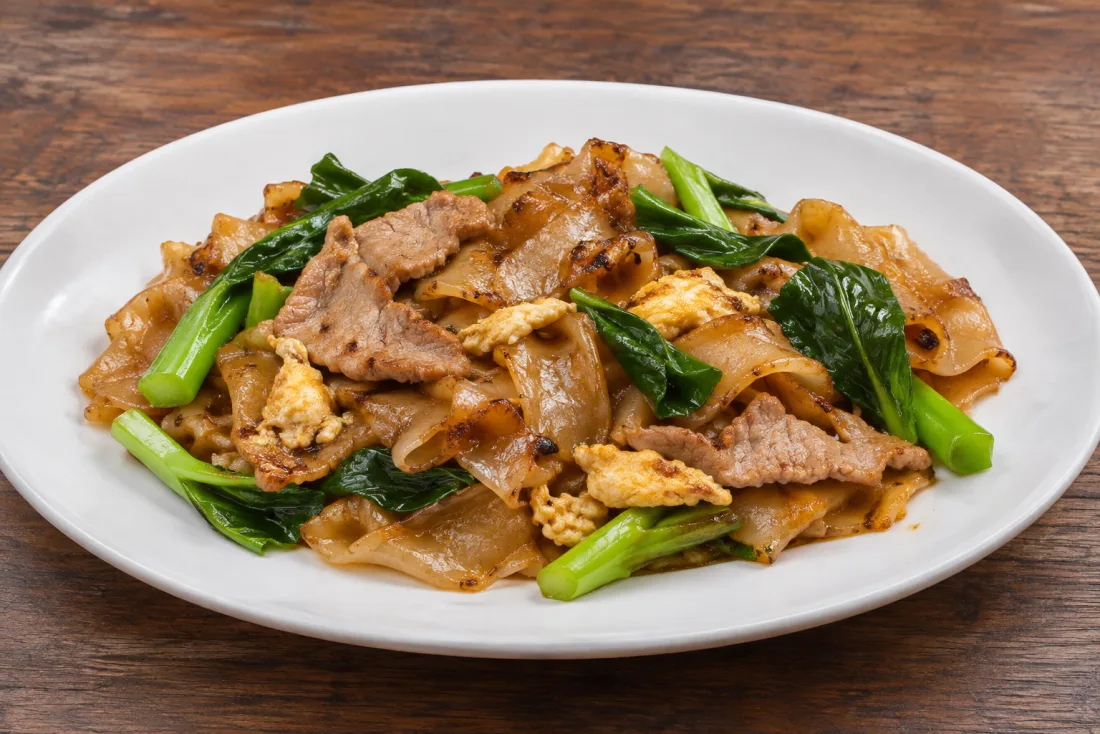

What the name means and where you find it
Phat means stir-fried, and si io means soy sauce. The phrase names a method and seasoning that can also be used with thinner rice noodles or egg noodles. Menus may spell it Pad See Ew or Pad Si Ew. Check the noodle and protein when ordering.
Thailand’s Ministry of Foreign Affairs describes a chicken version in its coverage of Thai food. Pailin Chongchitnant writes about eating wide rice noodles as street food and encountering an egg noodle version in southern Thailand. Those records document ways to serve it, without settling who invented it or when.
The roles of noodles, greens and sauces
Sen yai are soft, wide, fresh rice noodles that take on the sauce. Chinese broccoli has tender leaves and crisper stems. Pieces of egg sit between the noodles and greens, while slices of chicken, pork or another protein may add a fuller bite.
Pailin’s recipe uses garlic, egg, Chinese broccoli and fresh rice noodles. Its sauce includes oyster sauce, regular soy sauce, Thai black soy sauce, fish sauce and seasoning sauce. The black soy sauce contributes colour, while the sauce mixture determines the overall saltiness and savoury flavour.
How the noodles get their seared edges
Fresh noodles can stick in a crowded pan. One reference method cooks the protein separately, then fries garlic, egg and Chinese broccoli before giving the seasoned noodles brief contact with the hot pan. This gives ingredients with different cooking needs their own time and can leave the edges more toasted than the centre.
Both the sauce and the searing affect the colour. Dark noodles can still be soft and supple, while a lightly charred edge may feel drier. The thickness of noodles and size of each cooking batch change the contrast.
Savoury flavour and table condiments
Start by tasting the soy-based sauce, the chew of the noodles, the crunch of Chinese broccoli and the egg. Garlic and some toasting add depth to the sweet-savoury seasoning. Prik nam som, or chilli vinegar, is a separate condiment in Pailin’s recipe and can add tartness and heat.
Taste first before adding chilli vinegar, dried chilli or fish sauce at the table. They contribute different things: acidity, heat or salt. The dark colour of the dish alone does not tell you how much chilli a cook used.
Common variations and what to order
Sen yai usually means wide rice noodles; sen mee means thinner rice vermicelli. Thin strands and wide sheets hold the sauce differently. Pailin also describes a southern version using mee lueang, or yellow egg noodles. The noodle choice can change what the dish contains.
Chicken or pork are possible choices, and some cooks also use shrimp or tofu. Ask which noodles are used and whether the protein and chilli vinegar are included, especially if you had a particular wide noodle version in mind.
Allergens in noodles, sauces and the wok
Rice noodles do not tell you what is in the sauce. Soy sauce may contain soy and wheat. Oyster sauce made from oysters involves a mollusc, and fish sauce usually contains fish. The stir-fry can contain egg. Egg noodles may also contain egg and wheat, and a shrimp version adds a crustacean ingredient. A tofu option may still use fish or oyster sauce.
Ask about noodle labels, premixed sauces and any marinade. Also ask whether woks, spatulas and condiment stations are shared. Removing visible pieces leaves the sauce already on the noodles. If staff cannot confirm the ingredients, use your own allergy requirements to decide.
If you have a food allergy, tell the restaurant before ordering and ask about ingredients, sauces and shared cooking equipment.