

 chicken
 fish sauce
Why the lemongrass is cut thin
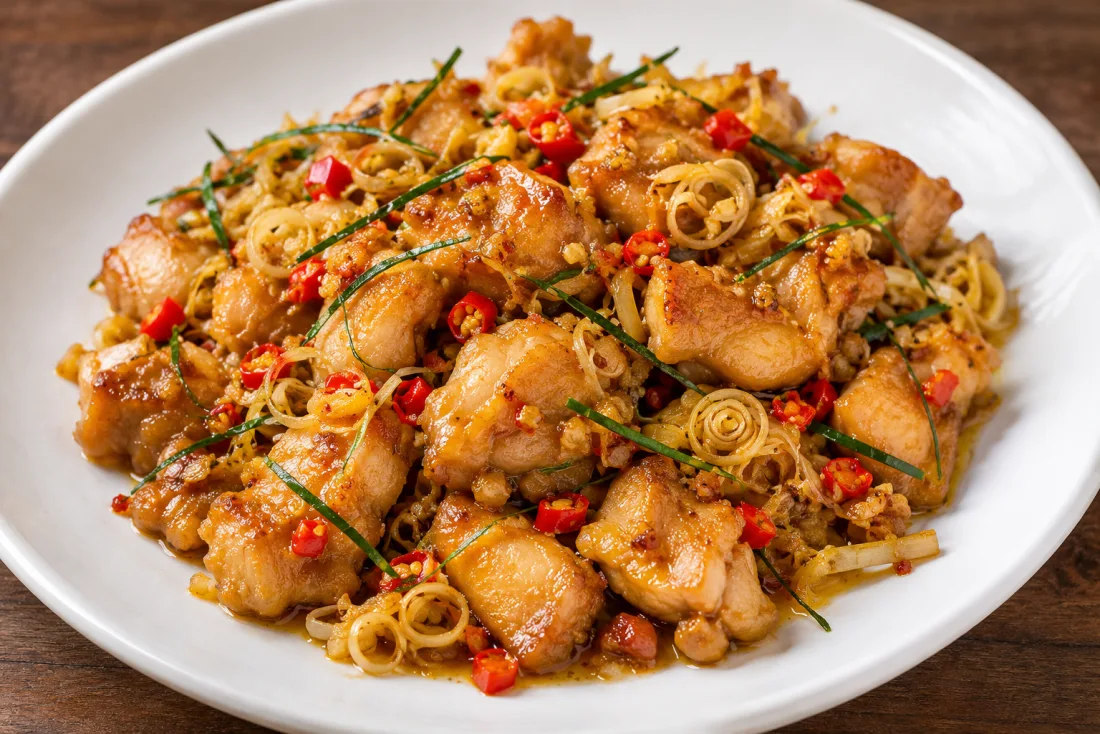
Phat takrai means lemongrass stir-fry, and kai identifies chicken. The tender lower stem can be finely sliced or pounded instead of being left in large pieces. Pale lemongrass rings and dark green makrut lime leaves can both appear. A menu that omits kai may use another protein.
From a Thai kitchen to a rice plate
Thai cooks document chicken stir-fried with lemongrass, including an Isan-labeled home version. These show several ways of making the dish. It can come as a shared stir-fry or as chicken and rice with cucumber. Breast and thigh can both be used.
Chicken, lemongrass and makrut lime leaf
A representative Thai recipe uses chicken, lemongrass, garlic, fresh chili, fish sauce, oyster sauce, sugar, dark soy sauce and makrut lime leaf. Pounded aromatics add fragrance and liquid seasonings lightly coat the meat. The leaf smells citrussy and does not necessarily give the dish a lime-juice tartness.
Fry the aromatics and cook the chicken through
Peel away the tougher lemongrass layers and slice the tender base. Briefly fry aromatics, add chicken pieces and cook them through before finishing the seasoning. Keep raw-chicken tools apart from cooked food. Add torn lime leaf near the end to keep its fragrance.
Citrus aroma and a savory finish
Lemongrass gives a bright leafy citrus note, while lime leaf adds fragrance of its own. Chili heat depends on the type and amount. Fish sauce and oyster sauce give depth, and rice catches the light seasoning. Thin tender stems remain gently crisp.
Allergens in the stir-fry seasonings
Fish sauce contains fish, oyster sauce can contain mollusks, and soy sauce can contain soy and wheat. Shrimp paste adds a crustacean allergen where used. Ask about premixed sauce and whether the wok or serving tools are shared with other dishes.
If you have a food allergy, tell the restaurant before ordering and ask about ingredients, sauces and shared cooking equipment.