
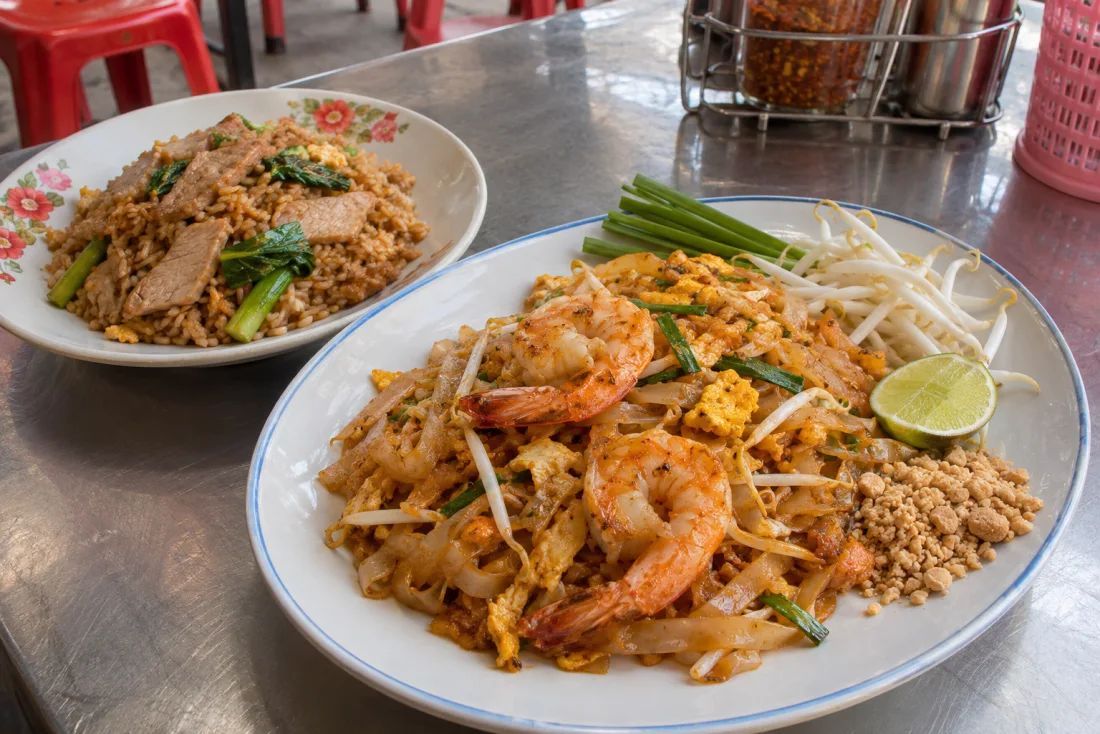

 cooked shrimp
How noodle shops build a set
Kung sot refers to the fresh shrimp used as an ingredient, which arrives cooked. A Don Mueang shop combines it with traditional railway fried rice and a choice of protein. Another Bangkok shop offers it with a fried mussel pancake.
Rice noodles, shrimp and sweet-sour sauce
Flat rice noodles take up a tamarind, sugar and savoury sauce. Egg, bean sprouts and chives bring texture. Lime and peanuts often come to the side. Some recipes add tofu, preserved radish or dried shrimp.
Cooking the two dishes separately
The noodles and shrimp are wok-fried until the noodles are pliable and the shrimp cooked through. Railway rice is fried separately with its protein and vegetables. A mussel pancake is pan-fried on its own so the edge stays crisp.
How the accompaniments taste
Tamarind is gently fruity and sour, with a sweet and salty finish. Railway fried rice gives a savoury spoonful between bites. Mussel pancake brings a crisp edge and tender shellfish, sometimes with a separate chilli dip.
Two finished combinations
One service puts the noodles next to a separate small plate of railway fried rice. Another serves the noodles and a golden mussel pancake together with dip. Exact protein, serving size and garnishes depend on the shop.
Allergens in the whole set
The shrimp are crustaceans. Pad Thai can also contain egg, peanuts, soy and fish sauce. The mussel pancake adds molluscs, and batter or sauces can contain wheat. Ask about both plates, dips and cross-contact at the wok or frying surface.
If you have a food allergy, tell the restaurant before ordering and ask about ingredients, sauces and shared cooking equipment.