

 beef
 fish sauce
Beef in the Thai panang family
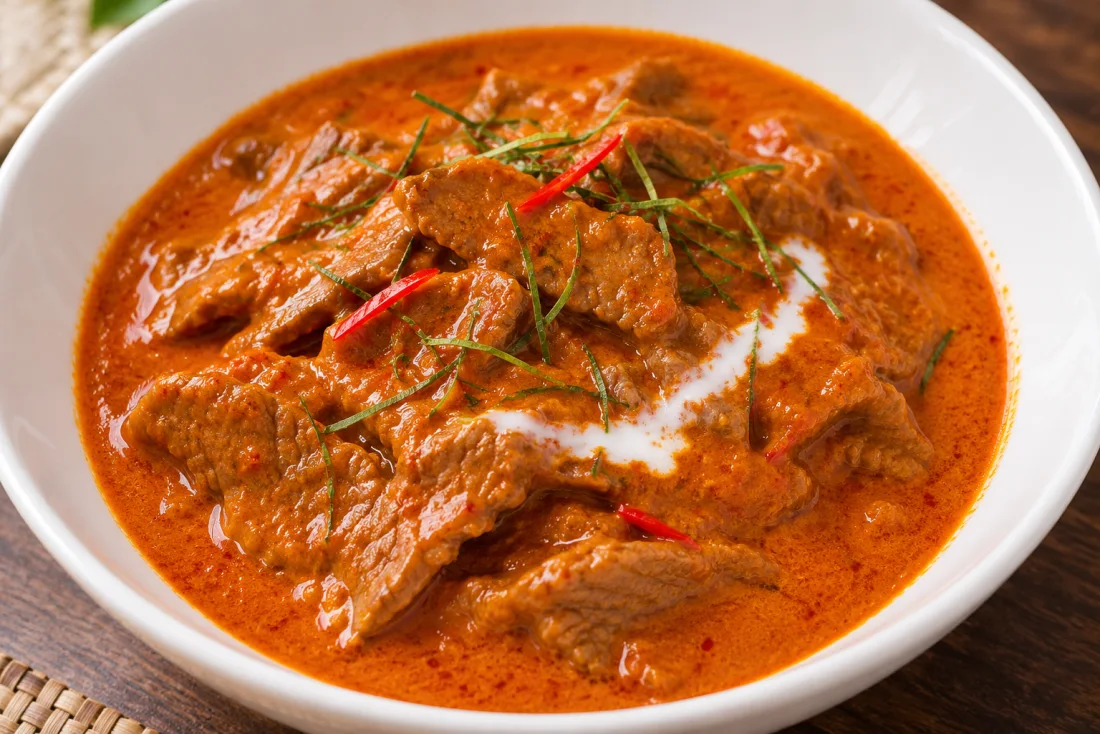
Neua means beef. Panang is a Thai coconut curry with just enough thick sauce to coat the meat. Thai chefs document both thin beef slices and thicker pieces with pea eggplant. The menu name leaves room for differences in paste and chili.
Reducing coconut milk and coating the beef
Fry the curry paste in reduced coconut milk and add toasted cumin, coriander and peanuts where used. Tear some makrut leaves for the sauce and slice more for garnish. Thin beef can cook quickly, while another version uses thicker cuts, pea eggplants, fish sauce and palm sugar.
A rich sauce with spice and lime leaves
The sauce coats the beef, with a clear citrus leaf aroma and warm dried spices. Ground peanuts can add body without obvious pieces. Palm sugar balances fish sauce. Thin or thick cuts and pea eggplants change the bite.
Serving with steamed rice
Put beef and a little sauce over rice. Set tough leaves aside or eat fine strips. Order rice separately if needed and ask whether heat can be adjusted. Removing chopped chili garnish leaves the chili that is already in the paste.
Panang, red curry and massaman
Red curry can be more soupy, while panang has a thicker coat and prominent makrut lime. Massaman often uses potatoes, onion, tamarind, warm spices and peanuts. Look at the sauce, ingredients and Thai name rather than the beef cut alone.
Hidden peanut, fish and shrimp allergens
Ground peanuts may be present without pieces, and their use varies by paste. Fish sauce contains fish and shrimp paste adds crustaceans. Declare coconut allergy and ask about soy or wheat. Check marinades, garnishes and shared grinders, pans and ladles.
If you have a food allergy, tell the restaurant before ordering and ask about ingredients, sauces and shared cooking equipment.