

 pork intestine
 shrimp
Why the dish has rings
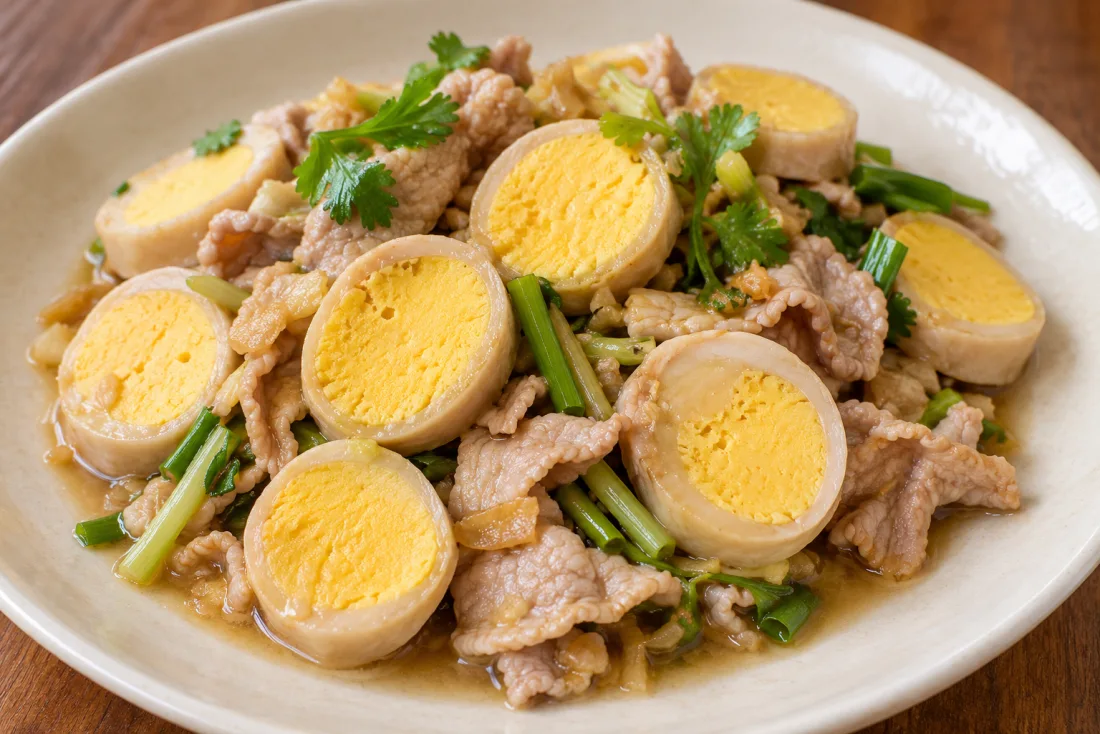
Phat means stir-fried and huang means a ring. The old recipe makes duck egg rounds in an edible pork casing. The slices show a pale yellow center and a thin outer rim. They go into the stir-fry with pork, prawns and peppers.
An older Thai stir-fry
A historical Thai cookbook records the egg rounds and their stir-fry accompaniments. This documented preparation uses more advance work than ordinary scrambled egg. Availability depends on the kitchen. Share with rice and other dishes.
Duck egg, pork, prawn and pickled garlic
The original lists pork, prawns, duck eggs, pork intestine, green and red chilies, pickled garlic, fresh garlic and lard. Traditional shrimp seasoning flavors the egg. Pickled garlic brings a mild acidity. Kitchens can vary the chili and frying oil.
Use suitable casings and cook all ingredients through
Use a properly handled food-grade casing and keep raw and cooked tools separate. Cook the egg-filled casing through before slicing. Cook the pork and shrimp thoroughly before serving with the peppers and garlic. Color alone cannot establish doneness.
Soft egg and a sharp garlic finish
The egg center is tender and the casing gives a gentle chew. Pork is savory, cooked shrimp sweet and springy, and pickled garlic gives a tart-sweet finish. Green and red peppers add freshness. Rice catches the stir-fry juices.
Allergens in the rings and stir-fry
The historical recipe contains egg and crustaceans. Fish, wheat, soy or oyster may appear in alternative sauces. Pork casing, meat and lard also matter to diners avoiding pork. Ask about ingredients and utensils separately.
If you have a food allergy, tell the restaurant before ordering and ask about ingredients, sauces and shared cooking equipment.