

 minced pork
 fish sauce
A familiar cooked-to-order Thai rice dish
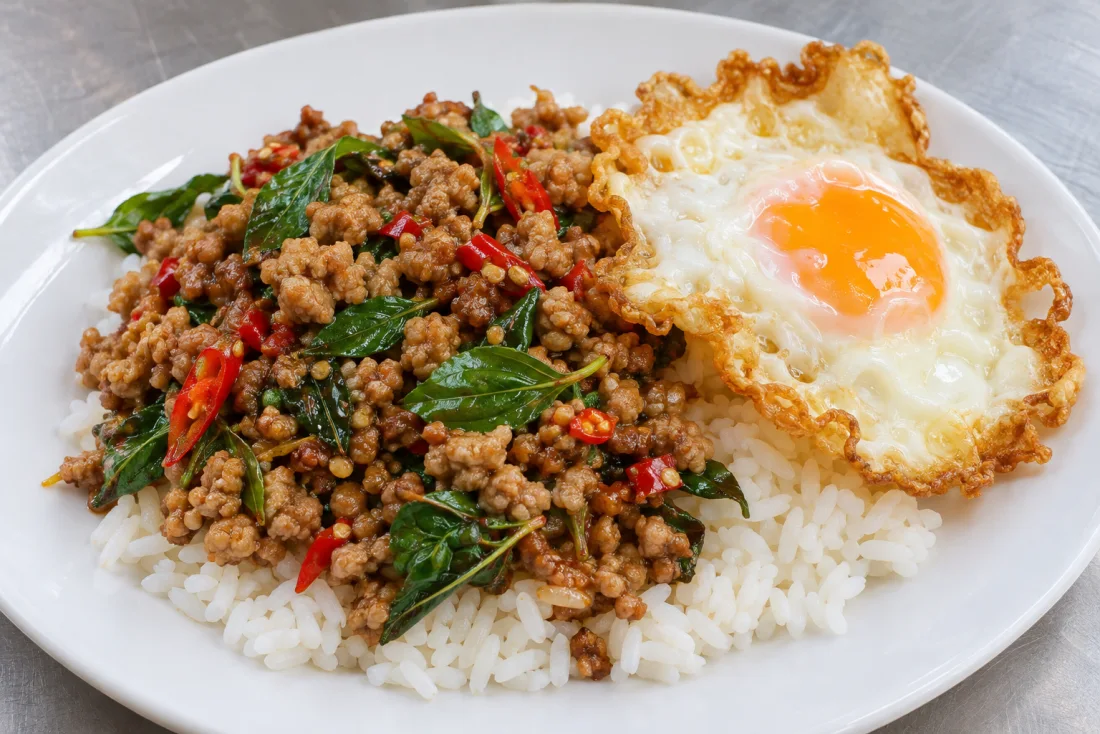
Pad means stir-fried, krapao means holy basil and moo means pork. Holy basil is the central herb. A menu that says Thai basil pork may leave which herb is used unclear. The Thai name specifies holy basil.
This stir-fry fits Thailand’s cook-to-order food stalls and restaurants. The kitchen can wok-cook the meat and herbs for each order and send them out with rice. Thai cooks also present it as a quick meal. That helps place it in everyday dining without establishing a single city as its birthplace.
Pork, crushed garlic, chilli and holy basil
Minced pork breaks into pieces in the pan. Lean pork gives a firmer bite, while a little fat adds richness. Some cooks mince a mix of collar and tenderloin, and others buy the pork already minced. Fresh or dried chilli can be crushed with garlic and cooked in oil with the pork.
The pork is cooked through. Fish sauce and a little sugar are one option, while recipes can also add soy sauce, oyster sauce and a little water. Some plates are fairly dry and others come lightly sauced. Holy basil can go in just before the pan comes off the heat, wilting the leaves and keeping their aroma apparent.
Holy basil aroma, chilli heat and a little sauce
Garlic and holy basil are often apparent first, then the heat of the chillies. Holy basil can smell peppery and fragrant, alongside the savory pork and fish sauce. Fresh chilli can taste brighter, while dried chillies can have a warmer, toasted aroma.
Dry-style mince can have browned edges and distinct pieces. A little more sauce will season more of the rice underneath. Some cooks add a little sweetness to take the edge off the stronger flavors. Ask separately about the chilli in the stir-fry and in any chilli fish sauce served at the table.
Why rice and a fried egg often come with it
Holy basil pork over rice is a familiar single-plate meal. Plain rice takes up the juices and spreads out the salt and heat. A Thai-style fried egg can add crisp white edges and a richer yolk to the spicy pork. Chicken or duck eggs can appear in that role.
A plate to share as a side dish can be ordered at some restaurants and eaten with rice and vegetables. Check whether rice or egg is included if the menu has several versions. Taste a bite before adding chilli fish sauce if you want to notice the fresh basil.
Minced, crispy and other menu variations
Moo sap identifies minced pork and moo krop identifies crispy pork. Moo by itself can also mean sliced pork. Crispy pork has a distinct fatty and crisp layer, while mince mixes readily with rice. Kai dao on the menu specifies fried egg. The exact egg and price depend on the restaurant.
Horapha is the Thai name for a sweet basil used in other dishes. Its aroma is sweeter than that of holy basil. If an English menu says only basil, the additional word krapao is a useful clue. Some cooks add long beans or other vegetables for crunch, alongside the basil, garlic and chilli.
Allergies in the sauces, egg and wok
Fish sauce usually contains fish. Oyster sauce can contain mollusks such as oysters. Soy sauce contains soy and can contain wheat. A fried egg adds egg, while any chilli fish sauce needs a separate check. The brown color of the meat or a spice label does not identify the seasonings.
Tell the kitchen what you need to avoid and ask about shared woks, spatulas and frying oil. Removing an egg or a separate condiment cannot remove ingredients already cooked into the pork. The kitchen can say whether the order can be prepared separately.
If you have a food allergy, tell the restaurant before ordering and ask about ingredients, sauces and shared cooking equipment.