
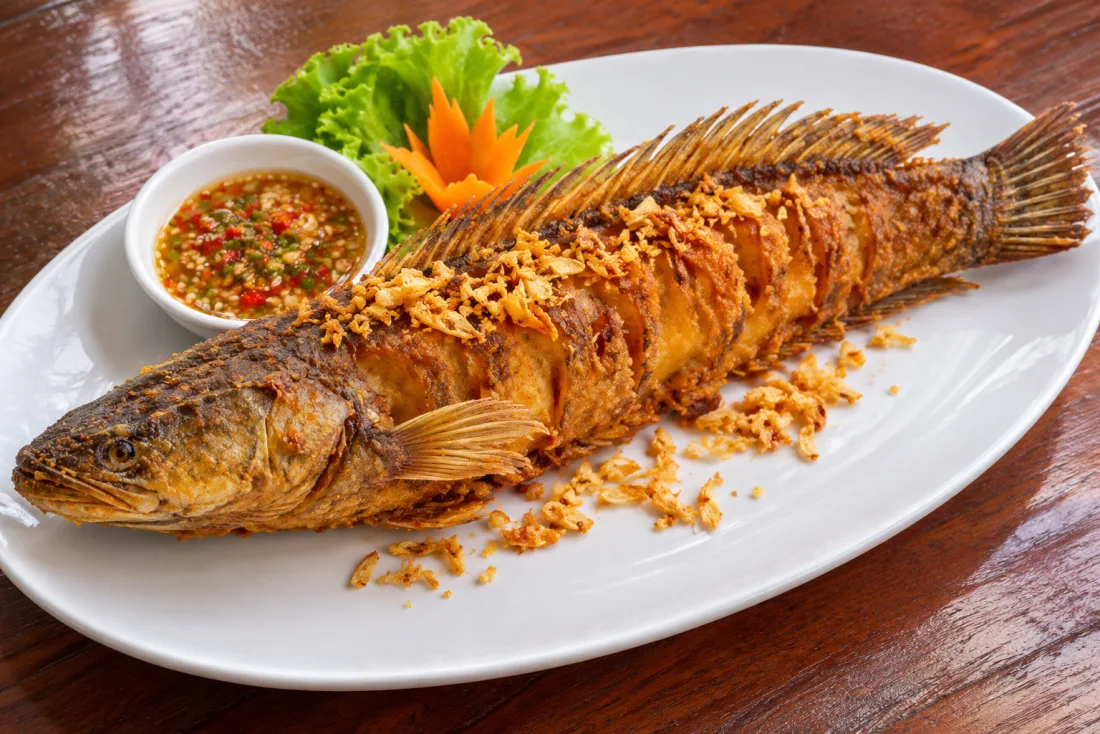

 snakehead fish
Identifying the fish and preparation
Pla chon is striped snakehead, and thot means fried. A Thai menu can add krathiam to identify garlic. Whole fish and cross-cut steaks are both used. The flesh remains in pieces with its natural grain.
Serving it at Thai tables
Thai recipes include whole garlic-fried fish and simple fried steaks. A whole fish can also be dressed with tangy Thai herbs. It is commonly shared or eaten in portions with steamed rice. Ask whether the sauce is poured on or served separately.
Fish, garlic and coatings
One Thai preparation uses snakehead, salt, garlic, frying flour and oil. Garlic can be fried and scattered over the fish. Other recipes use fish sauce, soy, chilies or lime. Cashews may appear in a dressed herb-salad variation.
Cooking whole fish or steaks through
Dry the surface before frying. A whole fish can be scored so the thick parts heat more evenly. Cook through until the flesh is opaque and flakes. Browning alone does not establish doneness. Drain and watch for bones when serving.
Crisp skin and firm flesh
The skin is crisp, with a firm, lightly sweet interior. Fried garlic lends a toasted fragrance. A chili-lime dip gives a bright contrast and can be served separately to preserve crispness.
Allergens in fish, coatings and sauce
Snakehead contains fish, as does fish sauce. Coatings may contain wheat, egg, soy or milk. Depending on the sauce, oyster or shrimp can also be present. A dressed variation may add cashews. Ask about ingredients and shared fryers.
If you have a food allergy, tell the restaurant before ordering and ask about ingredients, sauces and shared cooking equipment.