
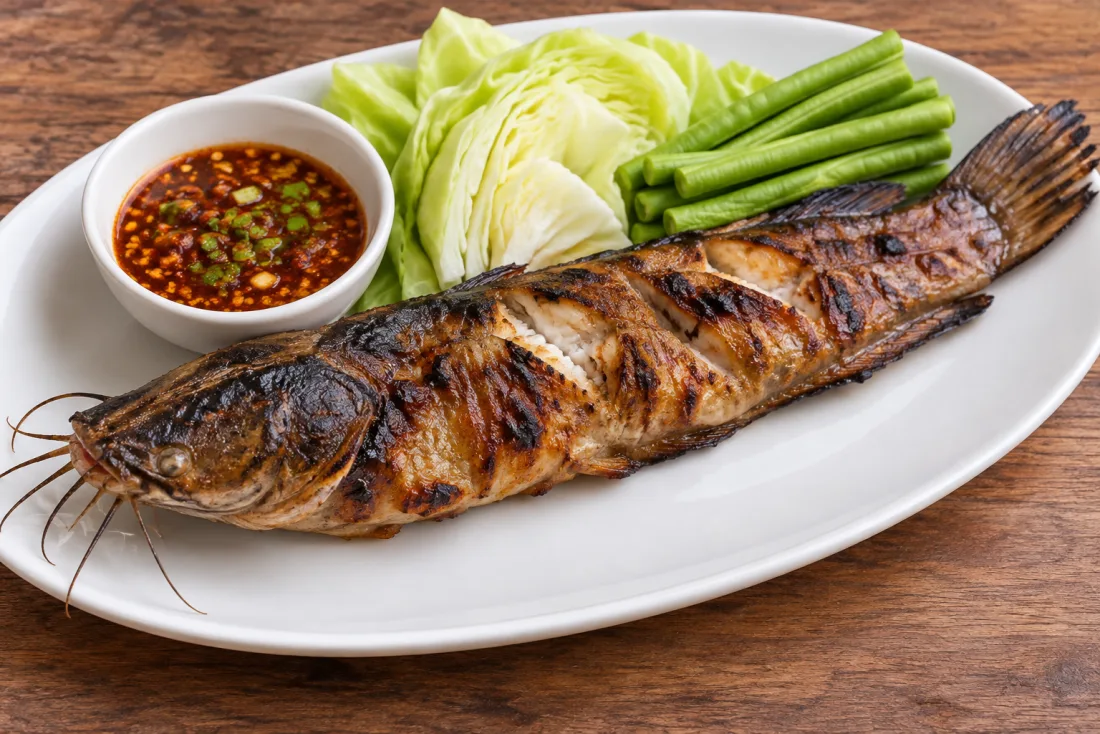

 catfish
Whole catfish at Thai grill stalls
Pla duk means catfish and yang means grilled. The fish can be turned whole over charcoal, sometimes secured with a skewer or grill basket. A Thai recipe serves it with neem and sweet fish sauce. Other stalls can serve it with sticky rice or a separate chilli dip.
Fish, neem and sweet fish sauce
Cleaned catfish is the centre of the dish. The bitter shoots or buds called sadao are used as a vegetable accompaniment. Fish sauce, palm sugar and tamarind make a thick sweet-sour dip. Some versions include shrimp paste, fried shallots and dried chilli.
Cooking the whole fish and preparing the shoots
On a grill the skin browns first while the inside cooks. A skewer or basket helps hold the fish together. A cooking variation roasts the fish in an oven. Neem may be blanched or briefly exposed to flame, and the sauce is simmered and served separately.
Charred skin with bitter, sweet and sour notes
The part next to the skin tastes rich and the flesh around the back is firmer. Tamarind and palm sugar make a round dip, with fish sauce for savour. Neem is distinctly bitter. Try each on its own and then combine them with a little plain rice.
Other accompaniments and grilled fish
Some stalls sell single fish or portion a larger one. A fresh chilli dip can replace the sweet sauce. Catfish has a different texture from grilled sea mackerel, and direct grilling produces a different skin from fish baked in a thick salt crust.
Allergens in sauces and on a shared grill
Catfish and fish sauce contain fish. Shrimp paste or dried shrimp adds crustaceans when used, and soy or oyster sauces can add soy, wheat or molluscs. Ask about sauces, marinades and shared tongs. Check a whole fish for bones when serving.
If you have a food allergy, tell the restaurant before ordering and ask about ingredients, sauces and shared cooking equipment.