

 squid
Reading the Thai name
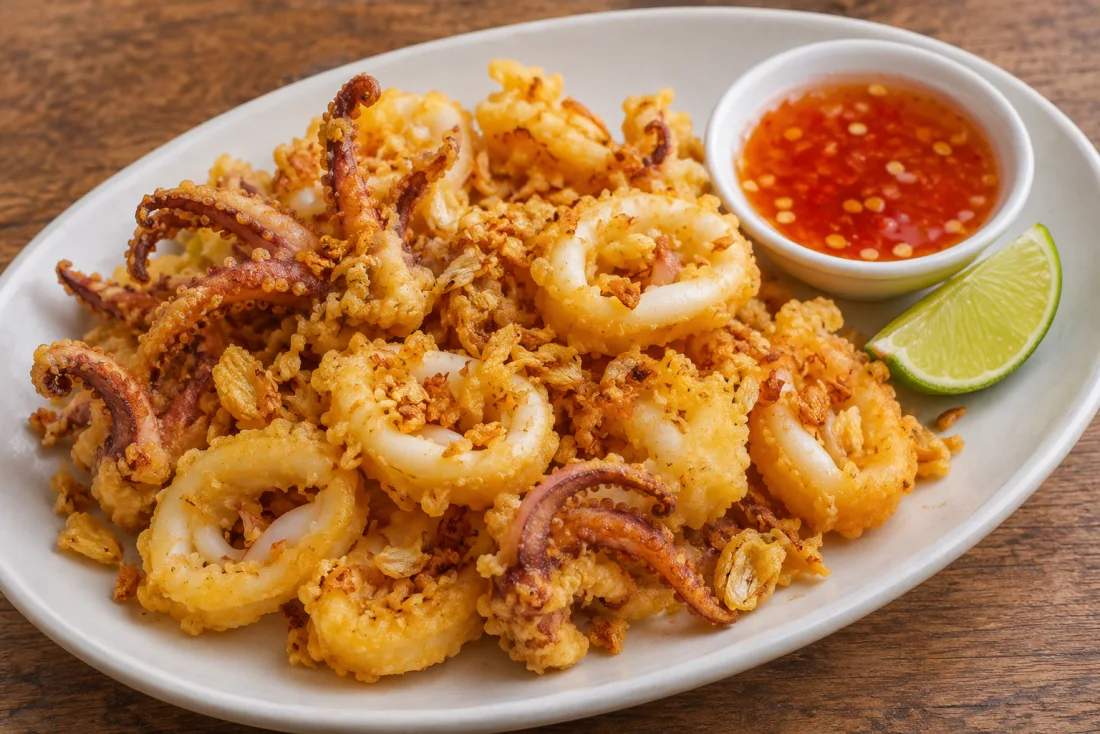
Pla muek thot means fried squid, and chup paeng indicates a coating. Squid rings, scored pieces and tentacles can be prepared this way. A garlic or chili-salt version can be tossed briefly after frying.
Thai snacks and rice dishes
Thai cooks serve thin-coated fried squid as a snack or with hot rice. Restaurant menus can specify a garlic finish. Street portions may be packed in a tray, with dip on the side.
Squid, flour and seasonings
A Thai chef uses squid, tapioca starch, wheat flour and baking powder, then garlic, coriander root and light soy. Other versions add chilies and salt, or serve sweet chili or seafood dip. Batters vary and may contain egg or milk.
A crisp surface and fully cooked center
Drain the squid before coating. Fry in manageable batches and cook thick pieces through. Color alone is insufficient. Add dry seasonings near serving, keep raw and cooked utensils separate, and let steam escape after frying.
Crunch and a springy bite
A fresh crust is dry and crisp while squid remains springy. Garlic adds toastiness and chilies add heat. Try a plain piece before adding lime or sweet chili sauce. Cucumber can refresh the bite.
Allergens in squid, coating and oil
Squid is a mollusc, and the representative coating contains wheat. Other coatings may add egg, milk or soy. Fish sauce contains fish, and shrimp paste or oyster sauce can add other seafood. Ask about shared frying oil.
If you have a food allergy, tell the restaurant before ordering and ask about ingredients, sauces and shared cooking equipment.