
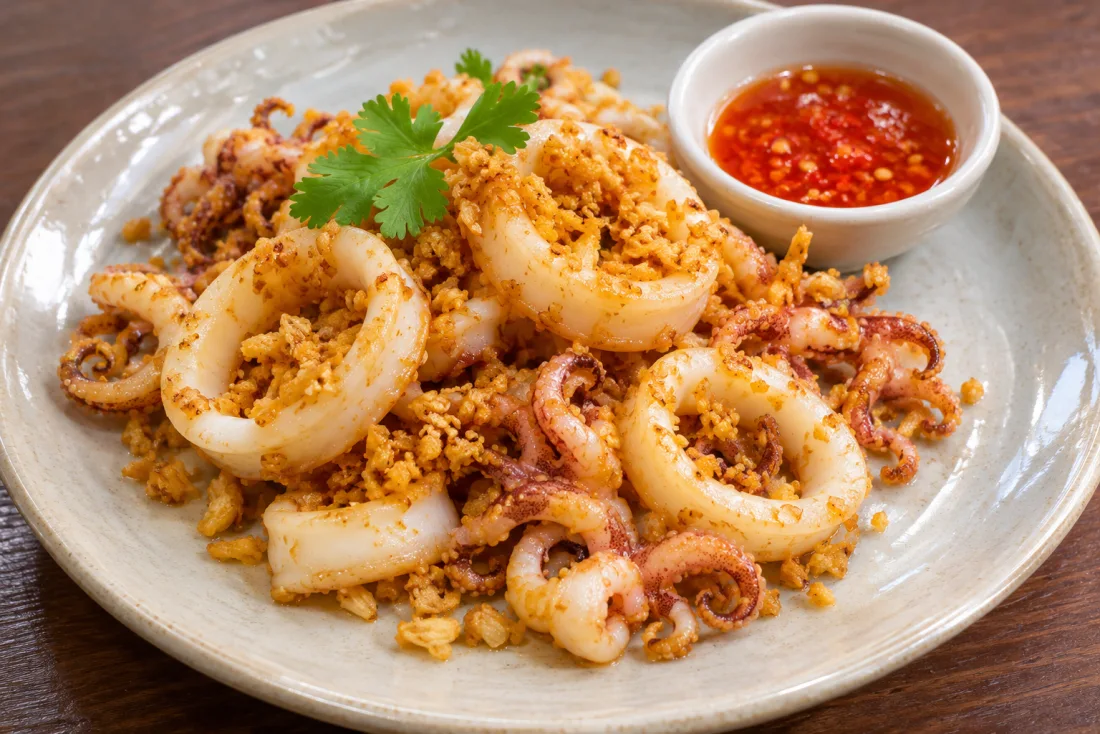

 squid
Recognising the squid and garlic
Cooked squid is white to pale gold and may curl where the flesh is scored. Rings have a distinct cross-section. Crisp chopped garlic is scattered on top. Some kitchens use a light coating, while others leave the squid surface visible.
Reading Thai seafood menus
Muk hom is a familiar local market name for this kind of squid. Thot krathiam describes the garlic-fried preparation, and a menu may also mention pepper. Thai seafood restaurants offer it in different portion sizes.
How garlic and squid are combined
The kitchen can fry garlic separately and add it to the cooked squid, or briefly toss both together. Seasoning may include white pepper, salt, fish sauce or soy sauce. Flour and dips are optional depending on the kitchen.
How it tastes
The squid has a springy, savoury bite with crisp garlic. Pepper adds warmth. Lime or seafood dip provides a brighter, sharper note. Rice can take up any juices, and a separately served dip keeps a light coating crisp.
Ordering the portion and sides
Ask whether the dish is sold by size and whether it includes rice, lime or dipping sauce. Cut rings and scored pieces can be shared. Request takeaway dip separately if you prefer.
Allergens and shared equipment
Squid is a mollusc. Fish sauce contains fish and shrimp-based sauces contain crustaceans. Coatings may contain wheat, egg or soy. Ask about ingredients and shared fryers or preparation tools when you need to avoid an allergen.
If you have a food allergy, tell the restaurant before ordering and ask about ingredients, sauces and shared cooking equipment.