

 white fish
Reading the Thai menu
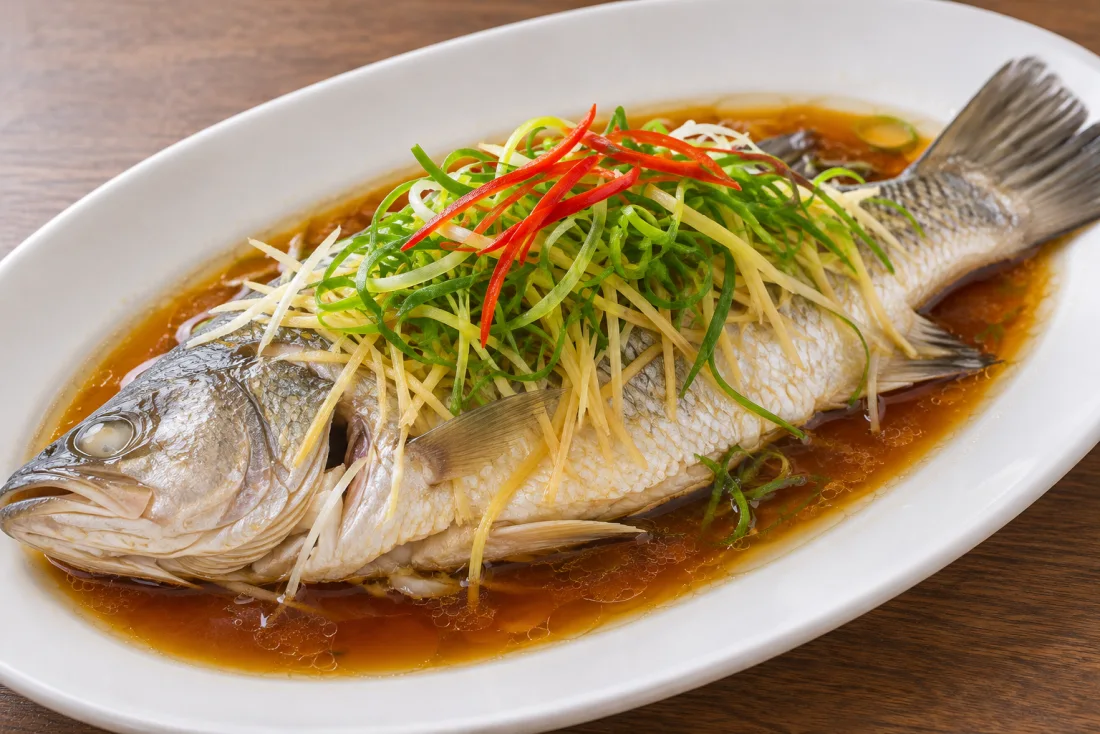
Pla means fish, nueng means steamed and si-io means soy sauce. A menu that says pla kapong identifies the restaurant's barramundi or sea bass choice. Whole versions often have pale ginger and scallions on the back and brown sauce in the plate. Fillets can carry similar garnishes. Lime-steamed fish instead relies on citrus and chili.
Whole and fillet versions on Thai tables
A Thai television chef demonstrates a whole barramundi for sharing. A Thai cooking studio uses fillets with ginger, scallions and Chinese celery. Both are current Thai preparations, and the general term does not establish a province of origin. The dish makes a mild savory part of a shared meal with rice, vegetables and more pungent sides.
Fish, soy sauce, ginger and scallions
One Thai fillet recipe uses light soy sauce, sugar, mushroom seasoning, ginger, Chinese celery, scallions and sesame oil. A whole fish recipe uses several soy sauces with fish sauce, oyster sauce, sugar and pork stock, finished with scallions and fried alliums. Garnishes and the strength of a sauce vary by kitchen.
Steaming the fish and adding aromatics
Drain the prepared fish and use a plate that catches the cooking juices. Some kitchens steam the fish with ginger and add the mixed sauce later. Others steam with the sauce. Fish should be cooked through, and the FDA seafood guidance uses 63°C as a reference. Ginger and scallions near serving can provide a fresh finish. Watch for fine bones.
Delicate fish and savory sauce
Steam leaves the flesh tender and softens the ginger's bite. Scallions add an aromatic lift and soy adds savory depth. Fish juices dilute the sauce, whose color alone cannot establish saltiness. A spoonful seasons rice. Sesame oil can add a nutty aroma, and fried scallions or shallots can contrast with the soft meat.
Allergens in fish and sauces
Fish is intrinsic to this dish. Soy sauce can contain soy and wheat. Check for sesame oil and for fish sauce or oyster sauce. Oyster is a mollusk, prawns and crabs are crustaceans, and finfish is separate. Ask about a possible pork stock according to your dietary needs. Check the steaming sauce and shared dishes even when extra sauce comes separately.
If you have a food allergy, tell the restaurant before ordering and ask about ingredients, sauces and shared cooking equipment.