

 chicken thigh
 fermented fish sauce
Chicken and the Significance of Pla Ra
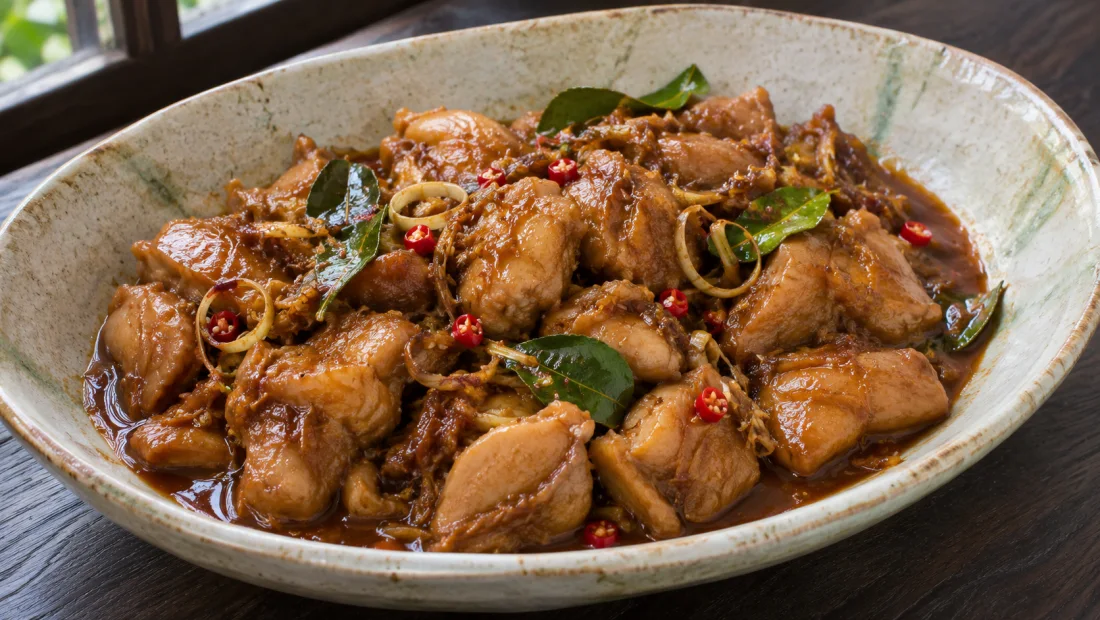
Kai means chicken, and pla ra is a Thai fermented fish seasoning. Ruan here describes cooking and turning the ingredients as the seasoning reduces. The main portion is chicken, with fermented fish contributing savor and aroma.
Thai Home and Community Versions
Thai culinary writing describes the dish in Thai Phuan and Thai Mon home cooking, including examples around Lopburi and Nakhon Nayok. Free-range and standard chicken both appear. Some kitchens keep a little extra liquid or add coconut milk. The plates here emphasize the reduced pan-cooked versions.
Chicken and Fresh Aromatics
Thigh suits the dish because it stays juicy. Lemongrass, galangal and makrut leaves make up a common aromatic base, with red chiles and shallots. An alternative uses fingerroot and whole red chiles. Pla ra is the main seasoning, and fish sauce, sugar or oyster sauce can be added depending on the cook.
Two Ways to Reduce and Serve
A darker version reduces the sauce to a glossy coating on thigh pieces. Another cooks the liquid down further and shows distinct pieces of lemongrass and fingerroot. Both can be served with rice. A maker's modern variation uses the cooked chicken as a topping for a grilled sticky-rice patty.
Fermented Savory Notes and Chile Heat
Makrut leaves and lemongrass lead with a fresh aroma. The chicken tastes savory, with peppery or herbal warmth behind the fermented fish and chile. A little sugar or shallot may add a sweet finish. Plain cooked rice makes it easier to enjoy the concentrated sauce.
Fish and Other Allergens
Pla ra and fish sauce contain fish. Some cooks also use oyster sauce, soy-based seasoning or blended stock that may contain mollusks, soy, wheat or crustaceans. Ask about coconut in versions with a creamy sauce. Ask about shared equipment and keep utensils for cooked chicken separate from raw chicken tools.
If you have a food allergy, tell the restaurant before ordering and ask about ingredients, sauces and shared cooking equipment.