
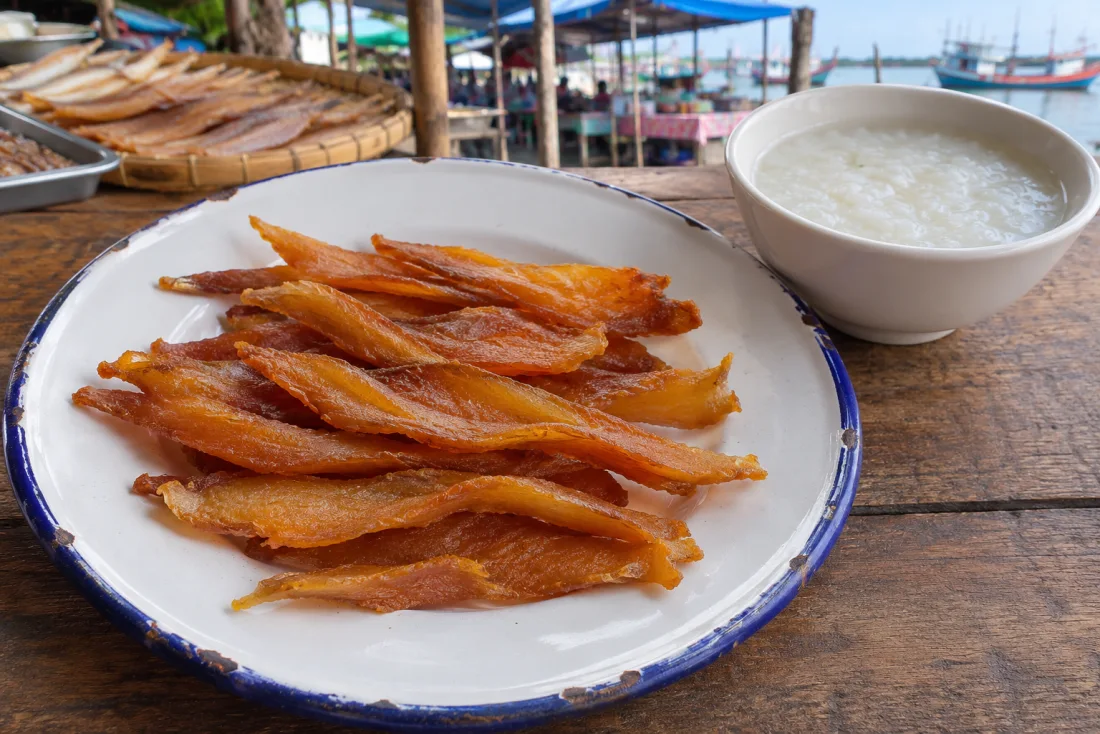

 sea catfish
Thai Name and Coastal Examples
Pla riu kiu wan thot means sweet-cured riu kiu fish, fried. Pla riu kiu is also known in Thai as pla riao siao. The Thai Department of Fisheries lists it as a fish used for traditional sweet cured fish. Producers in Phang Nga and Rayong offer it, and a Phetchaburi rice-porridge shop lists the finished fried fish as a side.
Fish, Sugar, and Salt
Thin cuts are taken from the fish flesh. A standard Thai fisheries handbook formulation uses fish, sugar, and salt, with other local recipes varying the sugar. The market forms include strips and flattened rounds, which can be cut into small portions. The size of the cooked piece comes from the cut, and the plate can consist of skinless slices.
Drying and the Finished Fried Forms
The seasoned fish is dried before its final cooking. Thorough frying darkens much of the surface, leaving amber or toasted brown patches. Long slices can be spread on a plate. A round flattened piece can be divided into small wedges after or before frying. The appearance of a cooked piece is different from a packaged fish slice that is sold for further cooking.
Sweetness, Salinity, and Texture
The seasoning gives a noticeable sweetness with salt in the background. The thinner parts may be lightly crisp with a toasted sugar aroma, while the interior retains a chew. Thicker slices can be firmer. Plain white rice porridge makes the sweet and salty notes easy to distinguish. Chili or dipping sauce depends on whether a venue serves additional seasoning.
Menus, Market Packs, and Accompaniments
Wan marks the sweet-cured style. Thot phrom than indicates fried, ready to eat. A fish name on its own can refer to raw fish, a packaged dried ingredient, or another preparation. At rice-porridge shops a plate can be ordered as a separate side, and market fish can also be served with plain rice. Portions can be sold by piece or by weight.
Allergens, Bones, and Seasonings
Sea catfish is a fish allergen. A shared fryer or serving utensil may also contact crustaceans, molluscs, or wheat batter. Additional sauces can introduce fish sauce, soy, wheat, or shrimp ingredients. Ask about the exact preparation and check for possible small bones, particularly when sharing with children. Read the producer's label for whether a market pack needs cooking.
If you have a food allergy, tell the restaurant before ordering and ask about ingredients, sauces and shared cooking equipment.