

 fish sauce
What the three flavors mean
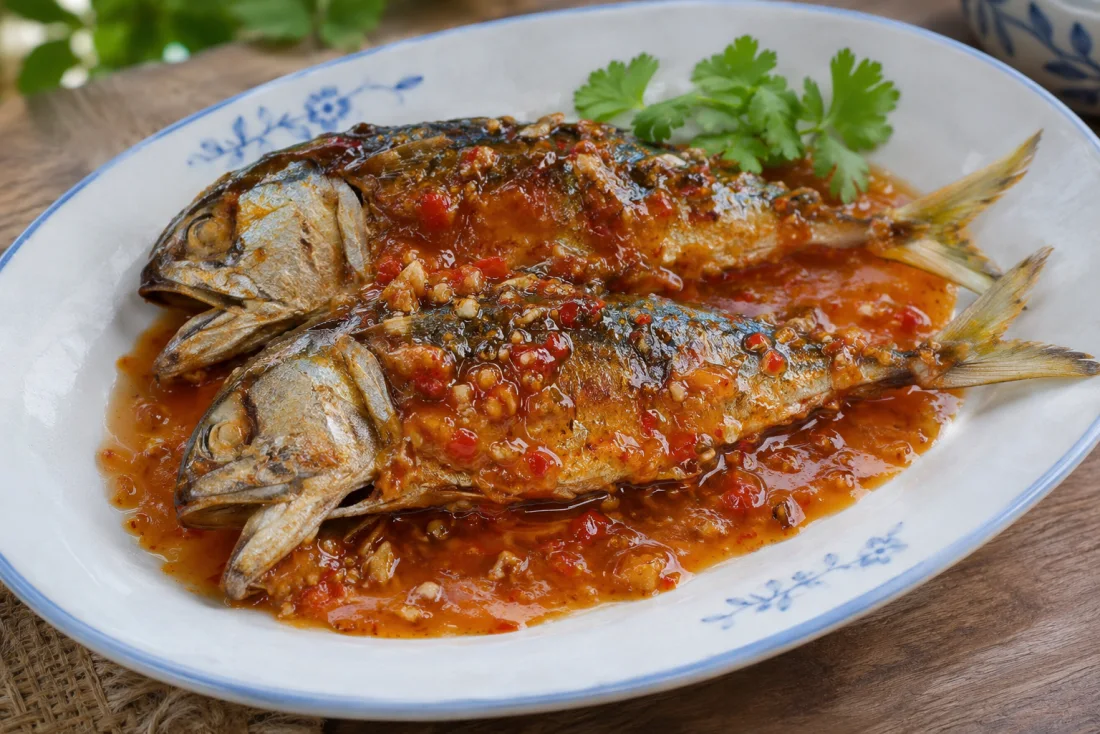
Pla thu points to mackerel in this version of three-flavor fried fish. Thai examples emphasize sweet, sour and salty seasoning with possible chili heat. Some cooks leave the fish whole, while others split it or serve pieces.
Mackerel and two representative sauces
One cook fries fresh mackerel and makes a sauce from red chili, garlic, fish sauce, palm sugar, tamarind and water. Another uses coriander root, oyster sauce, light soy and optional sesame oil with the palm sugar and tamarind.
Crisp fish and bright sauce
Tamarind gives a fruity sourness, sugar gives sweetness, and salty ingredients add depth. Garlic and chilies bring fresh aroma. The skin and coating soften after the sauce is poured on.
Frying and making sauce separately
Fry the fish until fully cooked and crisp. Prepare and reduce the sauce separately, then spoon it on at serving. Coat thickness and the cut affect the final crunch.
Serving and related Thai fish
Share a whole fish or order fillets with hot jasmine rice. Other chili- or tamarind-sauced fried fish have overlapping flavors. Ask about the species, sweet-sour balance and heat.
Allergens and fish bones
Mackerel and fish sauce contain fish. The alternate sauce uses oyster sauce, soy sauce and optional sesame oil. Ask about mollusks, soy, wheat, sesame, shared frying oil and bones. A fillet can still retain small bones.
If you have a food allergy, tell the restaurant before ordering and ask about ingredients, sauces and shared cooking equipment.