
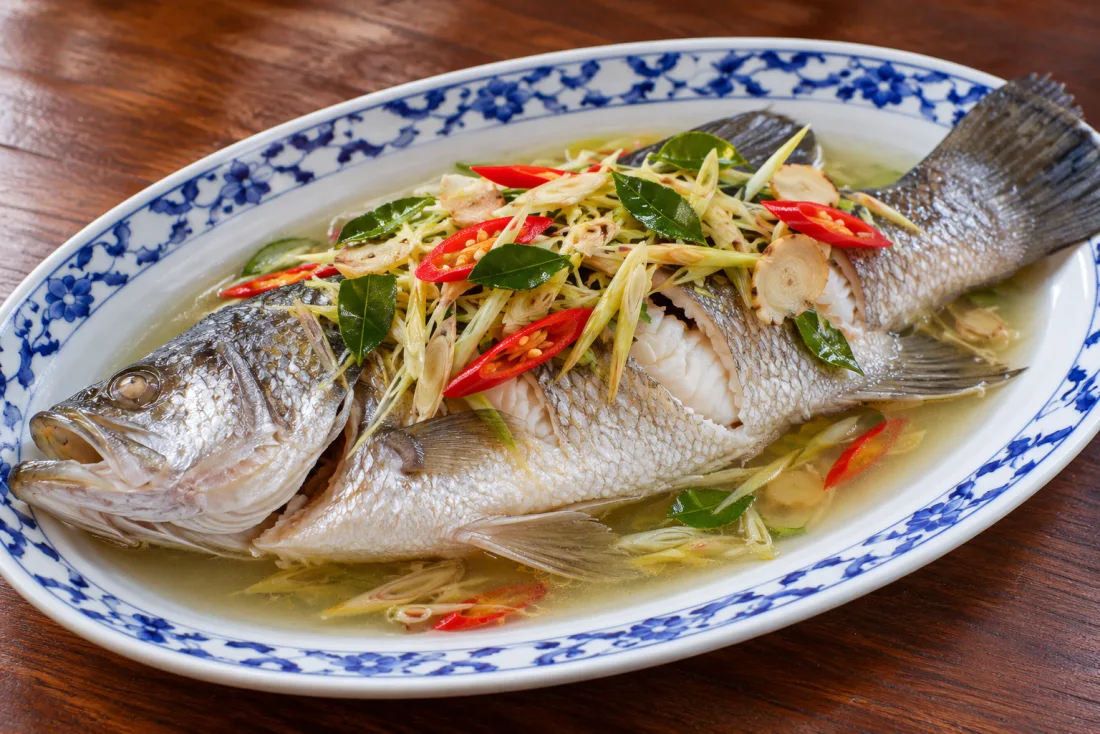

Understanding the Thai name
Pla neung samun phrai means fish steamed with aromatics. Seabass is one choice, and Thai recipes also use tilapia or other white fish. Whole fish can be shared, and fillets suit smaller servings. Soy-steamed and lime-steamed fish may be listed separately.
Thai homes and seafood restaurants
Thai recipes and restaurant menus show both whole and portioned herb-steamed fish. It can come with steamed rice, vegetables and a separate dipping sauce. Check whether chilies are steamed with the fish or served on the side.
Fish and aromatic ingredients
One Thai recipe places galangal, lemongrass, makrut lime leaf and garlic with the fish. A seabass recipe uses shallots, pepper, soy, chilies and coriander as well. The dip may use chilies, lime, garlic, sugar and fish sauce.
Heating the fish through
Keep the fish above the steaming water. Thickness sets the cooking time. Cook until the flesh is opaque and flakes, using an internal temperature of at least 63 degrees Celsius if using a thermometer. Use clean utensils to serve.
Tender texture and citrus aromas
Steamed white fish is tender and mildly sweet. Lemongrass and lime leaf add citrus notes, and galangal or garlic gives a warmer fragrance. Rice soaks up the juices. A dip gives a sharp chili and lime contrast.
Allergens in fish, seasoning and dip
Fish and fish sauce contain fish. Soy sauce contains soy and may contain wheat. Oyster sauce may contain a mollusc and shrimp paste contains crustaceans. Ask about the marinade, separate dip, stock and shared steamer.
If you have a food allergy, tell the restaurant before ordering and ask about ingredients, sauces and shared cooking equipment.