
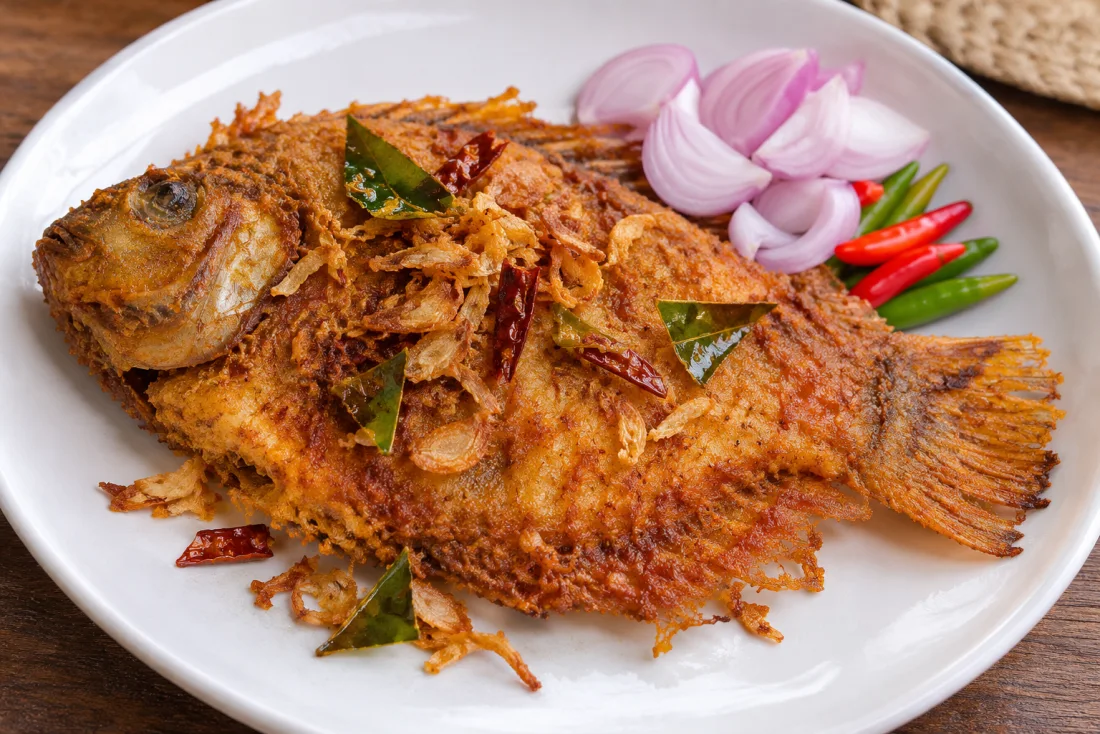

 fermented freshwater fish
What pla som thot means
Pla som identifies a sour fermented fish product, and thot means fried. Fermentation supplies the fish’s tang, while a squeeze of lime adds fresh citrus. A small fish can be opened and fried whole. Larger fish may arrive in cut sections. Some cooks add a light rice-flour coating or dip the fish in egg for a more even crust.
From Thai markets to the shared table
Fried fermented fish appears in Northern and Northeastern Thai food traditions, with Phayao among the places associated with pla som. Market stock and the fish’s size shape what is served. A whole fish is suited to sharing. Cut portions are convenient alongside other dishes, sticky rice and fresh greens. The common name supports a family of preparations across places.
Fermented fish, rice flour and fried aromatics
A published Thai kitchen version cuts prepared fermented freshwater fish into pieces, uses rice flour and separately fries shallots, garlic, dried chilies and makrut lime leaves. Lime, vegetables and sticky rice accompany the fish. An egg-dipped recipe has a distinct golden film. Other cooks serve a whole fish with shallots and dried chilies. Commercial fish preparations and seasonings vary.
Fry until the fish is cooked through
Start with a prepared fermented fish from a reliable source and keep it properly stored. Drain the surface before frying. Fish thickness matters, and a golden exterior alone cannot confirm that the center is done. Thai public health guidance advises fully cooking fermented freshwater fish. Keep cooked fish away from raw-fish tools and plates. Fish bones may still be sharp.
How the tang and crispness taste
The first bite brings a crisp edge and fried shallot aroma before the savory, fermented tang of the center. A few drops of lime brighten that acidity. Dried chilies contribute heat when broken and eaten, while rice makes the salted coating taste gentler. Sourness and the strength of the fermented aroma vary across prepared products.
Allergens and shared fryers
Fish is intrinsic to pla som thot. Batters may contain wheat, and egg-dipped versions contain egg. Ask about prepared seasoning and any optional soy or fish-based condiments. Crustaceans such as prawns and crabs and mollusks such as clams and oysters may share a fryer, rack or serving tool. Ask about ingredients and kitchen handling separately.
If you have a food allergy, tell the restaurant before ordering and ask about ingredients, sauces and shared cooking equipment.