
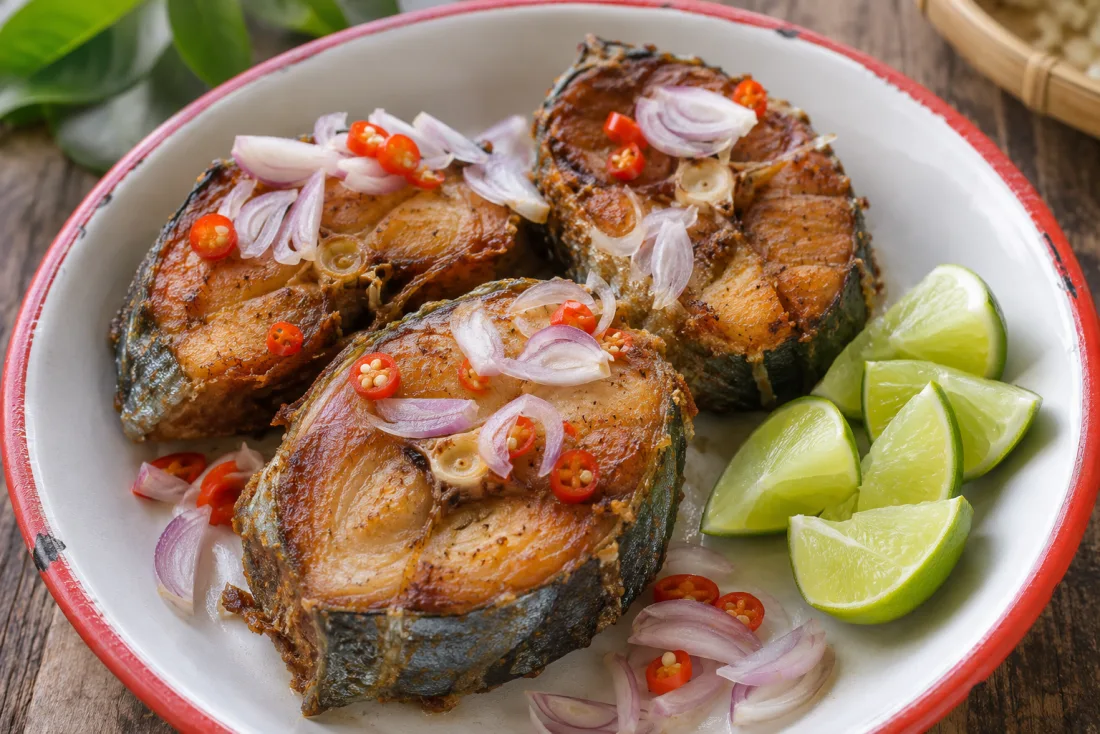

Recognizing salted mackerel steaks
Pla khem means salt-cured fish. Spanish mackerel steaks often show a dark rim of skin, browned flesh and the place where the central bone runs. Shallots and chilies can be scattered over the fish or set alongside. The same Thai name can refer to other fish, including smaller freshwater fish.
Eating it with rice in Thailand
Published Thai home recipes pair fried salt-cured mackerel with shallot, chili and lime, alongside plain rice or porridge. The fish itself is salty. A fresh steak fried and seasoned with fish sauce is a separate menu preparation.
Fish steaks, cooking oil and the garnish
Use salt-cured Spanish mackerel steaks, vegetable oil, shallot, chili and lime. Frying browns the outside, then the fish is drained before serving. Shallot and lime stay fresh when added near serving. Another named variation fries salted fish and then cooks the flaked flesh with coconut cream.
Salt, crisp edges and bright acidity
The edge of a hot steak can be crisp and toasty. The center has more of the dense, savory taste. A little lime and fresh shallot brighten the bite, and chili adds sharper heat. A small piece can season several bites of plain rice.
With porridge or a rice plate
Share a small plate beside rice or porridge. Take a little at a time and add lime and chili as you prefer. Serve with lightly seasoned greens or a plain bowl of rice. Garnishes may be mixed through or put on the side.
Allergens, sodium and bones
The fish contains fish allergens, and any fish sauce also contains fish. Ask about shared frying oil, wheat batter and crustaceans. Look for small bones. Salt-cured fish contributes sodium. Adding lime changes the flavor without removing the salt.
If you have a food allergy, tell the restaurant before ordering and ask about ingredients, sauces and shared cooking equipment.