

 fish
 pork fat
 chicken-bone stock
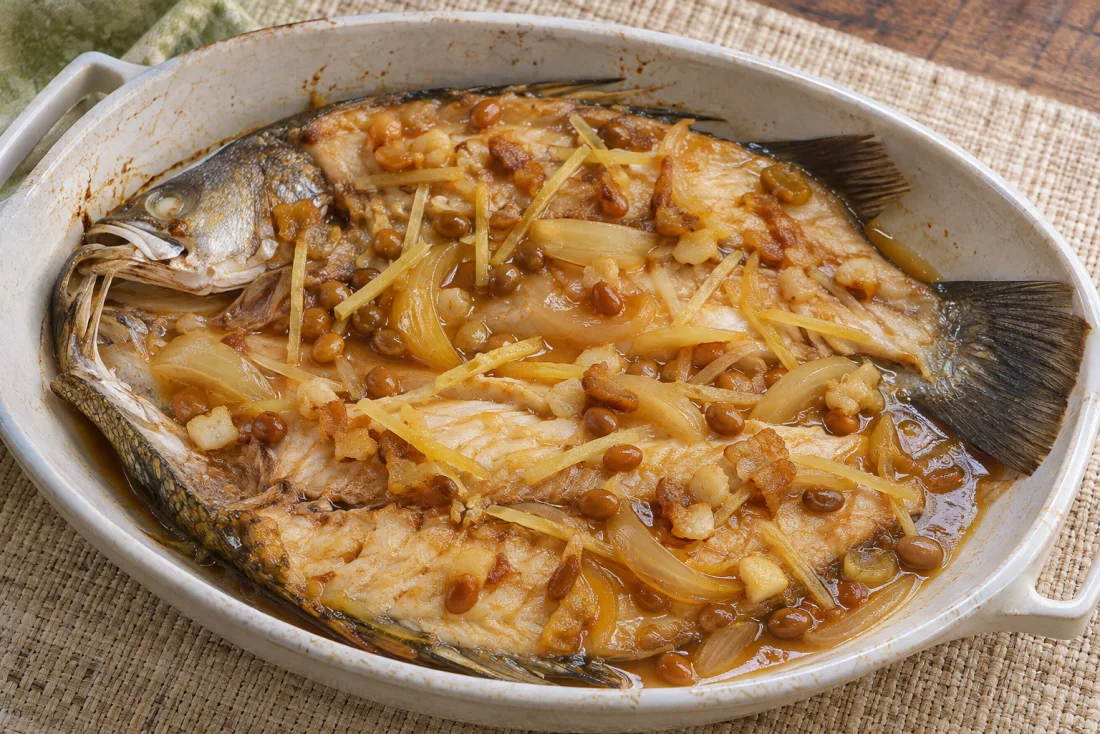
Fish split lengthwise for baking
Pla is fish and op indicates a form of enclosed cooking or baking. The older Thai preparation splits the fish along its length. The pieces can keep their skin and are served with their cooking juices. Young ginger and fermented soybean sauce help identify this version. Light, savoury juices distinguish it from a coconut curry. Soy-steamed fish, salt-crusted grilled fish and other baked fish still need to be identified by their actual sauce and technique.
An older Thai recipe using ginger and soybeans
A Thai cookbook records a baked fish with ginger, fermented soybeans, pork fat and chicken-bone stock. The published recipe documents one preparation, without proving a single province of origin or nationwide popularity. Some modern Thai cooks also bake fish with ginger and fermented soybeans in foil. That can illustrate an enclosed preparation, but ingredients used in the modern recipe do not automatically belong to the older version. A platter can be shared and the actual fish or sauce confirmed with the kitchen.
Fish choices with young ginger and tao chiao
The older recipe names local fish and allows another firm-scaled species. Do not assume that all fish offered under the name are identical. Fermented soybean sauce, or tao chiao, can have soft beans and a salty savoury taste. Young ginger adds fragrance. Onion, garlic, pork fat, light soy, chicken-bone stock and a little roasted chilli paste contribute to the cooking sauce. A touch of sugar can balance salt. The sauce can remain light enough for the fish flavour to come through.
Bake the split fish through with its sauce
The split pieces can be laid in a suitable vessel with ginger, onion, garlic and seasoning. A contained cooking vessel can retain moisture and let the sauce reach the fish. Pork fat and stock appear in the older formula, while newer cooks can choose different fats or stocks. Cook the fish fully through at the thickest part before transferring it to a warm plate. Preserve some liquid and check for fine bones when dividing the pieces.
Tender flakes, mellow soybean and ginger
Fish brings a mild sweetness while the fermented bean sauce is savoury and ginger adds warmth. Onion, garlic and pork fat can round the juices. A little roasted chilli paste does not necessarily make the fish intensely hot. The amount of fat depends on the fish and sauce. Taste a flake first, then add a spoon of ginger and soybean sauce to the fish or rice. A different chilli paste can change both sweetness and heat.
Allergens in fish, fermented soybeans and seasonings
The dish contains fish and may also use fish sauce. Tao chiao and soy sauce contain soy and may include wheat. Roasted chilli paste can contain shrimp or fish, depending on the recipe, and additional oyster or sesame seasonings need separate confirmation. Pork fat and chicken stock matter for some diets. Ask about sauces, stock and shared equipment. Small bones are a separate consideration when eating a whole fish or split half.
If you have a food allergy, tell the restaurant before ordering and ask about ingredients, sauces and shared cooking equipment.