
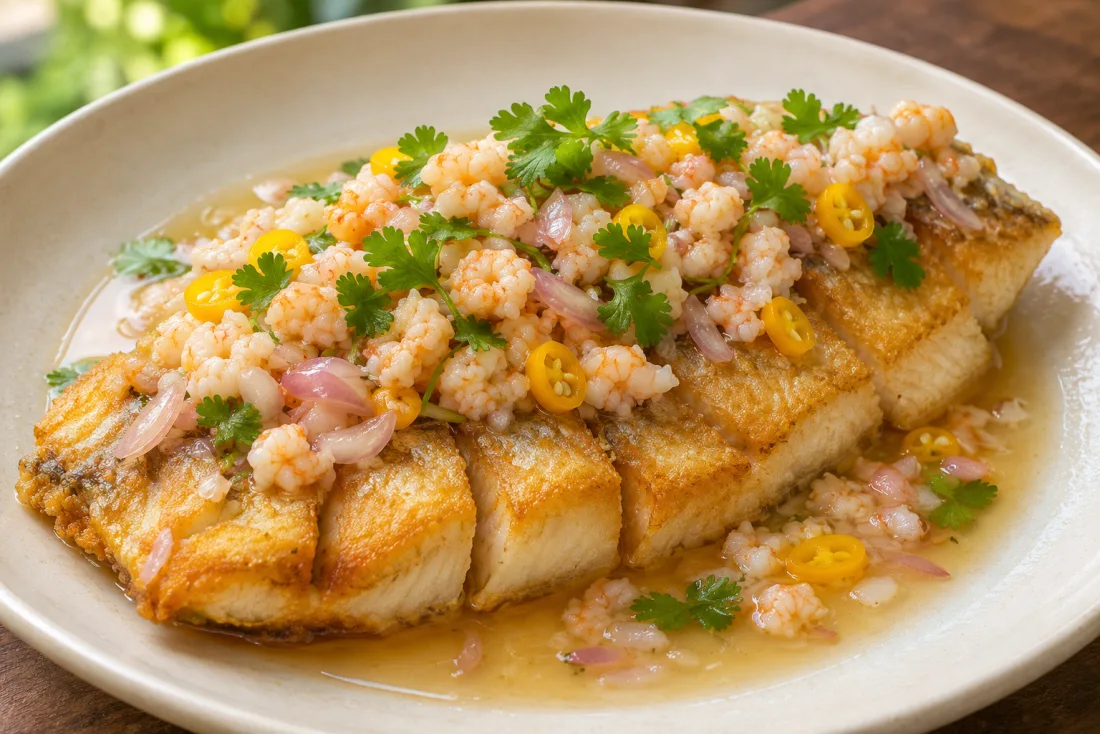

 shrimp
Reading the Thai fish name
Pla kulao commonly refers to threadfin, including fourfinger threadfin in Thai fisheries records. Thot prung na describes frying and seasoning the top. The original method handles salt on the fish, indicating cured fish. Ask what fish and preparation the kitchen uses.
Preserved fish at a Thai meal
Coastal Thailand has salted threadfin products. A historical Thai cookbook shows a fried piece finished with shrimp and onion. This records one kitchen's preparation rather than a birthplace. The fish is salty enough to share in small bites with plain rice.
Threadfin, shrimp, onion and vinegar
The original recipe uses salted threadfin, shrimp, onion, coriander, vinegar, sugar, yellow chili and lard. The shrimp and onion are chopped and cooked as a topping. A restaurant might choose another frying oil or change the strength of the sweet-sour dressing.
Cook fish and shrimp through
Use a properly stored fish product and follow its preparation directions. Cook cured fish and shrimp thoroughly. Salt, color and vinegar cannot establish doneness. Keep raw shrimp tools separate. Add the cooked shrimp topping just before serving and watch for fish bones.
Salty fried fish and sweet-sour shrimp
The fish has a roasted edge and a concentrated savory flavor. Cooked shrimp and onion bring sweetness and vinegar brightens it. Yellow chili varies in heat. Eat a little fish with rice or cucumber and spoon on the topping as preferred.
Allergens in fish and garnish
Threadfin is fish and shrimp is a crustacean. Oyster is a mollusk. Prepared seasonings may contain soy or wheat. The original uses lard. Ask about the topping, frying oil and shared equipment, since removing shrimp cannot undo contact.
If you have a food allergy, tell the restaurant before ordering and ask about ingredients, sauces and shared cooking equipment.