
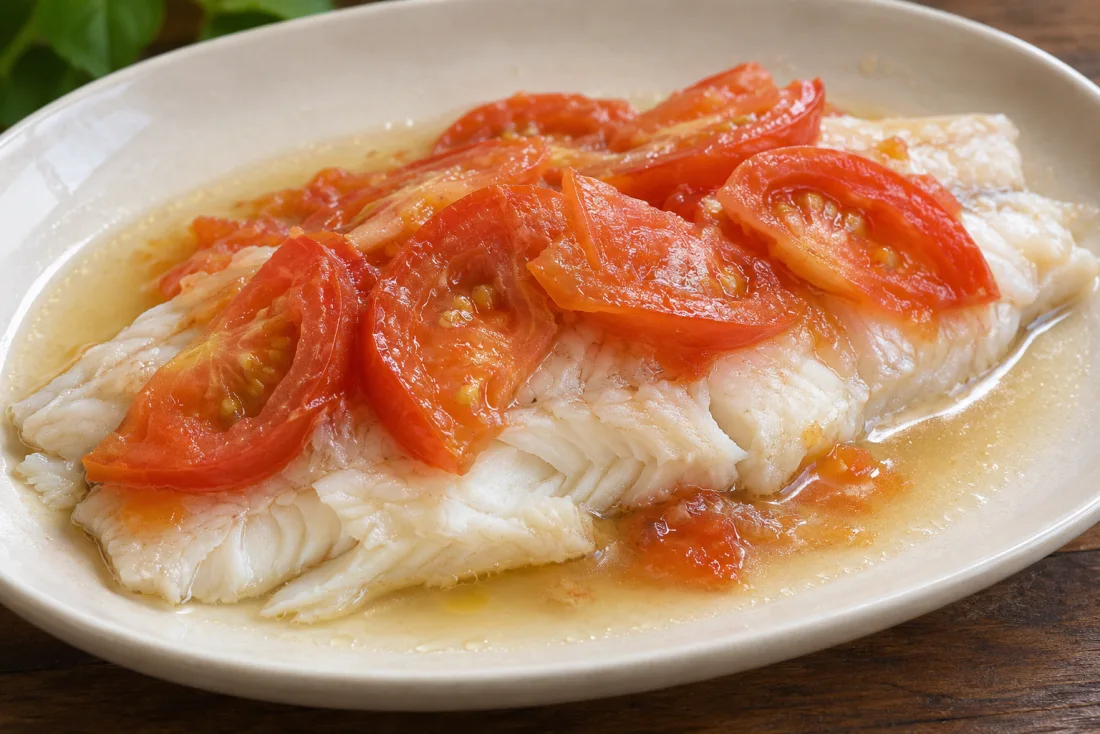

 snakehead fish
Tomato and freshwater fish in the name
Pla nueng kap makhuea thet means steamed fish with tomato. The historical recipe chooses pla chon, a snakehead fish. White fish pieces and red tomatoes are visible after the fish is deboned. The menu name does not guarantee the species unless the restaurant specifies it.
A Thai cookbook way to serve steamed fish
The old Thai recipe steams fish under Chinese cabbage, scallions and cilantro, then removes skin and bones. Tomato is prepared separately. The serving can be shared with rice. Some kitchens may use fillets rather than steam a whole fish first.
Snakehead, cabbage and tomato
The recipe includes snakehead, Chinese cabbage, scallions, tomatoes, cilantro, sour seasoning, sugar, salt and pepper. Tomato adds natural acidity, and cooked cabbage and scallions taste gently sweet. The dressing differs across kitchens.
Steam through, debone and add tomato
Steam the fish with clean greens until fully cooked in its thickest part. Remove bones with clean tools and blanch and cut the tomatoes separately. Keep tools used for raw fish away from cooked food. Dress near serving.
Tender fish with tangy tomato juices
The fish flakes gently, and tomato adds bright juice. Cooked onion greens and cabbage soften the overall taste. Pepper adds mild warmth and the sweet-sour dressing can moisten rice.
Allergens in fish and dressings
Snakehead and any substitute fish are fish allergens. Ask about soy, wheat, fish sauce, oyster or shrimp in any added seasoning and about shared steamers or utensils. Removing cooked fish from the plate cannot undo contact.
If you have a food allergy, tell the restaurant before ordering and ask about ingredients, sauces and shared cooking equipment.