

 shrimp
The mackerel and what is inside
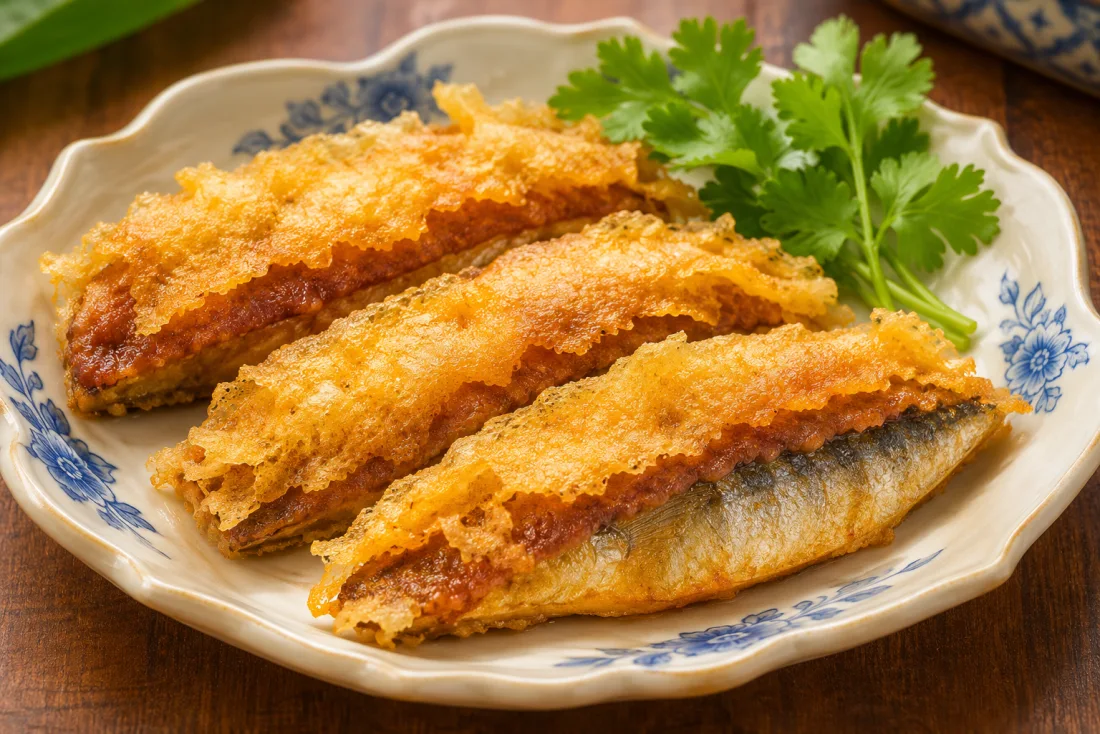
Pla thu chup paeng thot means battered fried mackerel. The general name can include plain battered fish. The historical version here fills mackerel with seasoned shrimp. A slice shows separate fish and filling, which may not be visible from the outside. Ask the kitchen before ordering.
An older Thai filled fish
A Thai cookbook published in Bangkok records mackerel with shrimp, duck egg, tapioca starch and pepper. Other street vendors can sell batter-fried fish without listing that filling. A serving can come sliced with rice or lime. The aged recipe describes one version of the dish.
Fish, shrimp, duck egg and tapioca
The original recipe uses fresh mackerel, minced shrimp, duck egg, tapioca starch, salt, pepper, cilantro and frying oil. The shrimp is mixed with egg and seasoning. Other kitchens may use a different prepared batter or a separate dip.
Debone first and cook the filling through
Steam fish and remove bones with clean tools. Keep the shrimp filling chilled until use. Fry until the middle of the filling is fully cooked, since color cannot establish doneness. Keep raw shrimp and egg tools apart from the cooked fish. Drain the fried fish before slicing.
Crisp coating and two seafood textures
The coating is crisp, mackerel is rich and shrimp is springy. Pepper offers mild warmth and the egg binds the filling. A lime dip brightens the fish and sweet chili dip softens the savory coating. Rice and cucumber can accompany it.
Allergens in the fish and filling
Mackerel is fish, shrimp is a crustacean and duck egg is an egg allergen. Prepared batters may also contain wheat, soy or milk. Oyster is a mollusk. Ask about the filling, batter, dip and shared fryer. Removing filling at the table cannot undo contact.
If you have a food allergy, tell the restaurant before ordering and ask about ingredients, sauces and shared cooking equipment.