

 salted fish
 shrimp paste
The garden in the Thai name
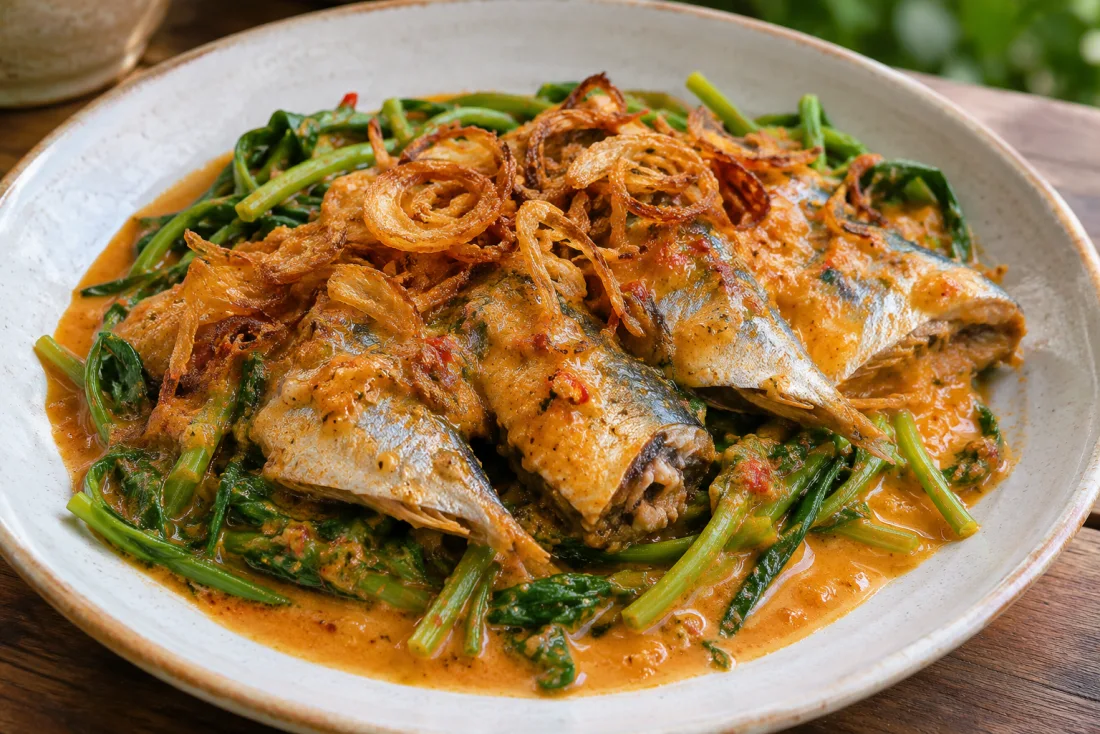
Pla thu is mackerel, while rong suan evokes a garden channel. The original recipe uses steamed mackerel and young water spinach tips. Silver-skinned fish, green stems and an orange-brown coconut sauce are characteristic. Ask about the actual fish and greens.
Steamed fish and young greens in Thai cookery
A historical Bangkok cookbook puts steamed mackerel together with water spinach taken from the garden. Coconut and herbs season the fish and greens. This is a documented Thai home preparation. A restaurant can serve it with rice or present the sauce in a separate bowl.
Mackerel, water spinach and coconut sauce
The older recipe uses steamed mackerel, water spinach tips, grated coconut and fried shallots. Dried chili, galangal, lemongrass, shallot, garlic, fingerroot, salted fish and shrimp paste flavor the reduced coconut sauce. Prepared curry pastes can contain other ingredients.
Cook the fish, greens and sauce
Wash and cook the water spinach. Use appropriately stored, thoroughly cooked fish and watch for small bones. Cook the aromatic sauce well and reduce until thick but pourable. Use clean tools and add fried shallots near serving, whether sauce is poured over or served alongside.
Mellow coconut and aromatic herbs
The fish tastes savory, the greens are gently crisp and the coconut sauce is rich. Fingerroot, galangal and lemongrass add distinct aromas. Salted fish and shrimp paste bring depth. Fried shallots give crunch and rice can catch the sauce.
Allergens in fish, shrimp paste and coconut
Mackerel and salted fish contain fish, and shrimp paste is a crustacean product. Oyster is a mollusk. Ask about coconut, prepared sauces and shared utensils. A separate sauce can still contain fish and shrimp paste.
If you have a food allergy, tell the restaurant before ordering and ask about ingredients, sauces and shared cooking equipment.