

 fish sauce
What fried and seasoned means
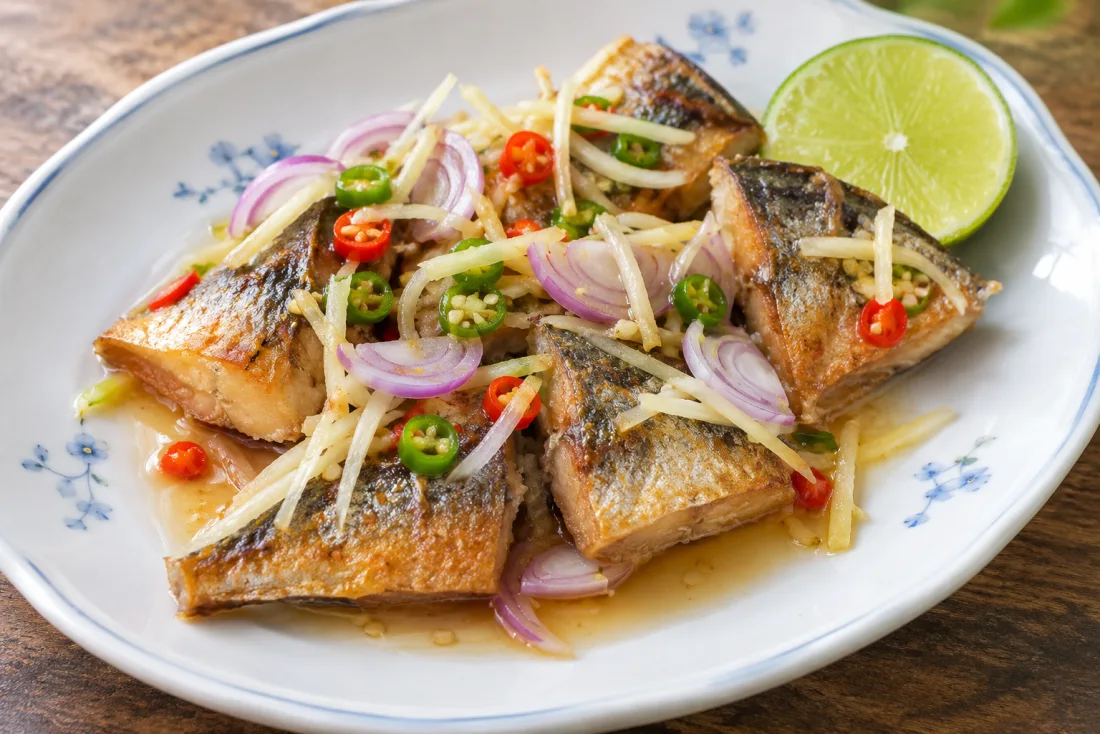
Pla thu is mackerel, and thot prung describes frying and seasoning it. The fish can arrive in silver-skinned pieces with ginger and shallot on top. Lime and fish sauce give it a sharper flavor than plain fried mackerel. Ask about the precise fish and whether it was deboned.
A Thai cookbook preparation for rice
A historical Bangkok cookbook fries previously steamed mackerel, removes the bones and seasons the pieces with aromatics. This is a documented home preparation. It works with rice and cucumber or as part of a shared meal. Portions and additions vary.
Mackerel, ginger, shallot and lime
The original recipe uses steamed mackerel, shallot, ginger, fish sauce, lime and grilled green and red long chilies. Shallots can be thinly sliced. Grilling adds aroma to the chilies. Some kitchens change their chili type or adjust acidity and sweetness.
Cook through, debone and season
Store steamed fish appropriately and heat thoroughly. If starting from raw fish, cook it through the thickest part. Drain the fried fish and use clean tools to remove bones and portion it. Mix lime, fish sauce and grilled chili separately and add near serving.
Crisp skin and bright ginger
Fried skin has a roasted bite, with rich mackerel inside. Ginger and shallot add a clean sharpness, while lime is bright and fish sauce savory. Grilled chilies can smell lightly smoky. Rice and cucumber make the strong dressing gentler.
Allergens and shared frying oil
Mackerel and fish sauce contain fish. Soy and wheat can be in alternative seasonings. Shrimp paste is a crustacean product and oyster is a mollusk. Check whether the kitchen shares frying oil, strainers or utensils with other foods.
If you have a food allergy, tell the restaurant before ordering and ask about ingredients, sauces and shared cooking equipment.