
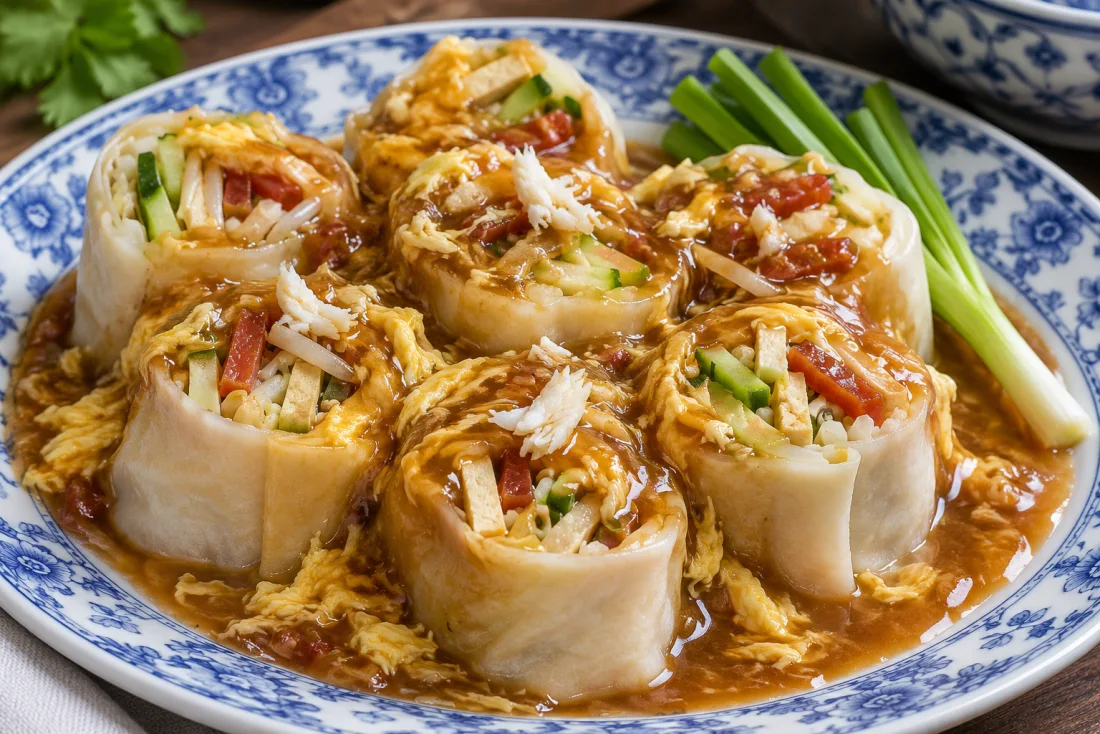

Fresh rolls in Thai-Chinese cooking
Poh pia sod describes a soft fresh roll. Thai-Chinese and Yaowarat examples serve filled rolls with brown gravy. The wrapper is rolled without deep-frying the assembled roll.
Wrappers, cooked fillings and gravy
The reference uses spring-roll wrappers, spiced braised tofu, bean sprouts, shredded omelette, cucumber, Chinese sausage and cooked crab. The gravy can use tofu broth, sweet and light soy, oyster sauce, tamarind, palm sugar, spices, sesame and starches.
Soft wrapper, crisp cucumber and sweet spice
The wrapper is supple, vegetables are crisp and the tofu and egg are soft. Crab and sausage bring different savory notes. The gravy can be sweet-salty with tamarind and warm spice.
Preparing the components and rolling
Prepare the tofu, cooked fillings and separate gravy. Roll the fillings inside soft wrappers and slice for serving. Ladle the gravy over the rolls or offer it alongside.
Serving and neighboring rolls
Serve as an appetizer, sometimes with spring onion or mustard. A fried spring roll has a crisp wrapper, while other fresh rolls may use different wrappers and dipping sauces. Ask about the filling and the sauce.
Allergens in wrappers, fillings and sauces
The reference includes egg, soy, crab, oyster sauce and sesame. Soy sauce and wrappers may contain wheat. Check mustard sauce, pork sausage or stock, additional seasonings and shared equipment. Omitting the gravy leaves the filled roll’s ingredients.
If you have a food allergy, tell the restaurant before ordering and ask about ingredients, sauces and shared cooking equipment.