

 pork
Thai snacks with a thin, golden wrapper
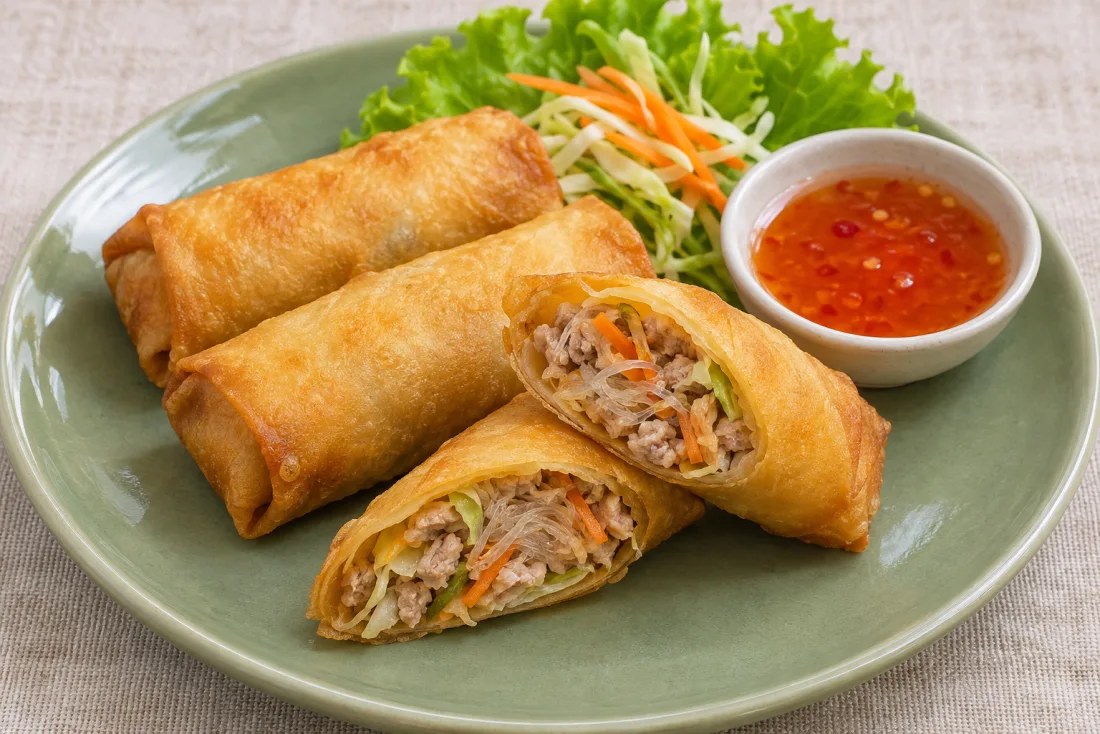
Tod means fried. The rolls can be served whole or cut to show glass noodles and vegetables. Thai cooking programmes serve them with chilli dip and lettuce.
Filled rolls appear in several Asian cuisines. Thai recipes document pork and noodle fillings, mixed vegetables with dried shrimp, and plant-based versions.
Wrappers, noodles, vegetables and savoury filling
One KRUA recipe uses pork, shiitake, glass noodles, cabbage, carrot, garlic, light soy and oyster sauce. The wrapper is often wheat-based.
Other Thai recipes use dried shrimp, wood ear and celery, or mushrooms, peas and vegetables with a plant-based seasoning. Vegetable on the menu does not identify every seasoning.
Cooking, cooling, rolling and frying
Stir-fry the filling and let it cool before wrapping. A filling that sheds little liquid is easier to enclose in a thin wrapper. Fold in the sides and seal the last edge.
Fry until evenly golden, then drain on a rack so oil and steam can escape. The filling is usually cooked first and the oil crisps the wrapper. Serving the sauce separately helps retain that texture.
The crunch and its sweet chilli and lettuce pairings
The first bite is crisp and gives way to soft noodles and vegetables. Shiitake, pork or dried shrimp bring more savouriness.
Try it plain and with a little sweet chilli sauce. A fresh lettuce leaf around the outside adds a cool crunch.
Fried rolls, fresh rolls and menu choices
Poh pia sot means fresh rolls. Look for tod for the fried version. Moo means pork, and jay identifies a plant-based style with its own dietary conventions. Ask about the wrapper and oil.
Some rolls have finely mixed fillings and others have visible shreds of cabbage and mushrooms. Ask whether dried seafood was used to season the vegetables.
Allergens to ask about: wheat, soy, egg and seafood
Many wrappers contain wheat. Wrappers or sealants can use egg. Soy sauce contains soy and may contain wheat. Oyster sauce, dried shrimp and fish sauce can add mollusc, crustacean or fish ingredients.
Check wrapper, filling, dip and shared fryer oil separately. A restaurant can clarify what equipment it uses for different fillings.
If you have a food allergy, tell the restaurant before ordering and ask about ingredients, sauces and shared cooking equipment.