

 minced pork
 fish sauce
Recognizing pu ja
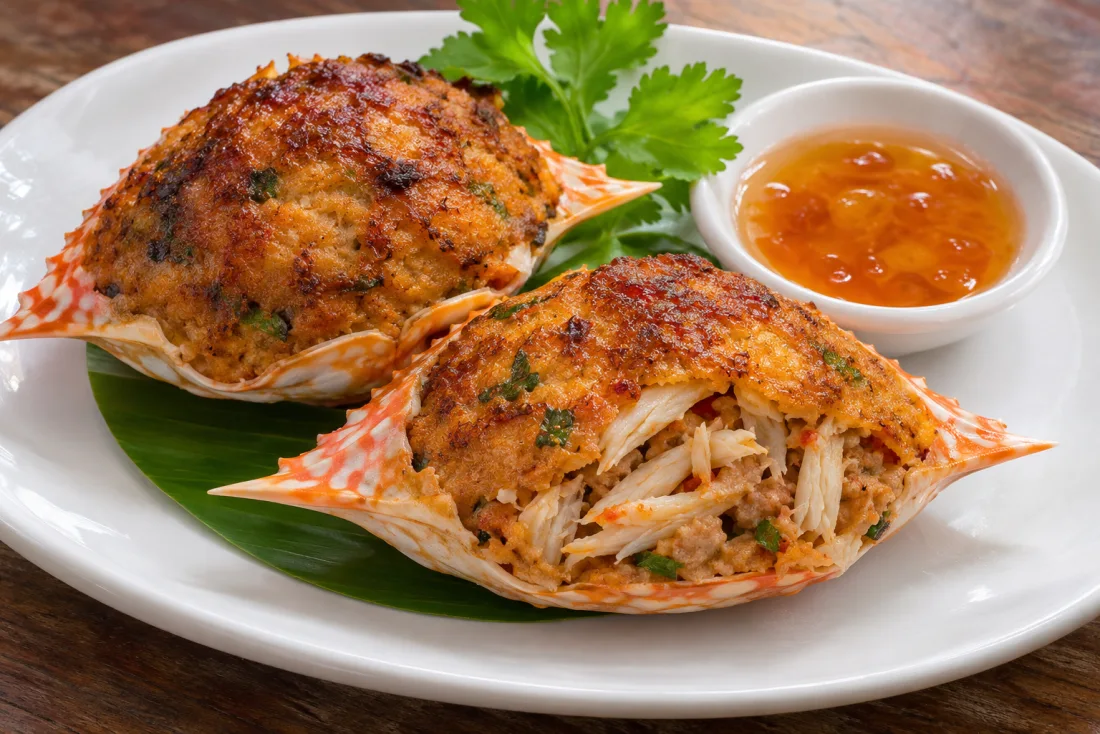
The shell holds a prepared crab filling so diners can scoop it out. The shell itself is set aside. Cooked crab is mixed into the filling along with seasonings, often pork and egg. A pale surface can indicate a steamed presentation, while a golden surface may come from a fried finish.
Crab and shared Thai meals
Thai recipes use smaller blue swimmer crabs or picked crab meat. A Thai university seafood guide records serving filled shells steamed or with a fried finish. Families and restaurants can offer several small shells for sharing. Portion sizes and crab sources vary.
Crab, pork and aromatics
One recipe uses crab meat, ground pork, coriander root, garlic, white pepper, salt, sugar, fish sauce, oyster sauce and egg. Other formulas can add light soy or tapioca starch. Plum dip is sweet-tart, while seafood dip can bring lime and chili.
Steaming and an optional fried finish
Pack cleaned shells with evenly thick filling and cook through, including any raw pork and egg. Thickness affects doneness. A steamed shell can be served directly, or the exposed filling can be coated with egg and fried for a golden crust. Watch for stray hard shell pieces in picked crab.
Crab sweetness, pepper and sauce
The steamed filling is tender and savory, with crab sweetness and mild pepper warmth. A fried finish adds a golden crust and toasted aroma. Try the filling before adding a little plum or lime-chili sauce.
Allergens in crab, egg and seasoning
Crab contains crustaceans and the featured filling uses egg. Fish sauce brings fish, oyster sauce may contain molluscs, and soy sauce or breadcrumbs may contain soy or wheat. Ask about the filling, dip, coating and shared tools.
If you have a food allergy, tell the restaurant before ordering and ask about ingredients, sauces and shared cooking equipment.