
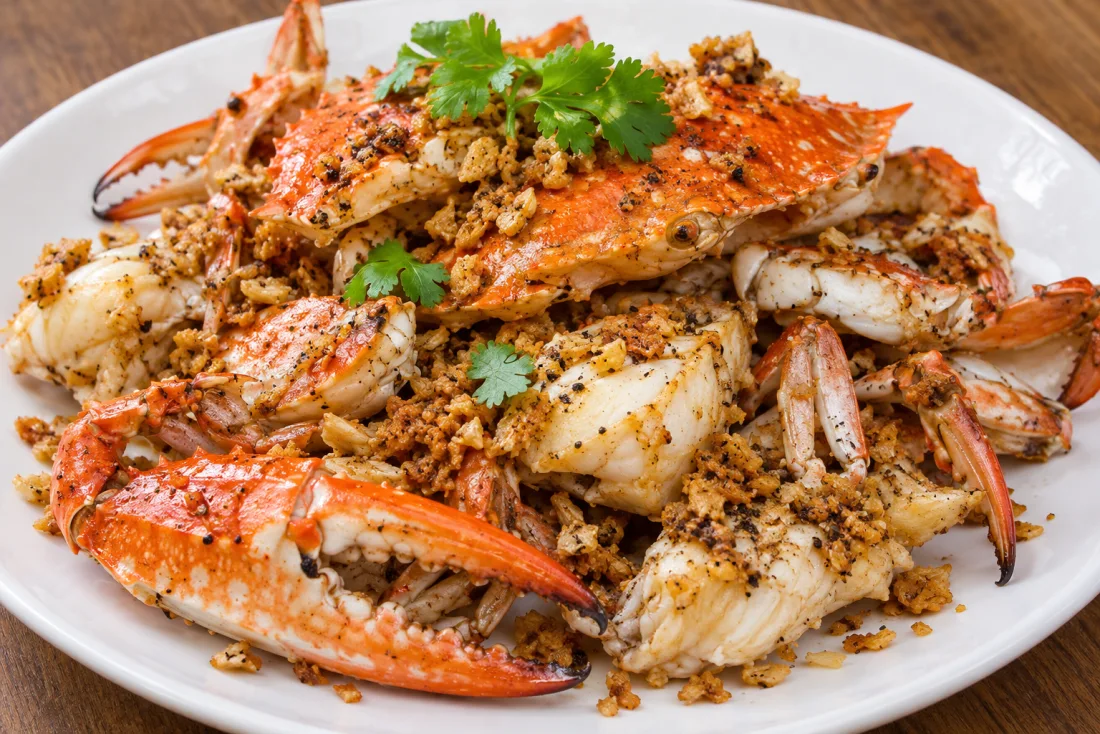

Reading the crab name on a Thai menu
Pu thot kratiem means crab fried with garlic. An additional krachang identifies swimmer meat from the part near the swimming leg. Pu nim means soft-shell crab. A plate of hard-shell crab may show orange claws and broken body sections, with garlic scattered over them. Soft-shell portions are commonly fried with a coating and eaten with the shell.
A dish at Thai seafood tables
Thai seafood menus list garlic-fried swimmer crab meat. Home cooks may start with cooked crab clusters, while restaurants choose what arrives fresh and may sell by portion or weight. The same garlic-pepper seasoning is familiar on different seafood. Fried crab adds a crisp dish to a spread of grilled, steamed and saucy plates.
Crab clusters, garlic and pepper
One Thai home recipe uses cooked crab sections, garlic, pepper and salt, with optional chili, ginger, alliums and cilantro. A separate soft-shell recipe calls for flour and pepper, with fried garlic on top. Cooks vary the amount of garlic and the finish. A light seasoning lets the crab's sweetness remain clear.
Frying and opening the pieces
Hard-shell crabs can be divided into claws and body portions. Cook crab thoroughly and keep cooked crab properly chilled until reheating. Small garlic pieces brown quickly and are often cooked apart and added near serving. Crack hard pieces for their meat and watch for fragments. Soft-shell crab has a different texture and is normally eaten differently.
Toasted garlic and naturally sweet crab
Golden garlic gives the first bite a toasted, almost nutty smell. The white or black pepper adds warmth rather than the heat of fresh chilies. Hard-shell pieces bring juicy meat beneath the garlic crumbs. Soft-shell crab can be crisp across the whole bite. Lime chili sauce and rice are optional accompaniments.
Allergens, coatings and fryers
Crab is a crustacean allergen, including soft-shell crab. Coatings can contain wheat or egg. Some cooks use fish sauce, soy sauce or oyster sauce. Oyster is a mollusk and fish is a separate category. Ask about each sauce and whether the fryer, baskets, strainers or serving tools are shared with other seafood.
If you have a food allergy, tell the restaurant before ordering and ask about ingredients, sauces and shared cooking equipment.