
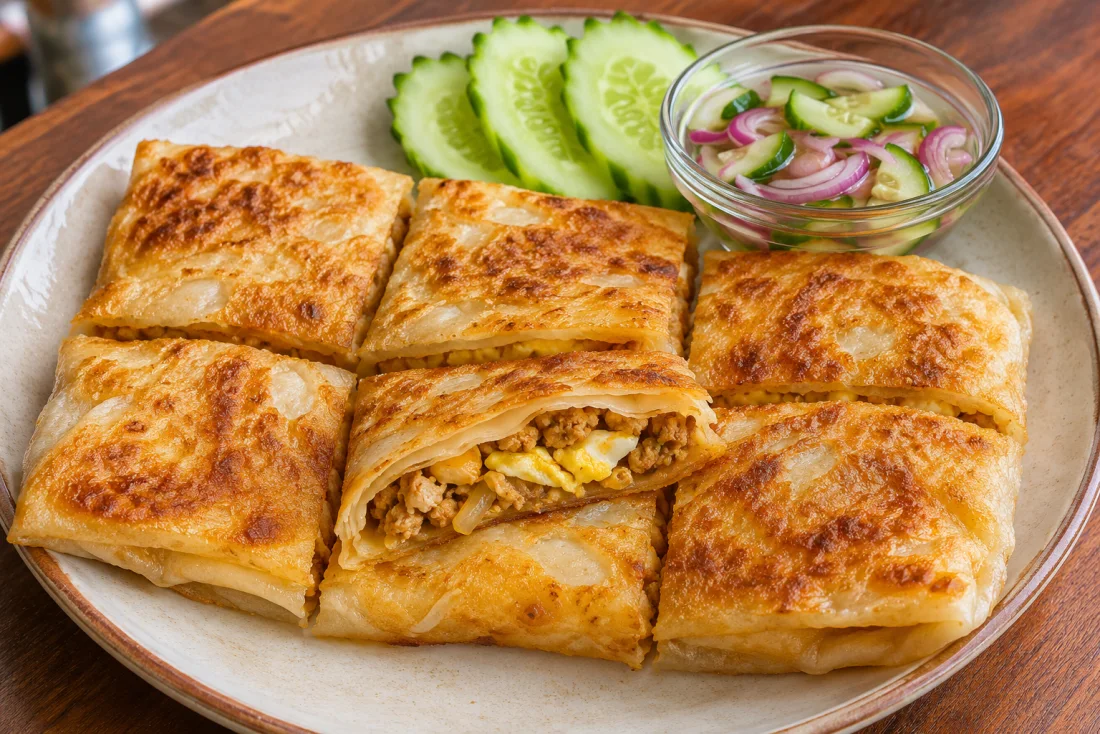

 minced chicken
A folded flatbread with a savoury centre
Roti mataba is filled and folded before it is fried. A cut piece shows meat and often onion or set egg under layers of dough. Shops may cut the parcel into squares or triangles. Sweet banana or plain roti are separate preparations with different toppings.
Roti in southern Thai Muslim communities
Pattani records describe mataba in local Muslim food culture, using chicken or beef with spices and a side of ajat relish. Shops elsewhere in Thailand serve it alongside tea and other rotis. The records document local practice without identifying one place of invention.
Wheat dough, spiced filling and cucumber relish
A chicken version uses wheat dough and cooked minced chicken with onion and spices. Egg can bind the filling, and potato or carrot can be added. Ajat is commonly cucumber, shallot and chili in sweetened vinegar with a little salt. Other dips are separate options.
Cook the filling, fold the dough and fry
Stretch rested dough into a thin sheet. Put the cooked filling in the middle, fold in the edges and fry both sides until golden. Egg can help hold the filling together. The crisp outer edges contrast with the warmer inner layers. Pack the relish separately to keep the pastry crisp.
Warm savoury filling and cool, tart cucumber
The fresh pastry has crisp edges and a softer interior. Spices bring warmth, onion sweetness and optional egg a soft bite. Beef adds a stronger meat aroma. Cool cucumber in sweet-sour dressing cuts the richness. Taste the filling and then a bite with relish.
Allergens in dough, filling and cooking surfaces
The dough usually contains wheat and the filling or dough may contain egg. Butter, ghee and milk add dairy. Seasoning and shared griddles may also contact soy, fish or other ingredients. Ask about the filling, cooking fat and separate relish, especially if different products use the same utensils.
If you have a food allergy, tell the restaurant before ordering and ask about ingredients, sauces and shared cooking equipment.