
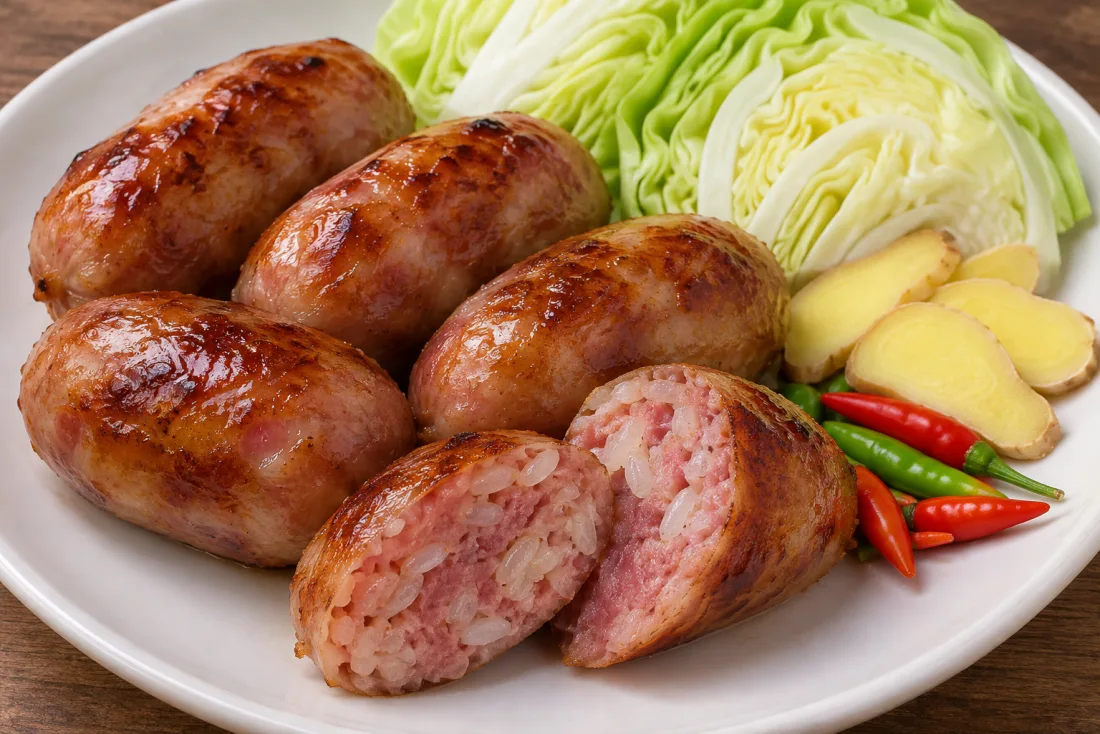

 minced pork
The name and northeastern food traditions
Sai krok means sausage and Isan is northeastern Thailand. Ubon Ratchathani University documents sausage production and sale in its survey of regional fermented foods. KRUA.CO records street vendors and the ways they serve it. Sourness varies by batch.
Pork, rice and seasonings
Minced pork and cooked rice are mixed with garlic and salt, then filled into a casing. Fat and rice affect the texture. Some shops add pork skin or glass noodles. Ask about the meat and the filling if the menu only gives the general name.
Fermented tang and grilled skin
Fermentation can develop a tang before the sausage is cooked. Grilling tightens and browns the casing, while the filling may remain juicy. Smaller round links have proportionally more casing, while a cut piece can show the grains and meat clearly.
Meaty flavour, tang and fresh sides
Try the tang and grilled garlic-pork flavour on their own, then add cabbage, ginger or chilli. Fresh vegetables can soften the rich taste. Some sellers offer pickled ginger, and the actual chilli heat depends on whether the chilli is mixed in or served alongside.
Serving sizes and other Thai sausages
It may come in a row of small links or as a longer piece cut for sharing. Northern herb sausage can have stronger lemongrass and chilli-paste aromas. Check the seller’s description for rice, glass noodles or pork skin and follow the package instructions if buying it uncooked.
Allergens, casings and shared grills
Ask about pork in the casing and filling, as well as fish, soy or wheat in prepared seasonings. Garnishes and noodles can contain other ingredients. Tell the vendor the exact allergen and ask about shared grills, knives and tongs.
If you have a food allergy, tell the restaurant before ordering and ask about ingredients, sauces and shared cooking equipment.