

 minced pork
A stuffed sausage from Lanna cooking
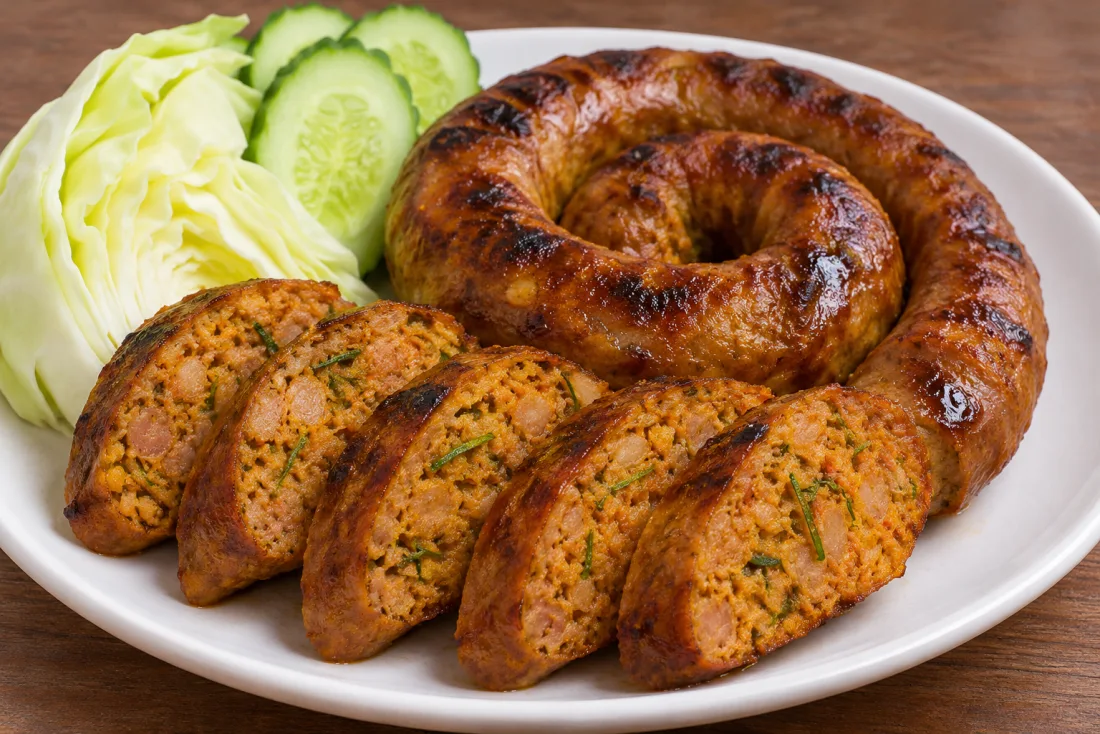
Sai means intestine and oua in northern Thai means to stuff. The mixture of pork and herbs in a casing is familiar in Lanna cooking. Thai tourism accounts document it in northern restaurants and at local markets, where it can be served differently.
The name may appear as sai ua, sai oua or sai aua. A sausage can arrive in a coil, a shorter piece or slices. Shape is one clue, alongside the chilli, lemongrass and makrut lime aroma. Ask for a piece cut from the coil to see the flecks of herbs.
Pork, herbs, seasoning paste and casing
Minced pork often includes some fat for juiciness. Pounded seasoning can use dried chilli, lemongrass, garlic, shallots, galangal or turmeric. Finely sliced makrut lime leaves, scallions and coriander can leave green flecks in the cut sausage.
The filling can be stuffed into a casing and coiled before grilling. Casings, heat, charcoal and the texture of the mince vary. Some recipes use shrimp paste or fish sauce, while others use other seasonings.
Lemongrass, lime leaves and grilled pork
The browned exterior smells of grilled pork. Cutting exposes lemongrass and lime leaf along with the warmth of dried chilli or turmeric. Fat gives the filling some richness. Heat varies with the chilli and paste.
A drier casing offers a little chew, while coarse meat stays distinct and fine mince gives a firmer slice. Freshly cut warm sausage can make the herb aroma easier to notice. Ask about heat and try a piece with plain sticky rice.
Markets, sticky rice and northern platters
A market vendor can cut the sausage into bite-size pieces. The skin is aromatic when warm, and the filling becomes more distinct as it cools. Sticky rice can take up some of the juices and spices. If the plate comes with a northern green chilli dip, taste them separately before combining them.
Restaurants can put slices on a northern appetizer platter with vegetables, dips or other cooked meats. Ask whether the sausage is sold by weight or plate and what sides come with it.
Isan sour sausage and the liver variation
Sai krok Isan commonly uses pork and rice and gets sourness from fermentation. The northern sausage emphasizes herbs such as lemongrass, lime leaf and chilli. Both can be grilled, so the name and cut surface help distinguish them.
Sai oua tap is a version with pork liver, which changes the texture alongside the herbs and pork. Ask what meat and casing a shop uses. Some cooks adapt the dish with other meat.
Allergies in the paste, casing and dip
The filling can contain shrimp paste, fish sauce or soy sauce containing soy and wheat. Prepared curry pastes or seasonings vary. The cut surface alone does not tell you if fish or crustaceans went into the seasoning. Ask separately about the casing and any liver.
Tell the shop what you need to avoid. Ask about the filling, dips, shared grills, knives and trays. Taking off the casing or skipping a separate sauce does not change ingredients that were mixed into the filling.
If you have a food allergy, tell the restaurant before ordering and ask about ingredients, sauces and shared cooking equipment.