
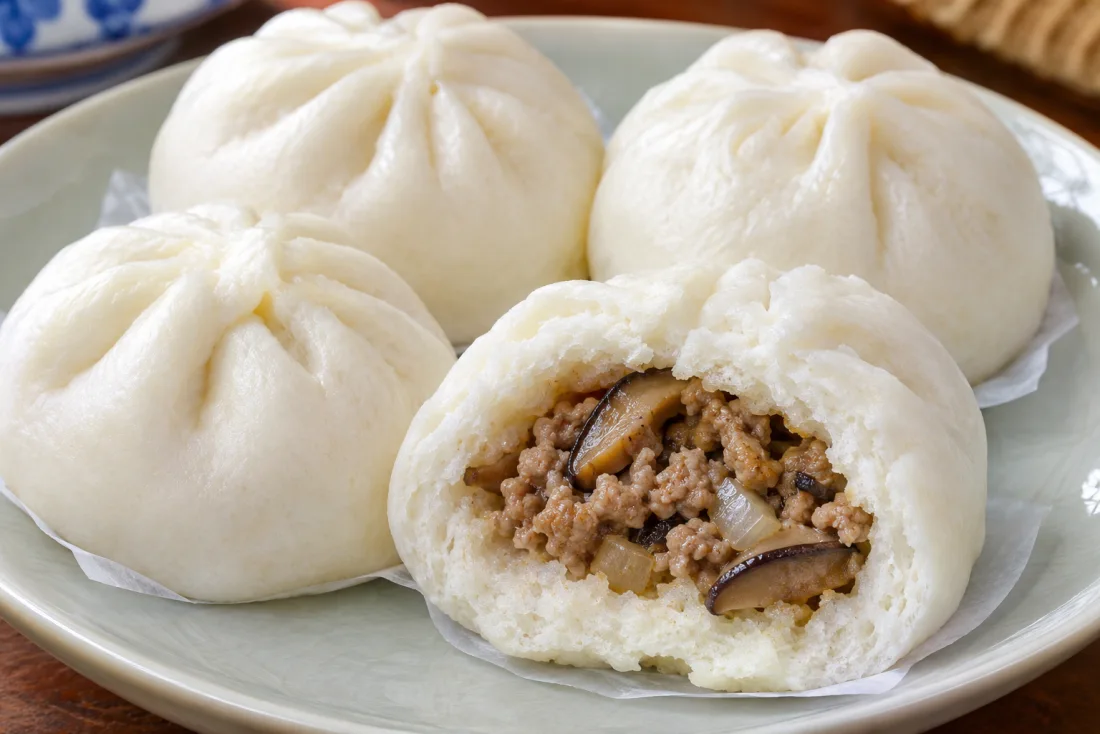

 minced pork
A Chinese-style steamed bun on a Thai menu
Salapao moo is a broad Thai name for a steamed pork bun. Moo sap says the pork is minced and moo daeng indicates the red barbecued pork version. Thai cookbooks and bun shops document both fillings. This entry uses a minced pork bun as its main example while recognising several preparations in Thailand.
Wheat dough and a juicy pork filling
The wrapper is made with wheat flour, water, sugar and yeast. Some recipes also use baking powder or shortening. Minced pork may include a little pork fat to keep it moist. Shiitake and diced jicama give texture, while garlic, coriander root, pepper, soy sauce, sesame oil and spring onion flavour the meat. Other versions may add egg or sausage.
Proof, pleat and steam
Shape a small piece of dough into a round sheet, add the filling and gather the edges tightly. Leave enough room for the buns to rise before steaming. Steam until the pork is cooked through. A thicker bun takes more time. The steam produces a soft pale skin, and the filling remains moist. Let the steam disperse briefly before opening a bun.
A fluffy shell with a savoury centre
Freshly steamed dough springs back and has a light wheat aroma and sweetness. Pork, shiitake and pepper give a savoury centre. Jicama brings a crisp bite and sesame oil adds fragrance. Barbecued pork generally has a sweeter glaze and a different texture. Try bread and filling together while warm.
Minced pork, barbecued pork or an unfilled bun
Moo sap means minced pork and moo daeng is barbecued pork. An unfilled manthou is a separate steamed bread with a similar soft skin. Bun shops can use paper or marks to identify fillings, but the signs vary. Buns may be served in a steamer or wrapped individually. Ask the seller to identify the filling if it matters.
Allergens in the dough, filling and steamer
The reference dough contains wheat, while soy sauce and sesame oil contain soy and sesame. Some soy sauces also contain wheat. Oyster sauce may contain molluscs, and some buns include egg, shrimp, fish seasonings or dairy. Ask about dough, filling and shared steamers and tongs. A plain-looking wrapper does not reveal the ingredients.
If you have a food allergy, tell the restaurant before ordering and ask about ingredients, sauces and shared cooking equipment.