
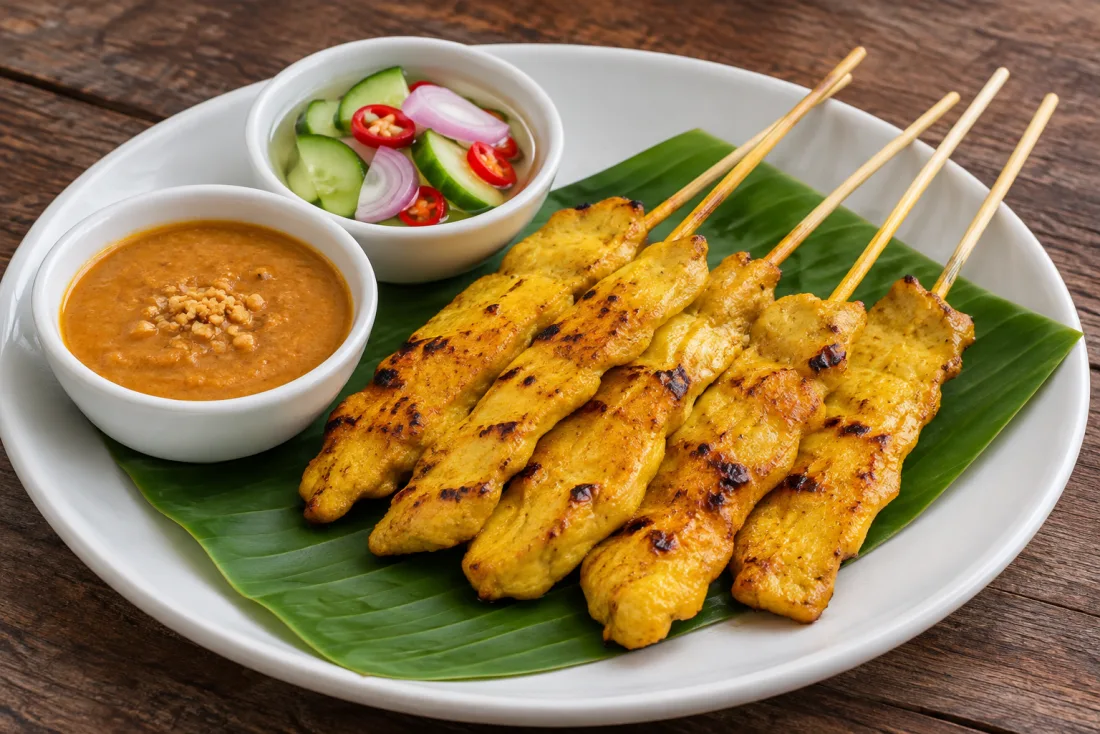

 chicken strips
A Southeast Asian tradition of grilled skewers
Satay is spiced meat threaded onto skewers and grilled. Collections at Singapore’s National Heritage Board also document satay, illustrating the wider Southeast Asian tradition. The marinade, peanut dip and sweet-sour cucumber are useful clues to the Thai chicken version. Similar-looking skewers across the region can come with different spices and sauces.
Pork is a familiar street-food satay in Thailand. Chicken appears in some Thai restaurants and Thai restaurant menus overseas. A Chiang Mai hotel kitchen, for example, uses its chicken satay recipe to teach Thai cooking. A single Thai province need not be assigned as its birthplace. Look for gai or ไก่ to identify chicken on a menu.
Chicken, aromatics and the charred edges
Breast meat or boneless thigh can be threaded as flat strips along each skewer. Evenly sliced breast has a more distinct grain once cooked, while thigh tends to stay softer and juicier. A strip exposes a relatively large surface to heat, allowing browned areas to form along the edges. Their toasted scent mingles with the spices from the marinade.
Marinades may contain curry powder, turmeric, salt, sugar or fish sauce. Some recipes use coconut milk in the marinade or as a glaze while grilling. Turmeric can make the meat golden, with the exact shade depending on the seasoning and cooking. With a mild spice mixture, the skewer can be aromatic and slightly sweet and savory, with more heat in the sauce.
What peanut sauce and cucumber bring to the plate
A Thai peanut dip can be cooked with coconut milk, roasted peanuts and curry paste. Some versions add tamarind and sugar to bring sourness and sweetness alongside the nut flavor. Coarsely ground peanuts leave tiny pieces on the chicken. A smoother sauce coats the meat more evenly, and even a little can noticeably change the bite.
The cucumber relish, ajad, often uses vinegar and sugar with shallots and fresh chilli. Watery, crunchy cucumber and the sweet-sour dressing are refreshing in between bites of the thicker dip. For less heat, try the chicken first and then taste the sauce. Also check the sliced chillies floating in the relish.
An appetizer portion made to share
Chicken satay often comes as several skewers with separate sauce and cucumber dishes. At a shared table everyone can take a skewer and choose how much of each accompaniment to add. A modest appetizer portion provides hot grilled meat and spices while people wait for dishes to share.
Chicken satay is familiar on Thai restaurant menus abroad, while Thai street satay is more commonly pork. Read the full name or ask what meat the vendor uses. Chicken does not have the little piece of pork fat found in certain pork satay recipes, so the coconut and peanut flavors can stand out alongside the chicken.
Comparing satay with other grilled chicken
Gai yang is a broad name for grilled chicken. It might be served as bone-in legs or a chopped whole bird with sticky rice and a dipping sauce. Satay gai is commonly portioned by the skewer, using strips of chicken with curry spices and a peanut dip. The cut, marinade and accompaniments describe the dish more reliably than the heat source, since cooks can use a griddle as well as a charcoal grill.
Chicken and pork satay can be eaten with similar sauces. If both appear, gai specifies chicken and moo specifies pork. Texture and marinade may differ, and the restaurant may serve the same sauce or two different ones. Try the first bite plain to notice the grilled edge and meat, then add some dip.
Allergies in the sauce, marinade and preparation
The peanut dip normally contains peanuts. Some recipes also use fish sauce, shrimp paste in a curry paste or soy sauce, so ask about fish, crustaceans, soy and wheat. Certain chicken marinades use condensed milk or butter. Coconut milk has a creamy appearance, so check with the kitchen about any added milk ingredients.
Ask separately about the marinade, brushing liquid, dipping sauce and cucumber. Leaving the peanut sauce off the plate does not address shared tongs, griddles, serving spoons or work surfaces. Tell the restaurant what you need to avoid and ask whether your food can be prepared and plated separately.
If you have a food allergy, tell the restaurant before ordering and ask about ingredients, sauces and shared cooking equipment.