
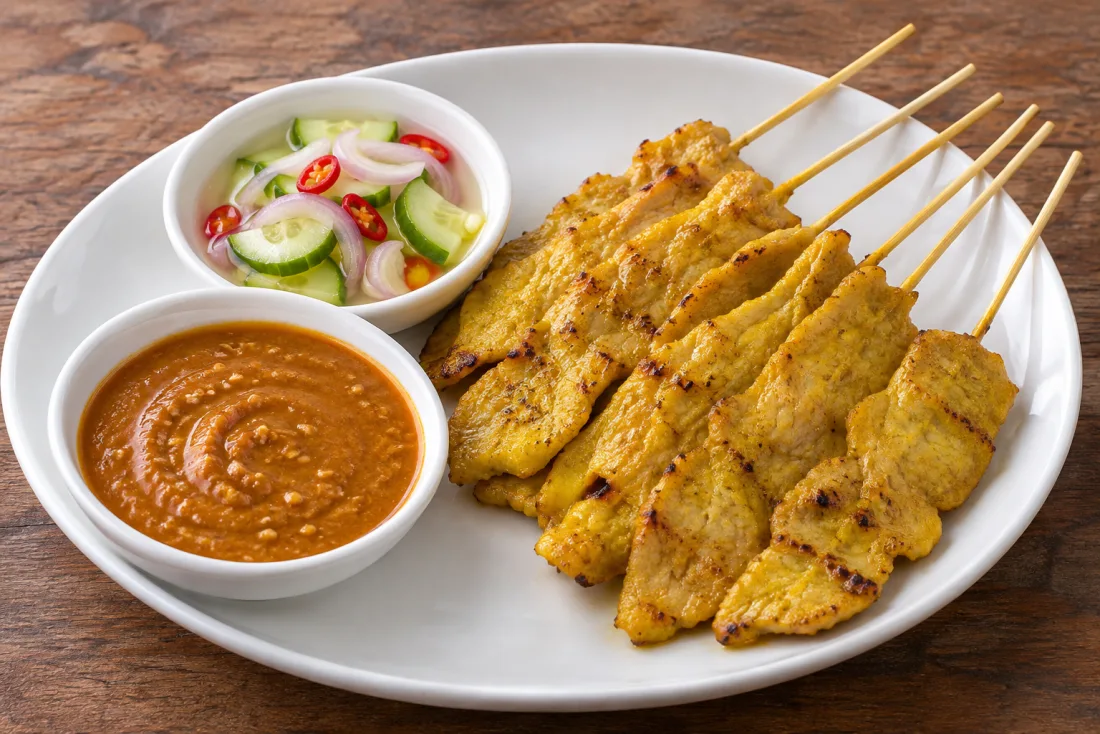

 thin pork slices
A familiar Thai street-food skewer
Satay is part of a wider Southeast Asian tradition of grilled spiced meat. Singapore’s National Heritage Board records satay street vendors and grilling tools that show one way this tradition has taken root in the region. In Thailand, golden pork skewers, peanut sauce and pickled cucumber form a recognizable combination. That combination does not establish a single Thai city as its birthplace.
The Tourism Authority of Thailand lists dedicated pork satay vendors and describes ordering satay at a restaurant in Nakhon Nayok in central Thailand. Both settings help show how people encounter the dish, either at a specialist stall or as one small plate among several. Moo means pork, which is useful when the menu uses a different spelling of satay.
Thin pork slices, coconut cream and turmeric
Cooks commonly cut the pork thinly and lay each slice lengthwise on the skewer. A flat surface cooks evenly and takes on darker color around the edges. Some recipes put a small piece of pork fat on the skewer to add richness under the grilled surface. Other skewers use leaner meat throughout, giving them a firmer bite.
One Thai recipe marinates pork with coconut cream, sugar, salt, curry powder and turmeric. Turmeric adds a golden color and an earthy note, blended spices contribute a warm aroma, and coconut cream rounds out the seasoning. Spice mixes differ by vendor. The thickness of the pork, the heat and any coconut brushing liquid also change the aroma and juiciness.
The flavor of the skewer, dip and relish
Try the pork first to taste its mild sweetness, browned edges and warm curry spices. Sweet and savory are often more prominent than chilli heat. A dip brings a richer flavor. Some sauces use roasted peanuts, coconut cream and Massaman paste. Tamarind and coconut sugar bring tartness and sweetness, and white sesame can add its own toasted flavor.
The cucumber relish, ajad, often uses cucumber, shallots and fresh chilli in a sweetened vinegar dressing. Water-rich cucumber, crunch and acidity make the relish feel lighter. Where the pork is fatty and the dip sweet, the cucumber offers a bright bite in between. Even a mild skewer can be served with sliced chilli in the relish.
Serving several skewers, sometimes with toast
At stalls and specialist shops, pork satay often comes as several skewers, with individual bowls of dip and relish. A menu can price the meat by the skewer or by a set. At a shared table, see how many skewers make up a portion and whether the accompaniments are included. A small order is easy to pass around alongside noodles or a table of other small plates.
Some versions come with toasted white bread. Its crisp surface takes up leftover sauce and makes it easy to control the amount of dip between bites of meat. Skewers fresh from the grill also make it easier to notice the difference between their browned edges and tender centers as the pork fat cools.
Distinguishing moo ping and chicken satay
Moo ping is another Thai grilled pork skewer, often paired with sticky rice. It is easy to confuse the two by shape. Turmeric or curry spices, a peanut dip and cucumber relish are better clues for pork satay. The menu terms moo ping and moo satay are also worth looking for.
Chicken satay may be just as golden and served with the same pair of accompaniments. Pork can have a distinctly rich grilled fat edge, whereas chicken texture differs depending on whether it is breast or thigh. If a menu lists only Satay, ask which meat is used. Diners avoiding pork can also ask about marinades, sauces and shared equipment.
Peanuts, sesame and prepared seasonings
The dip usually contains peanuts, and some recipes do use white sesame. Depending on the ingredients, curry paste, fish sauce and soy sauce can introduce crustaceans, fish, soy or wheat. A side of toast often contains wheat. The gold color of the pork cannot tell you the ingredients in its marinade or dipping sauce.
Diners with food allergies should ask about the skewer, any brushing liquid, the peanut sauce, cucumber and toast separately. Shared grills, tongs and trays are also worth asking about when a stall prepares several kinds of skewer. The restaurant can name the seasonings in use and say whether the food can be prepared separately.
If you have a food allergy, tell the restaurant before ordering and ask about ingredients, sauces and shared cooking equipment.