
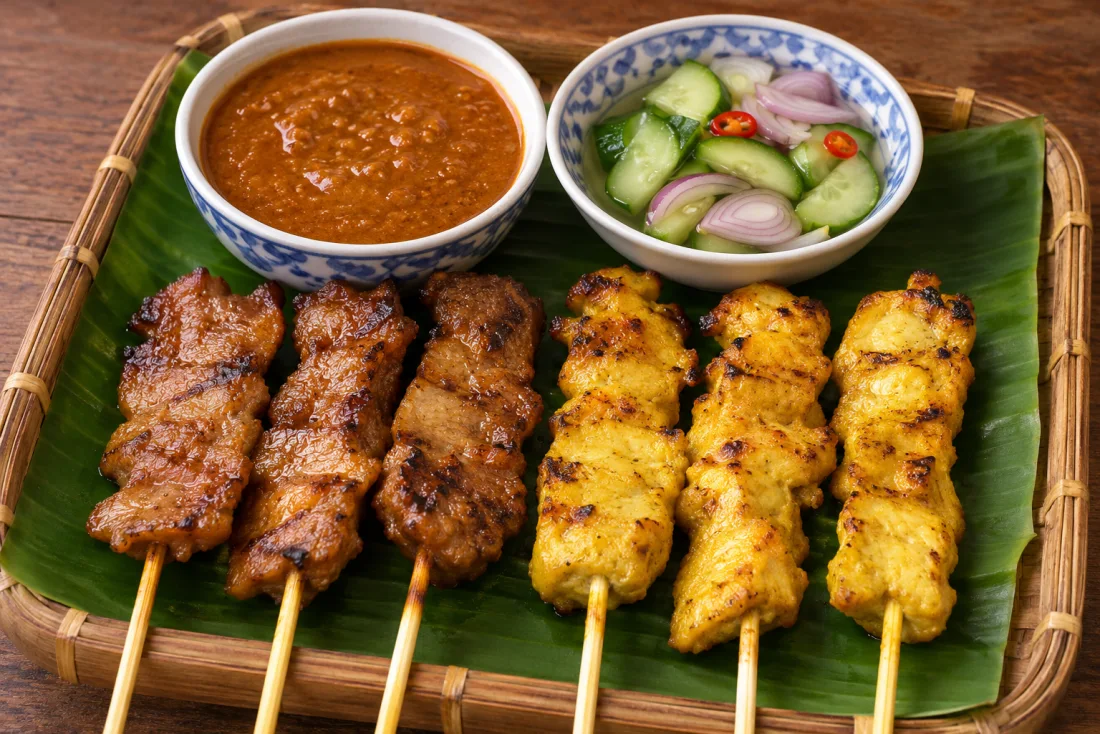

 pork
 chicken
 beef
 shrimp
What mixed means on a Thai menu
Satay names seasoned grilled skewers, and ruam indicates an assortment. A Bangkok menu offers a pork-and-chicken combination. Another Thai restaurant lists six meat skewers or eight with prawns. The word mixed does not set the number or protein ratio.
Telling the skewers apart
Pork can have darkened edges and a moist centre. Chicken has a lighter, tender grain, beef a different savoury taste and cooked prawns a firmer curve. Turmeric or coconut milk can appear in some marinades. Ask the shop which group is which.
Peanut sauce and cucumber achat
Peanut sauce brings a rich roasted aroma and may contain coconut and spices. Achat is a light sweet-sour pickle often made with cucumber, shallot and chilli. Some sellers also serve toast. Dip a little first to keep the grilled flavour clear.
A two-type or larger platter
A pork-and-chicken plate offers two textures. Other menus add beef, and a larger example includes prawns. Counts are shop specifications. Check which skewers, sauces and sides come in the order, particularly if an ingredient is being avoided.
Sharing the cooked skewers
The warm meat and separate dips let diners try a little of each. Separate sauces help keep the grilled surface from softening in takeaway. Remove sharp sticks and prawn tails before serving small children if needed.
Allergens in dips, marinades and shared grills
Peanut sauce contains peanuts, and prawns are crustaceans. Ask about shrimp paste, fish sauce, soy sauce and associated fish, soy or wheat. Toast can contain wheat and other ingredients. Coconut, milk, egg or sesame can matter if used. Ask about separate utensils and the grill.
If you have a food allergy, tell the restaurant before ordering and ask about ingredients, sauces and shared cooking equipment.