

 fish sauce
Recognizing the mixed rice
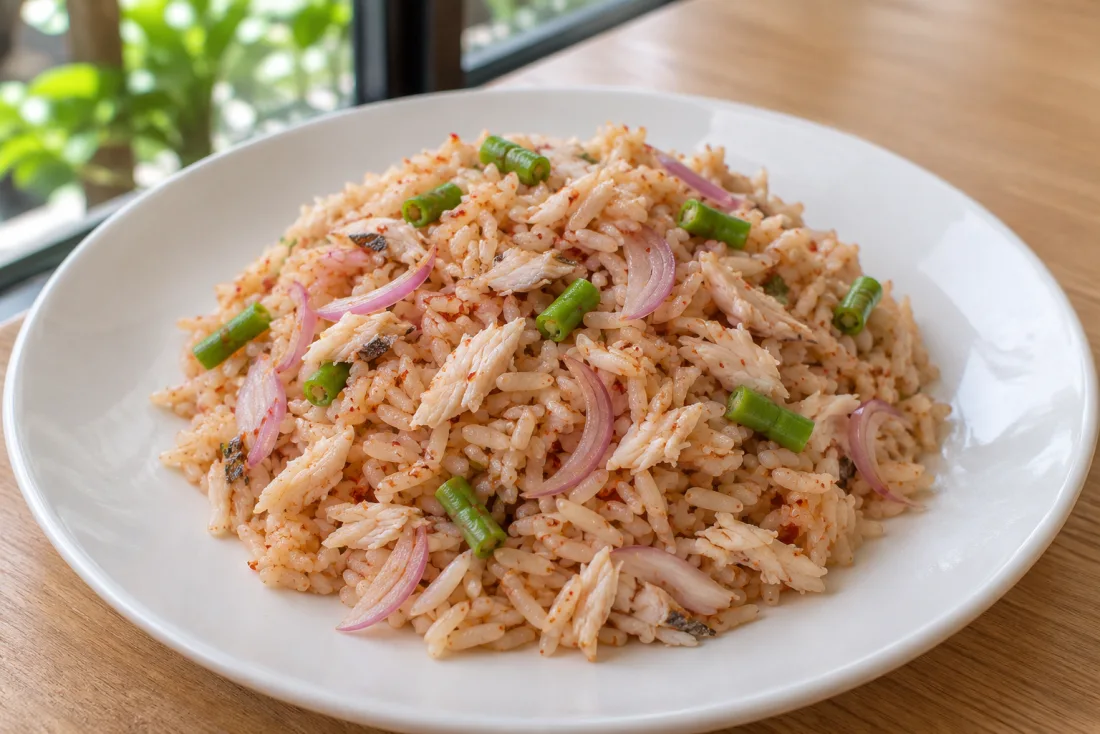
Khao khayam describes tossing cooked rice with seasonings and fish. Rice stays in recognizable grains with flakes of cooked fish and chopped aromatics. In these two examples cooked pla ra seasons the fish and rice. The rice itself is freshly cooked and tossed, without fermentation or another turn in the wok.
Kanchanaburi mackerel version
A Kanchanaburi café lists flaked mackerel, pla ra, ground chilli, fish sauce, lime, yardlong beans and shallot. Mackerel provides tender flakes and beans add a light crunch. Lime brightens the savory dressing.
Fried gourami with Riceberry
A Thai home cook uses fried snakeskin gourami with cooked Riceberry, fresh chilli, fish sauce, lime and shallot. The recipe allows a little pla ra. Spring onion and cilantro provide fragrance, and the photographed version is served with cucumber and hard-boiled egg.
Balancing the seasoning
Pla ra gives the dish a distinct fermented aroma. Fish sauce adds salinity, lime brings tartness, and chilli adds heat. Some crunch from fried fish softens after tossing, so the fresh plate still gives the clearest contrast with tender rice.
Ordering and sharing
Ask which fish is used and whether the rice contains pla ra. Extra chilli can sometimes be served separately. Cucumber and egg belong to one documented serving. To share the dish, make sure both the cooked fish and the rice are divided.
Allergens and fish sauces
Both the cooked fish and the two fish seasonings are fish ingredients. The serving with hard-boiled egg also contains egg. Ask about prepared sauces and shared fryers or utensils when avoiding fish, egg, soy, wheat or shellfish. Small bones can remain even in hand-flaked fish.
If you have a food allergy, tell the restaurant before ordering and ask about ingredients, sauces and shared cooking equipment.