

 fish sauce
Recognising the leaves
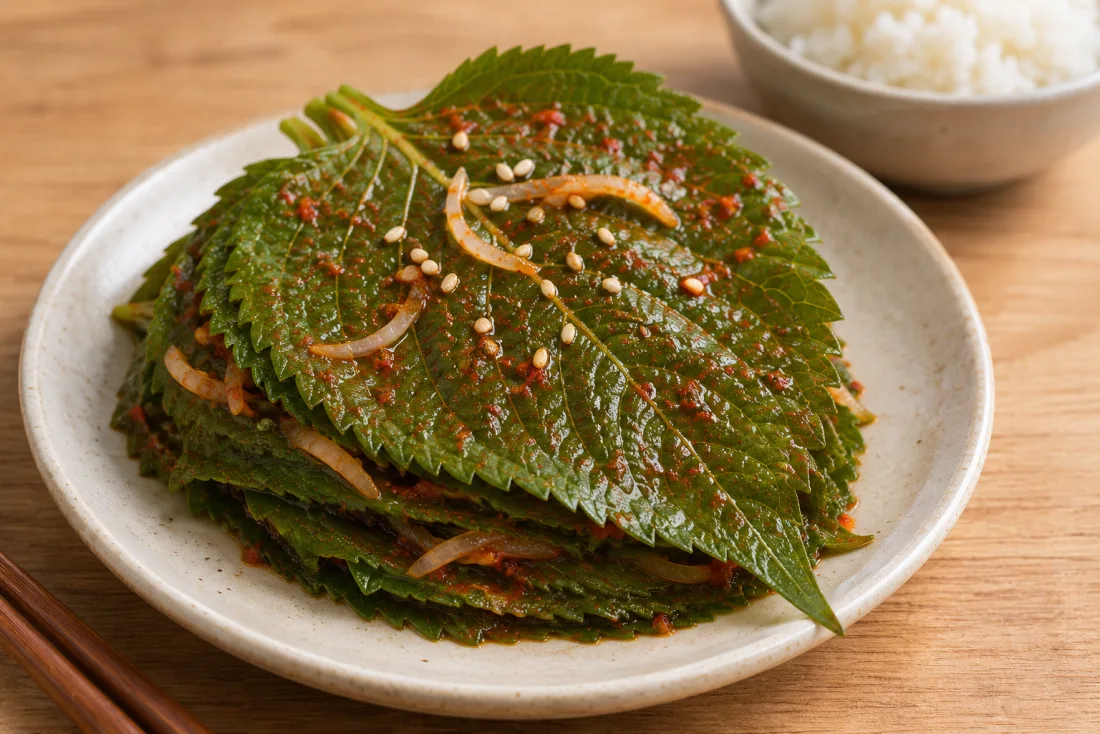
Kkaennip is Korean perilla. In Thailand the leaves may be called bai nga, literally sesame leaves. Perilla is a separate plant from sesame. The leaves are broad, pointed and visibly serrated, and any toasted sesame seeds are a separate ingredient. The whole leaves are normally stacked in a small dish and lifted one at a time.
Korean preparations found in Thailand
Korean households make closely related layered and steamed side dishes. A Korean merchant in Bangkok lists soy-seasoned perilla leaves, and other Thai vendors carry prepared Korean-style leaves. Pickled, freshly dressed and steamed preparations should be identified individually. Northern Thailand also grows perilla, and its seed uses are separate from this Korean leaf side.
Fresh dressing and steamed seasoning
One fresh version uses Korean chilli flakes, fish sauce, garlic, carrot, onion, green onion, sesame seeds and honey. A steamed example uses soy sauce, fish sauce, sesame oil, garlic and green onion, with a possible soy-based version without fish sauce. The ingredient list can vary. Lime is not a required ingredient in these examples.
Leaf aroma and texture
Freshly dressed leaves remain a little firmer and greener. Steamed leaves soften and appear darker while the veins remain visible. Perilla brings a distinct herbal aroma, chilli can colour the dressing red, and toasted sesame adds a nutty note. Fish sauce brings savouriness; soy sauce can add another flavour.
Serving a small dish
Arrange overlapping whole leaves in a small side dish. Take a leaf at a time to fold around a little cooked rice or eat with rice and other sides. Fresh perilla can also serve as a wrap for grilled dishes, and Thai leaf wraps use various other leaves. Here the seasoning stays between the perilla leaves.
Allergens and sauce labels
Fish sauce or dried fish introduces fish. Sesame seeds and sesame oil count as sesame. Soy sauce can bring soy and wheat. Perilla and sesame are separate plants, so the common name alone does not settle the allergen question. Check shop recipes, packaged ingredient lists and shared serving equipment if relevant.
If you have a food allergy, tell the restaurant before ordering and ask about ingredients, sauces and shared cooking equipment.