
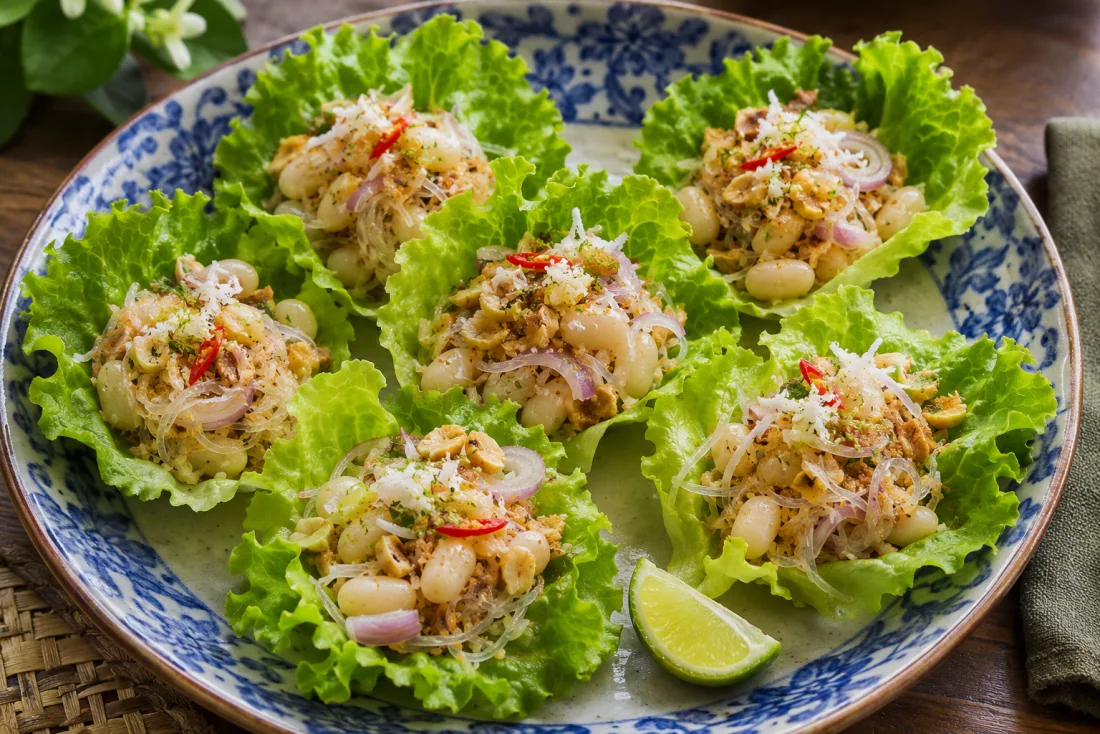

Beans and noodles in the Thai name
Thua naem is a bean accompaniment in this recipe. The old text explicitly substitutes cooked white beans for fish and glass noodles for sliced pork skin. The mixture can come in lettuce leaves or in a bowl beside them. Ask whether the kitchen follows the bean version.
A documented Thai ingredient substitution
A historical Bangkok cookbook records the substitutions and serves with lettuce. Small bites can be shared with rice dishes. Other Thai leaf wraps may use fish or pork, and restaurants can change seasonings. The historical recipe lists salt and lime for the dish.
White beans, glass noodles, toasted rice and citrus
The original lists cooked white beans, glass noodles, grated coconut, galangal, toasted rice, pickled garlic, Thai citrus peel, shallot, peanut, lime, sugar, salt, chilies and lettuce. Peanuts and toasted rice add different kinds of crunch and aroma.
Cook the beans and noodles before mixing
Prepare dry beans fully according to their type and directions and cook the glass noodles. Drain both, then mix with the seasonings. Wash and dry the lettuce and use clean tools. Fill leaves near serving and store cooked ingredients properly.
Soft beans, crisp lettuce and fresh zest
White beans are soft and glass noodles are slippery. Coconut brings a little sweetness, toasted rice adds grain aroma and peanuts crunch. Galangal, pickled garlic and lime give a fresh savory contrast. Eat in small bites.
Allergens in nuts, bean ingredients and sauces
The original contains peanuts. Ask about the bean, noodle starch, coconut, pickled garlic and shared equipment. Modern dressings may have fish, shrimp, oyster, soy or wheat. Picking off visible nuts cannot undo peanuts mixed into the dish.
If you have a food allergy, tell the restaurant before ordering and ask about ingredients, sauces and shared cooking equipment.